
Satellites show damage to Iran’s nuclear program, but experts say it’s not destroyed
Loading…
U.S. officials say that strikes conducted on three key Iranian nuclear sites have devastated its nuclear program, but independent experts analyzing commercial satellite imagery say the nation’s long-running nuclear enterprise is far from destroyed.
“At the end of the day there are some really important things that haven’t been hit,” says Jeffrey Lewis, a professor at the Middlebury Institute of International Studies at Monterey, who tracks Iran’s nuclear facilities. “If this ends here, it’s a really incomplete strike.”
Loading…
In particular Lewis says the strike doesn’t seem to have touched Iran’s stocks of highly enriched uranium.
“Today, it still has that material and we still don’t know where it is,” he says.
“I think you have to assume that significant amounts of this enriched uranium still exist, so this is not over by any means,” agrees David Albright, the president of the Institute for Science and International Security, which has closely tracked Iran’s nuclear program for years.
The independent assessments stand in stark contrast to congratulatory statements from the Trump Administration in the wake of the strikes.
Loading…
The U.S. military carried out its attack against Iran’s nuclear program early on Sunday, local time. Code-named “Operation Midnight Hammer,” the mission involved seven B-2 Spirit bombers carrying massive 30,000-pound bunker-buster bombs known as Massive Ordinance Penetrators.
It appears that a dozen of the bombs were used to strike Iran’s deeply buried enrichment site at Fordo. Two weapons were also used to strike an underground centrifuge facility at Iran’s main enrichment site in Natanz.
Concurrent with the bombings, a U.S. submarine launched more than two dozen cruise missiles. Those weapons hit buildings and tunnel entrances at a third nuclear site at Isfahan.

“Iran’s nuclear ambitions have been obliterated,” Secretary of Defense Pete Hegseth said during a Pentagon press conference on Sunday. “The operation President Trump planned was bold and it was brilliant.”
Both Lewis and Albright say that the strikes themselves may well have been effective, although it is difficult to say for sure. Satellite imagery shows six deep holes in the ground around Fordo, and ashy debris over much of the site. Albright believes that bunker-busters were used to try and strike at the enrichment facility’s ventilation system, along with the main hall where uranium-enriching centrifuges were kept.
“I think the purpose of the attack was to take out centrifuges and infrastructure and they feel they accomplished that,” Albright says.
But as evidence that the strikes may have missed the uranium stocks, both Albright and Lewis point to commercial satellite imagery from the days before the strike. The images show trucks at two key sites — Isfahan and Fordo. The trucks appear to be sealing tunnels that serve as entrances to underground facilities used to store uranium, possibly in anticipation of an American attack.

Both experts believe Iranians could have also moved their enriched uranium out of the sites in the run-up to the U.S. strikes.
“There were trucks seen in imagery apparently hauling stuff away,” Albright says. “One would assume that any enriched uranium stocks were hauled away.”
The International Atomic Energy Agency had assessed that Iran has more than 400 kilograms of 60% enriched uranium 235 — enough for around ten bombs, according to independent experts. That 60% enriched uranium is carried in relatively small containers that could fit easily into cars, says Albright.
Although Albright believes the program has been substantially set back, he thinks it could still be reconstituted.
Albright says Iran may also have thousands of uranium-enriching centrifuges that were never installed in Natanz and Fordo. It might be possible to move the uranium to another, covert facility, where it could be enriched to the required 90% for a nuclear weapon in a relatively short period of time. Even then, Iran would have to take further steps to fashion the uranium into a weapon.
“The program has been seriously set back, but there’s a lot of odds and ends,” Albright says. Ultimately he thinks the only way to truly end Iran’s nuclear program is through additional nuclear inspections by international monitors and cooperation from the Iranian regime, probably though some kind of diplomatic agreement.
Lewis agrees: “Even the most brilliant bombing campaign, probably is not going to get us where we want to be,” he says.

Opinion: The immorality of betting on war
Traders on prediction markets bet on nearly anything. One made more than half a million dollars betting on the U.S. strike against Iran. But should people wager on human suffering?
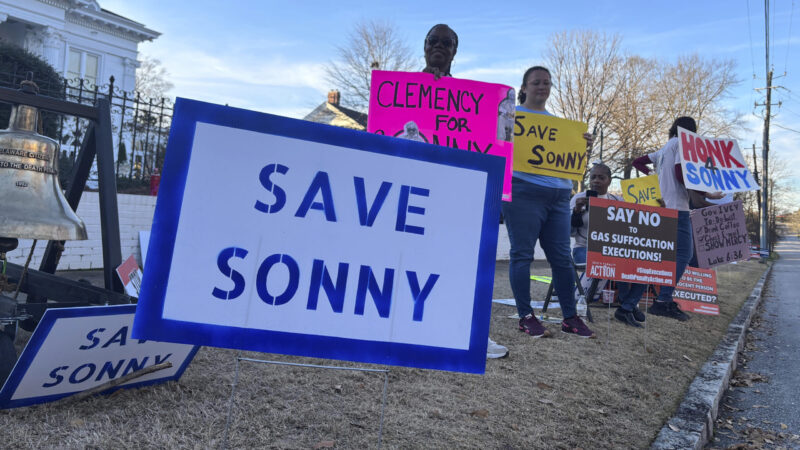
Alabama man facing execution for deadly robbery asks for clemency as he didn’t kill victim
Charles “Sonny” Burton is scheduled to be executed March 12 for his role in a 1991 robbery in which a man was fatally shot. His supporters and attorney are asking the governor for clemency, arguing that his life should be spared because Burton didn’t fire the gun or witness the killing.

Curling had its moment at the Olympics and now Paralympics. It sparked a curling bonanza in America
Hundreds of people become interested in curling every four years and the 2026 numbers already show that boom.
One week into the Iran war, the fallout is global
The war is no longer just about the U.S., Israel and Iran. More countries are getting caught in the political crossfire or being drawn into the fighting themselves.
Iran’s president defies U.S. demands while apologizing for strikes on neighbors
President Masoud Pezeshkian said Saturday that a demand by the U.S. for an unconditional surrender is a "dream that they should take to their grave." He also apologized for Iran's attacks on regional countries.
What the Trump administration says about why it went to war with Iran
The Trump administration says it is "laser focused" and mission driven, but the messaging has been varied. The range of cited motivations for striking Iran now are sometimes at odds with each other.
