
‘Rosemead’ tells a tragic — and true — story
Based on a 2017 Los Angeles Times article by Frank Shyong, the new movie Rosemead dramatizes a true and tragic story of a single Taiwanese American mother named Irene (Lucy Liu) who has cancer, and her teenage son, Joe (Lawrence Shou). A star student and swimmer, Joe begins to have increasing symptoms of his diagnosed schizophrenia, which intensify after the passing of his father (Orion Lee). As Joe’s hallucinations, delusions and outbursts become more frequent and intense, Irene struggles to support her son while dealing with her own terminal illness. If the premise of director Eric Lin’s feature debuts sounds bleak, that’s because it is.
Whether in the form of teachers, social services, or cultural shame, Rosemead highlights how external actors repeatedly fail Joe — driven not by compassion, but by their own internalized fears, exposing the lengths to which institutions will go to protect themselves from those they deem dangerous. After a school shooting drill triggers Joe in an early scene, prompting hallucinations, an administrator suggests that he transfer schools. “We all have his best interests at heart here,” he says with a false authenticity to an already-strained Irene.
The story of Rosemead is about a teenager with mental illness just as much as it is the Asian-American community, in a rare thematic combination that showcases the challenges facing both. Irene projects a composed public front and keeps her sorrow private, reflecting a culture in which shame often wears the mask of secrecy. At a party, other Asian-American families quietly gossip behind Irene’s back, raising questions about Joe seeing a psychiatrist. Instead of standing up for Joe, Irene insists that he’s attending the Family Center out of an interest in psychology, not because he needs therapy.
Meanwhile, when Joe is at school, Irene confesses to a friend who runs an herbal medicine shop that she’s avoided telling her son about her cancer diagnosis because she doesn’t want him to worry. She waves away her friend’s urging to be honest with him, saying she’s already doing all she can. Part of what makes Liu’s performance as an immigrant mother feel true is that the film doesn’t try to appease Western audiences with English-language dialogue. “I’ll make you another tincture,” her friend says in Chinese, as Liu dutifully sips a medicinal remedy from a cup — one of many nods to the divergence between cultures in the East and West. Another: their views on talk therapy, as Irene refuses to accompany Joe in his sessions, despite suggestions from his psychiatrist, Dr. Hsu (James Chen), to do so as a way to show support. Irene stubbornly claims that Joe is getting better on his own.
Dr. Hsu plays an integral role in the film, as perhaps the only character who truly sees Joe without judgment, and in turn, tries his best to tear through the family’s walls. In a pivotal scene, Irene discloses to Dr. Hsu that Joe’s internet search history is riddled with queries on school shootings and is worried that he might hurt someone. “Most people with schizophrenia don’t engage in violence,” Dr. Hsu says. “In fact it’s quite rare. We have no reason to believe that Joe is any different.”
Shyong’s original Los Angeles Times article notes that although mental illnesses such as schizophrenia are not significant contributors to violence in America, media reports tying mental illness and violence have increased in recent years. Rosemead‘s strength lies in its ability to dispel such narratives, however, the film’s portrayal of someone diagnosed with schizophrenia is less nuanced than the portrait it paints of Irene. Liu’s understated performance empathetically captures the resilience and sense of duty often associated with Asian mothers, while steering clear of tired on-screen tropes of strict parenting in Eastern cultures. However, the story would be far stronger with a more deliberate effort to challenge one-dimensional portrayals of mental illness. The film uses a range of camera angles and shaky movements to place the viewer in Joe’s mind, putting Lin’s background as a cinematographer on display. When Joe bolts from the classroom in the midst of the drill, the camera clings close, moving with him as if sharing the pulse of his panic. But viewers get little insight into Joe’s internal thoughts and struggles.
If you’re looking for a happy ending or an inspirational arc, Rosemead might not be for you. What Rosemead offers instead, is something real — a critique on a society that doesn’t know what to do with those that are outside the bounds of what is considered normative, and the compounded effects of shame and silence. What may seem to be one family’s tragedy is often a collective failure, born and bred by the same agents that pretend to offer a lifeline, only to yank it away as soon as you try to take hold.

U.S-Israeli strikes continue across Iran, Iranian drones hit Azerbaijan
The U.S. and Israel said they conducted new strikes inside Iran overnight, targeting ballistic missile launchers. Iran claimed it struck a U.S. oil tanker in the northern Persian Gulf.
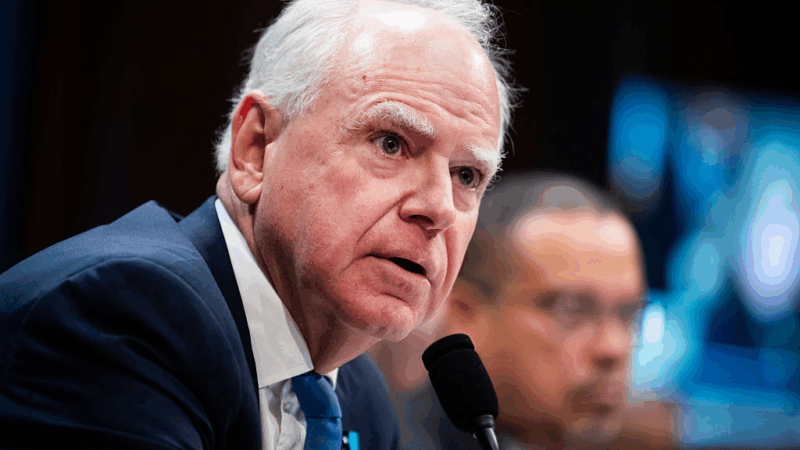
In lawsuit, Minnesota accuses Trump administration of ‘weaponizing’ Medicaid funding
The federal government said the state should do more to fight fraud and is holding back funds. Minnesota officials say the attack is unfair as the state's fraud rate is well below national averages.

Wall Street is betting on tariff refunds after Supreme Court ruling
When the Supreme Court struck down many of President Trump's tariffs, it left importers wondering how long they'd have to wait to get their money back. Hedge funds are offering to help out.
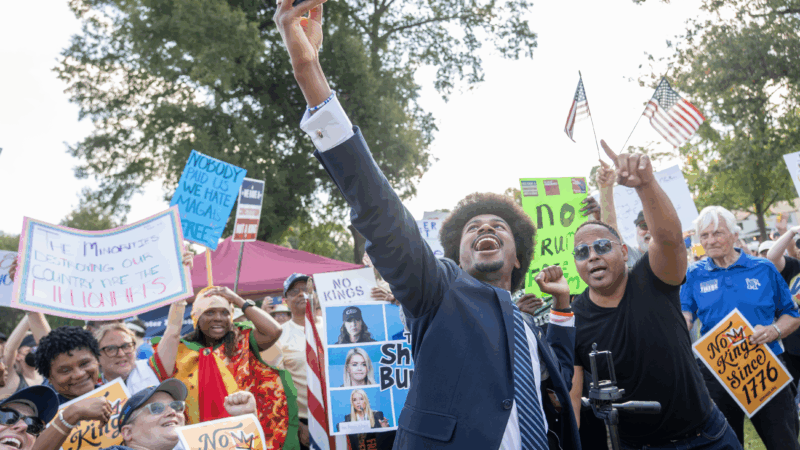
A run for their money: Young candidates rival older incumbents in midterm fundraising
As a growing crop of young candidates challenge longtime Democratic incumbents, some are not just breaking through in the money race, but outraising their opponents altogether.
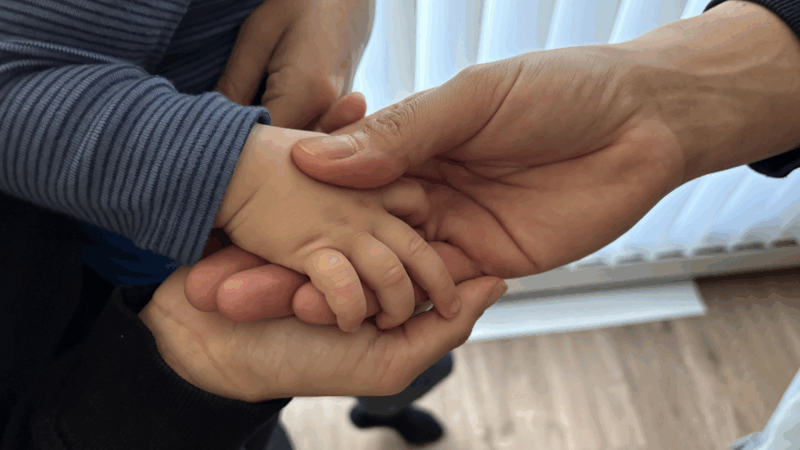
When ICE came, Minneapolis created underground health networks. Should other cities?
The Trump administration's immigration crackdown in Minneapolis forced some families into hiding and catalyzed informal medical networks to deliver critical health care services inside homes.

Announcing the 2025 NPR College Podcast Challenge Honorable Mentions
Here are some of the best entries in NPR's 2025 College Podcast Challenge.
