
RFK Jr. says autism database will use Medicare and Medicaid info
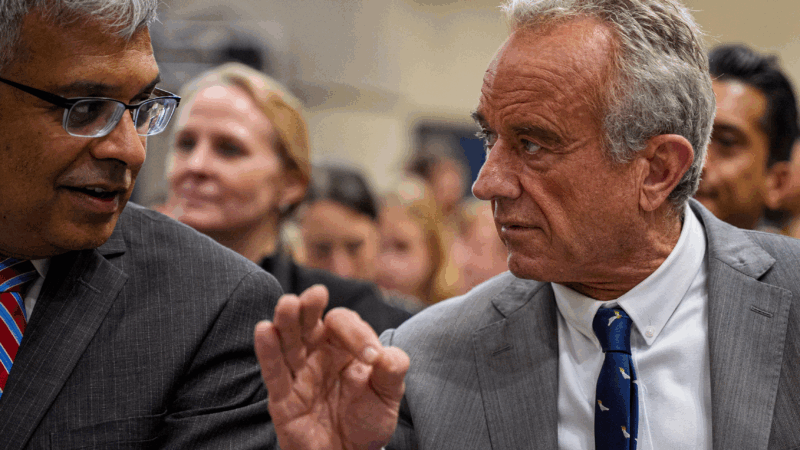
The National Institutes of Health will use information from federal health insurance programs Medicare and Medicaid to create a “real-world data platform” to determine the cause of autism, the agency announced this week.
The Department of Health and Human Services said in a statement on Wednesday that the NIH would team up with the Centers for Medicare & Medicaid Services (CMS) to create the database utilizing insurance claims, electronic medical records and data from wearable devices with health sensors, like smartwatches.
“We’re using this partnership to uncover the root causes of autism and other chronic diseases,” HHS Secretary Robert F. Kennedy Jr. said in a statement.
HHS said that CMS and NIH would establish a data use agreement focused on Medicare and Medicaid enrollees — about 36% of Americans — and follow autism diagnoses before expanding their research into additional chronic health conditions.
“Using ASD [Autistic Spectrum Disorders] as the pilot research program, teams at CMS and NIH will establish a secure tech-enabled mechanism to enhance this data sharing with timely, privacy and security compliant data exchange,” the statement read.
There was outrage last month after NIH Director Jay Bhattacharya told his staff of plans to compile a database of Americans with autism using private data that could be used to create a national autism registry
Unnamed HHS sources told multiple news outlets that the agencies are not creating an autism registry and described the effort instead as a real-world data platform linking existing datasets. NPR has not independently confirmed the reporting.
In Wednesday’s statement, NIH’s Bhattacharya said that the partnership with CMS was “an important step in our commitment to unlocking the power of real-world data to inform public health decisions and improve lives.”
“Linking CMS claims data with a secure real-world NIH data platform, fully compliant with privacy and security laws, will unlock landmark research into the complex factors that drive autism and chronic disease — ultimately delivering superior health outcomes to the Americans we serve,” he said.
NPR has reached out to HHS, NIH and CMS, but none responded to requests for comment before publication of this story.
The latest details immediately raised more alarm bells for the autistic community and privacy experts, who questioned how this data would be used and how patients’ sensitive data would be protected.
Helen Tager-Flusberg is the director of the Center for Autism Research at Boston University and leader of the Coalition of Autism Scientists, an organization formed in response to Kennedy’s widely debunked views on autism.
She warned of the potential for information collected in this database to be abused.
“CMS data includes certain information about individuals — age/date of birth, sex, where they live. It is possible to identify a person based on knowledge about these characteristics,” Tager-Flusberg said in an email to NPR.
“While the NIH Director provides assurances that privacy protections will be put in place, we have seen other examples of how this administration has given permission to identify people to certain people working for the federal government. How will this registry be protected?” she asked.
The heightened public focus on autism comes as Kennedy has repeatedly vowed to identify the cause of the disorder and ultimately eradicate it.
To that end, Kennedy, a former environmental lawyer, has made a number of baseless, conspiratorial claims about autism, including that it can be traced back to childhood vaccinations and that an “environmental toxin” is to blame for the uptick in autism diagnoses over the years.
He described autism as “a preventable disease” and said his agency would find the root cause of the disorder by September.
The notion that vaccines cause autism has been thoroughly debunked in medical science, and experts say there is likely no single cause for autism. Bhattacharya, the NIH director, pushed back on the September deadline to find a cause and said that a year timeline was more realistic.
And while a Centers for Disease Control and Prevention report did find that autism prevalence in the United States had increased from 1 in 36 children five years ago, to 1 in 31 children in 2022, it is more likely that this is due in large part to more comprehensive screening across a broader population.
This historian dug up the hidden history of ‘amateur’ blackface in America
In her new book, Darkology, historian Rhae Lynn Barnes writes about how blackface and minstrel shows became one of the most popular forms of entertainment in 19th- and 20th-century America.

Attempted attack with explosives in New York City investigated as “ISIS-inspired terrorism”
New York City NYPD Commissioner: "Explosive devices that could have caused serious injury or death."
Trump is using immigration policy to suppress speech, lawsuit claims
A new lawsuit accuses the administration of violating the First Amendment by threatening the visas of researchers for work on disinformation and content moderation of social media.

Why young girls are disguised as boys in Afghanistan
The Taliban has released a video of an interrogation of a girl who passed as a boy. It's an age-old practice in this patriarchal society but now appears to be happening with some frequency.

Live Nation and Justice Department reach settlement in antitrust case
The trial, which began a week ago in a New York City courtroom, aimed to break up Live Nation and its subsidiary, Ticketmaster.

Microshelters for Birmingham’s unhoused set to open soon
The pilot program called Home For All involves building 14 small pallet homes to house those who would otherwise be living on the streets.
