
Rep. Adam Smith says Trump’s oil blockade is about power over Venezuela
Representative Adam Smith, Democratic leader of the House Armed Services Committee, says President Trump’s move to block Venezuela’s sanctioned oil shipments is aimed at driving President Nicolás Maduro from power, not enforcing maritime law.
“This is about regime change in the conflict with Venezuela, much more than it’s about trying to enforce international laws against false flag vessels or dark fleet vessels,” Smith told Morning Edition.
His comments come as the Department of Homeland Security says the U.S. Coast Guard is pursuing an oil tanker that has recently departed from Venezuela, the third oil-carrying vessel pursued this month off the country’s coast. Two ships have already been seized.
The move follows President Donald Trump’s announcement last week to put a “total and complete blockade” against Venezuelan oil and sanctioned tankers. Trump said more military pressure would come “until they return to the United States of America, all of the oil, land and other assets that Venezuela stole from us.”
Venezuela denies that it has stolen from the U.S. and says Trump is after the country’s natural resources, including its vast oil reserves.
NPR’s Leila Fadel spoke with Smith further about why the Coast Guard is seizing sanctioned oil tankers linked to Venezuela.
Listen to the full interview by clicking on the blue button above.
The web copy of this interview was written by Destinee Adams.
Transcript:
LEILA FADEL, HOST:
For more on this, we’re joined by Democratic Representative Adam Smith of Washington state. He’s the Democratic leader of the House Armed Services Committee. Good morning, Congressman.
ADAM SMITH: Good morning.
FADEL: So as we just heard, the U.S. Coast Guard is now chasing another oil tanker linked to Venezuela, calling it a, quote, “active pursuit.” Is this an escalation?
SMITH: The whole thing’s an escalation, yes. I mean, certainly, you know, trying to chase tankers from Venezuela and trying to really sort of shut down Venezuela’s ability to sell their oil is trying to put economic pressure on Maduro. So clearly, it’s a continued escalation, particularly given the number of troops that we have in the region and the rhetoric coming out of the White House.
FADEL: Is there a legal basis for this? I mean, the argument that the White House has is these oil tankers are involved in the illicit oil trade, a trade that’s been a lifeline for certain governments, like Iran’s. It’s the basis for the drug trade. Is there a legal basis for intercepting them?
SMITH: Yeah. There is a legal basis for it, as I think was outlined in your report, if you’re one of these vessels, if you’re flying under a false flag, or no flag, and if you are engaged in illegal activities. This goes on all over the world. The dark fleet you referred to earlier. No one operates more dark fleet vessels than Russia, for instance. So this happens a lot. And there is a legal basis for boarding and stopping and inspecting.
It’s a lot murkier if you get into the issue of seizing the asset. But the legal basis is sort of beside point. The reason these are being targeted amongst the at least dozens if not more of these vessels operating around the world is because the president wants to drive Maduro from power. This is about regime change and the conflict with Venezuela much more than it’s about trying to enforce, you know, international laws against false flag vessels or dark fleet vessels.
FADEL: What do you think the end goal is here?
SMITH: Well, the end goal is to drive Maduro from power. But the broader way to look at it that I think is important, from what President Trump has said and from what’s in his national security strategy, is the belief that the U.S. should have the right to dominate the Western Hemisphere. I remember the threats to, you know, retake Greenland – sorry, take Greenland by force, take the Panama Canal by force, to annex Canada and this talk about the Monroe Doctrine coming back and spheres of influence. It’s really, I think, you know, an abandonment of 80 years of U.S. policy trying to push towards that rules-based international order and simply going back to the powerful take what they want. And I think that is very, very dangerous for the world and for our security at home as well.
FADEL: Now, Republican Senator Rand Paul has been critical of the action against suspected drug boats and Venezuela-linked oil tankers. On Sunday morning, he was speaking to ABC News. And he said he considered it a provocation and a prelude to war, and he doesn’t want to go to war with Venezuela. Do you think there is a bipartisan action that Congress might take or could take to challenge Trump’s campaign against Venezuela when Congress returns?
SMITH: Well, certainly, there are bipartisan actions we could take. Whether or not we will is debatable. We had a couple of votes right before the break on the War Powers Resolution to block President Trump from engaging in a conflict with Venezuela in the House. Both of those resolutions failed narrowly. We picked up a couple of Republican votes and lost a couple of Democrats on one. I mean, I think there are a lot of Republicans who are troubled by this, don’t like this.
How many of them are going to be willing to actually stand up against President Trump? For all of Trump’s weakness in recent months, you still see very few Republicans willing to take the steps that we could take in Congress. I mean, we could cut off funds for this sort of operation. Bunch of things we could do if the Republicans decide that their policy beliefs are greater than the fear of, their political fear, of Donald Trump. And we’re not there yet at this point. We got to keep pushing.
FADEL: Trump’s chief of staff, Susie Wiles, suggested in a candid interview with Vanity Fair recently that Trump is pursuing regime change in Venezuela. Would Congress back that? I mean, you spoke about the difficulties of getting on the same page.
SMITH: Yeah, Congress doesn’t back it so much as, the way the Republicans lead Congress, they acquiesce to it. You know, they may not come out and say it. You’ll have a few. There are a few very aggressive pro-Trump Republicans who will come out and cheerlead for this. The majority don’t agree with it. But, you know, what is it? Silence is complicity. In this case, you know, not acting gets you to the same place, even if you don’t like the policy. So that’s the problem with where the Republicans are at right now.
FADEL: Democratic Representative Adam Smith, ranking member of the House Armed Services Committee. Thank you for your time.
SMITH: Thank you. Appreciate the chance.
HUD proposes time limits and work requirements for rental aid
The rule would allow housing agencies and landlords to impose such requirements "to encourage self-sufficiency." Critics say most who can work already do, but their wages are low.
Paramount and Warner Bros’ deal is about merging studios, and a whole lot more
The nearly $111 billion marriage would unite Paramount and Warner film studios, streamers and television properties — including CNN — under the control of the wealthy Ellison family.

A new film follows Paul McCartney’s 2nd act after The Beatles’ breakup
While previous documentaries captured the frenzy of Beatlemania, Man on the Run focuses on McCartney in the years between the band's breakup and John Lennon's death.

An aspiring dancer. A wealthy benefactor. And ‘Dreams’ turned to nightmare
A new psychological drama from Mexican filmmaker Michel Franco centers on the torrid affair between a wealthy San Francisco philanthropist and an undocumented immigrant who aspires to be a dancer.
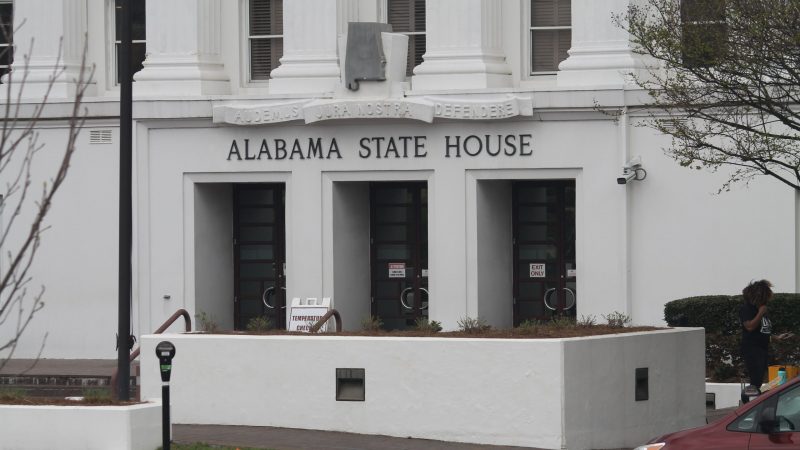
Bill making the Public Service Commission an appointed board is dead for the session
Usually when discussing legislative action, the focus is on what's moving forward. But plenty of bills in a legislature stall or even die. Leaders in the Alabama legislature say a bill involving the Public Service Commission is dead for the session. We get details on that from Todd Stacy, host of Capitol Journal on Alabama Public Television.
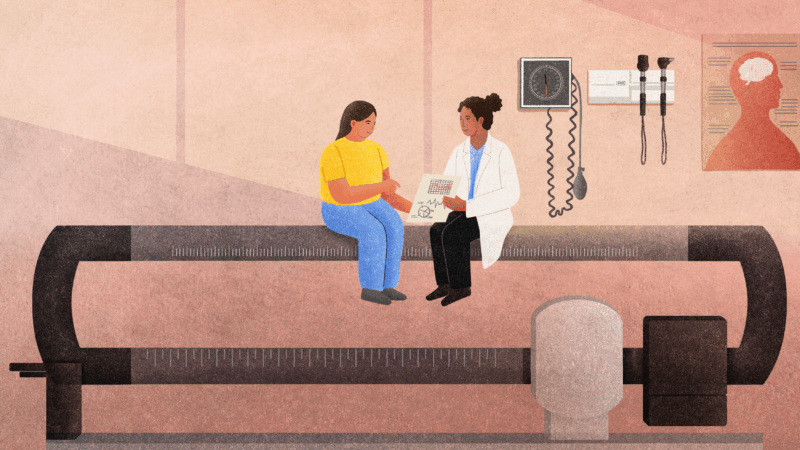
My doctor keeps focusing on my weight. What other health metrics matter more?
Our Real Talk with a Doc columnist explains how to push back if your doctor's obsessed with weight loss. And what other health metrics matter more instead.
