
Recent attacks have been ‘inspired’ by Islamic State. What does that mean?
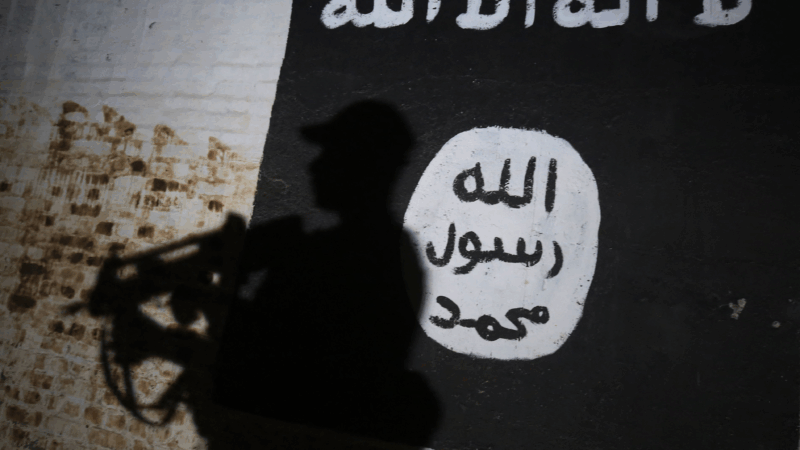
Just over a decade ago, the self-proclaimed Islamic State (ISIS) held vast swaths of territory across Iraq and Syria, carried out attacks that shocked the world, and regularly flooded social media with gruesome videos depicting the beheadings of orange-jumpsuited Western captives.
The Islamic State was declared wiped out by the U.S., but recent attacks linked by officials to the group suggest it continues to be viable, experts say.
At its peak, the group, also known under its Arabic acronym Daesh, had more than 40,000 foreign fighters from 120 countries, according to an estimate by the Wilson Center, a congressionally chartered think tank.
But by 2019, the ISIS “caliphate” that briefly ruled millions of people in Iraq and Syria over an area about the size of Kentucky, had largely collapsed, following years of U.S.-led operations aimed at dismantling its leadership, reclaiming its territory, and crippling its ability to launch attacks.
When the U.S. announced the death of Islamic State leader Abu Bakr al-Baghdadi that year, President Trump proclaimed, “we obliterated his caliphate, 100 percent.”
Yet recent attacks believed to be inspired, at least in part, by ISIS raise questions.
Krissy Barrett, Australia’s federal police commissioner, said a mass shooting Sunday during a Hanukkah celebration at Sydney’s Bondi Beach was “a terrorist attack inspired by Islamic State.” The father and son gunmen traveled to Davao, on the Philippine island of Mindanao — long a hotbed for Islamist extremist groups — before returning to Sydney in late November, according to the Philippines Bureau of Immigration.
Trump, in a Truth Social post, blamed ISIS for another attack over the weekend near the city of Palmyra, Syria, that killed three Americans, including two U.S. service members, although the group has not claimed responsibility. And in January, the FBI said the assailant in a vehicle attack in New Orleans that killed 14 people was inspired by ISIS.
Despite the group’s loss of territory six years ago, Aaron Zelin, a senior fellow at the Washington Institute for Near East Policy, says it never really went away.
There’s been “more dispersion of leadership” since the collapse of the caliphate, he says. “ISIS never gives up. As long as they continue to have the will to fight … they’ll use any means necessary to accomplish what they’re trying to do.”
Last year, the Pentagon estimated that there were still 2,500 ISIS fighters in Syria and Iraq. As recently as last month, U.S. Central Command (CENTCOM) said it had worked with the Syrian government to locate and destroy 15 sites containing ISIS weapons caches. “The terrorist group’s conventional threat has been degraded since its territorial defeat in 2019, and ISIS fighters are dispersed,” CENTCOM said.
The Congressional Research Service defines the Islamic State’s ideology as “a uniquely hardline version of violent jihadist-Salafism—the group and its supporters are willing to use violence in an armed struggle to establish what they view as an ideal Islamic society.”
“Enormous amounts of propaganda” disseminated via social media, have always been a key element of Islamic State’s recruitment strategy and that hasn’t changed since the fall of the caliphate, according to Daniel Byman, the director of the Warfare Irregular Threats and Terrorism Program at the Center for Strategic and International Studies.
He says that strategy, while effective, has always had “a degree of spaghetti on the wall” to it. In other words, ISIS is reliant on a receptive audience to be inspired to carry out its own attacks. Anger over the war in Gaza, which has killed more than 70,000 Palestinians, according to the United Nations, has helped fuel the propaganda. The brutal conflict began in the wake of the Oct. 7, 2023, Hamas-led attack on Israel that killed about 1,200 people, according to Israel.
Despite the extremist rhetoric though, militant groups linked to the Islamic State have struggled to reestablish themselves in the Philippines, says Sidney Jones, an adjunct professor of international relations at New York University who has also served as a consultant to the U.N. Office of Counter-Terrorism. That makes the possible link between the Bondi Beach assailants and ISIS-affiliated groups in Mindanao surprising, she says.
“We haven’t had a serious ISIS attack in the region for a long time,” Jones says.
In a five-month campaign in 2017, U.S.-backed Philippine forces laid siege to the southern city of Marawi to drive out militant groups affiliated with the Islamic State and, according to Jones, the Philippine government “has been going after them with all guns blazing for the last several years. … the army has been involved in systematic operations against the remnants of ISIS across Mindanao.”
That means it’s very unlikely that the Bondi Beach attackers would have found anything resembling a fully operational terrorist training camp there, says Joshua Kurlantzick, a senior fellow for Southeast Asia and South Asia at the Council on Foreign Relations. “You’re talking about groups and small cells of people hiding in the shadows,” he explains.
Byman says that while the most recent attacks inspired by the Islamic State are tragic, the number of attacks is declining. He says that goes for would-be attacks, too, such as the arrest earlier this year of a Michigan man who was allegedly planning an attack on a military base there on behalf of ISIS.
“The FBI and others are making arrests. But both the actual plots and the actual attacks are declining over time,” Byman says.
Forget the State of the Union. What’s the state of your quiz score?
What's the state of your union, quiz-wise? Find out!

A team of midlife cheerleaders in Ukraine refuses to let war defeat them
Ukrainian women in their 50s and 60s say they've embraced cheerleading as a way to cope with the extreme stress and anxiety of four years of Russia's full-scale invasion.

As the U.S. celebrates its 250th birthday, many Latinos question whether they belong
Many U.S.-born Latinos feel afraid and anxious amid the political rhetoric. Still, others wouldn't miss celebrating their country
Nancy Guthrie case: How do families of missing people cope with the uncertainty?
When a loved one goes missing, relatives can feel guilty simply for eating, says Charlie Shunick, whose sister was kidnapped. Shunick now helps others navigate a nightmare "nobody is prepared for."

US military used laser to take down Border Protection drone, lawmakers say
The U.S. military used a laser to shoot down a Customs and Border Protection drone, members of Congress said Thursday, and the Federal Aviation Administration responded by closing more airspace near El Paso, Texas.

Deadline looms as Anthropic rejects Pentagon demands it remove AI safeguards
The Defense Department has been feuding with Anthropic over military uses of its artificial intelligence tools. At stake are hundreds of millions of dollars in contracts and access to some of the most advanced AI on the planet.
