
Pulitzer Prize-winning correspondent Peter Arnett has died
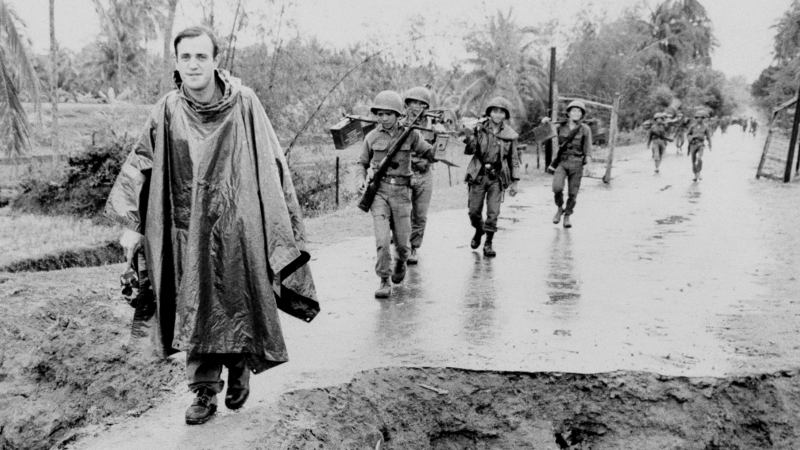
LOS ANGELES — Peter Arnett, the Pulitzer Prize-winning reporter who spent decades dodging bullets and bombs to bring the world eyewitness accounts of war from the rice paddies of Vietnam to the deserts of Iraq, has died. He was 91.
Arnett, who won the 1966 Pulitzer Prize for international reporting for his Vietnam War coverage for The Associated Press, died Wednesday in Newport Beach and was surrounded by friends and family, said his son Andrew Arnett. He had been suffering from prostate cancer.
“Peter Arnett was one of the greatest war correspondents of his generation — intrepid, fearless, and a beautiful writer and storyteller. His reporting in print and on camera will remain a legacy for aspiring journalists and historians for generations to come,” said Edith Lederer, who was a fellow AP war correspondent in Vietnam in 1972-73 and is now AP’s chief correspondent at the United Nations.
As a wire-service correspondent, Arnett was known mostly to fellow journalists when he reported in Vietnam from 1962 until the war’s end in 1975. He became something of a household name in 1991, however, after he broadcast live updates for CNN from Iraq during the first Gulf War.
While almost all Western reporters had fled Baghdad in the days before the U.S.-led attack, Arnett stayed. As missiles began raining on the city, he broadcast a live account by cellphone from his hotel room.
“There was an explosion right near me, you may have heard,” he said in a calm, New Zealand-accented voice moments after the loud boom of a missile strike rattled across the airwaves. As he continued to speak air-raid sirens blared in the background.
“I think that took out the telecommunications center,” he said of another explosion. “They are hitting the center of the city.”
Reporting from Vietnam
It was not the first time Arnett had gotten dangerously close to the action.
In January 1966, he joined a battalion of U.S. soldiers seeking to rout North Vietnamese snipers and was standing next to the battalion commander when an officer paused to read a map.
“As the colonel peered at it, I heard four loud shots as bullets tore through the map and into his chest, a few inches from my face,” Arnett recalled during a talk to the American Library Association in 2013. “He sank to the ground at my feet.”
He would begin the fallen soldier’s obituary like this: “He was the son of a general, a West Pointer and a battalion commander. But Lt. Colonel George Eyster was to die like a rifleman. It may have been the colonel’s leaves of rank on his collar, or the map he held in his hand, or just a wayward chance that the Viet Cong sniper chose Eyster from the five of us standing in that dusty jungle path.”
Arnett had arrived in Vietnam just a year after joining AP as its Indonesia correspondent. That job would be short-lived after he reported Indonesia’s economy was in shambles and the country’s enraged leadership threw him out. His expulsion marked only the first of several controversies in which he would find himself embroiled, while also forging an historic career.
At the AP’s Saigon bureau in 1962, Arnett found himself surrounded by a formidable roster of journalists, including bureau chief Malcolm Browne and photo editor Horst Faas, who between them would win three Pulitzer Prizes.
He credited Browne in particular with teaching him many of the survival tricks that would keep him alive in war zones over the next 40 years. Among them: Never stand near a medic or radio operator because they’re among the first the enemy will shoot at. And if you hear a gunshot coming from the other side, don’t look around to see who fired it because the next one will likely hit you.
Arnett would stay in Vietnam until the capital, Saigon, fell to the Communist-backed North Vietnamese rebels in 1975. In the time leading up to those final days, he was ordered by AP’s New York headquarters to begin destroying the bureau’s papers as coverage of the war wound down.
Instead, he shipped them to his apartment in New York, believing they’d have historic value someday. They’re now in the AP’s archives.
A star on cable news
Arnett remained with the AP until 1981, when he joined the newly-formed CNN.
Ten years later he was in Baghdad covering another war. He not only reported on the front-line fighting but won exclusive, and controversial, interviews with then-President Saddam Hussein and future 9/11 mastermind Osama bin Laden.
In 1995 he published the memoir, “Live From the Battlefield: From Vietnam to Baghdad, 35 Years in the World’s War Zones.”
Arnett resigned from CNN in 1999, months after the network retracted an investigative report he did not prepare but narrated alleging that deadly Sarin nerve gas had been used on deserting American soldiers in Laos in 1970.
He was covering the second Gulf War for NBC and National Geographic in 2003 when he was fired for granting an interview to Iraqi state TV during which he criticized the U.S. military’s war strategy. His remarks were denounced back home as anti-American.
After his dismissal, TV critics for the AP and other news organizations speculated that Arnett would never work in television news again. Within a week, however, he had been hired to report on the war for stations in Taiwan, the United Arab Emirates and Belgium.
In 2007, he took a job teaching journalism at China’s Shantou University. Following his retirement in 2014, he and his wife, Nina Nguyen, moved to the Southern California suburb of Fountain Valley.
Born Nov. 13, 1934, in Riverton, New Zealand, Peter Arnett got his first exposure to journalism when he landed a job at his local newspaper, the Southland Times, shortly after high school.
“I didn’t really have a clear idea of where my life would take me, but I do remember that first day when I walked into the newspaper office as an employee and found my little desk, and I did have a — you know — enormously delicious feeling that I’d found my place,” he recalled in a 2006 AP oral history.
After a few years at the Times, he made plans to move to a larger newspaper in London. En route to England by ship, however, he made a stop in Thailand and fell in love with the country.
Soon he was working for the English-language Bangkok World, and later for its sister newspaper in Laos. There he would make the connections that led him to the AP and a lifetime of covering war.
Arnett is survived by his wife and their children, Elsa and Andrew.
“He was like a brother,” said retired AP photographer Nick Ut, who covered combat in Vietnam with Arnett and remained his friend for a half century. “His death will leave a big hole in my life.”
Carney says he backs strikes on Iran ‘with some regret’ as world order frays
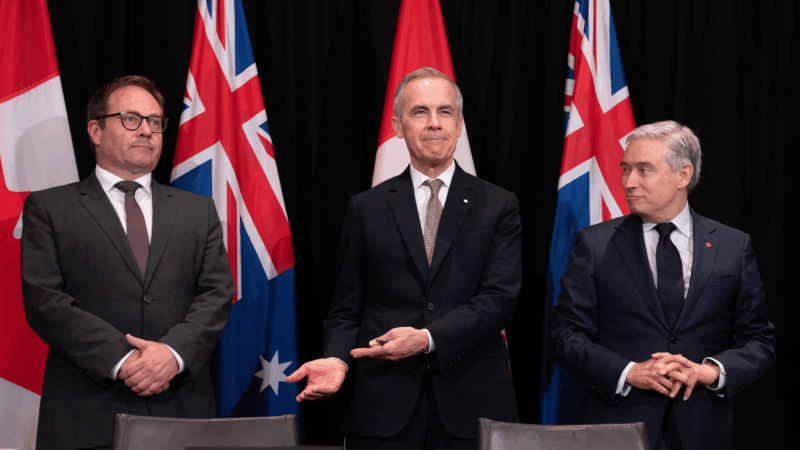
Canadian Prime Minister Mark Carney says he supports the strikes on Iran "with some regret" as they represent an extreme example of a rupturing world order.
Iranian civilians are now fleeing the relentless bombing for neighboring Turkey
As the U.S. military broadens its strikes in Iran, traumatized Iranians are reaching the border with Turkey.

A split Senate votes against measure to constrain Trump’s authorities in Iran
Democrats in the Senate were facing an uphill climb Wednesday in their push to restrain President Trump's ability to wage war against Iran.
WATCH: How traffic dried up in the Strait of Hormuz since the Iran war began
The effective closure of the Strait of Hormuz is "about as wrong as things could go" for global oil markets. Iran achieved it not with a naval blockade, but with cheap drones.

As Mississippi waits to spend opioid settlement funds, children and families suffer
Mississippi will receive more than $400M to fight the opioid epidemic. So far, officials haven't directed it toward programs that support addiction recovery.
Alabama’s new state climatologist takes the reins
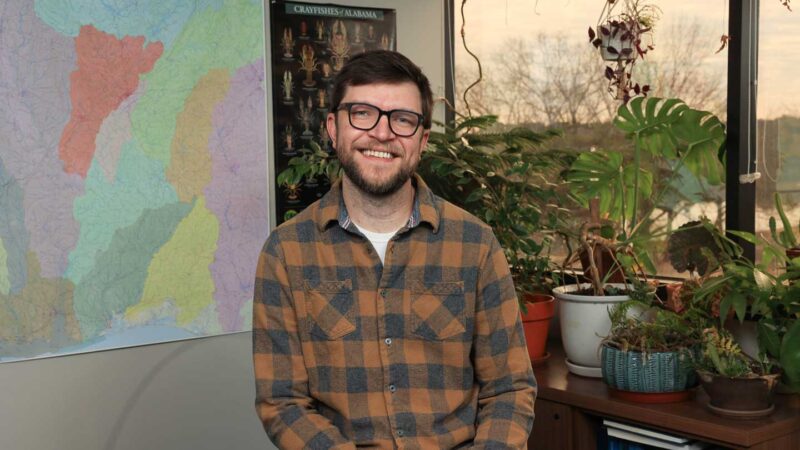
The controversial John Christy is retiring as Alabama’s state climatologist. Lee Ellenburg now assumes the role and is already making a few changes, including declaring that climate change is real and caused by humans.
