
Photos: Mother Nature must be really annoyed at our fakery
Since 2019, we’ve covered the debate among geologists over whether to dub our current epoch the “Anthropocene” by the measurable mark we’ve made — through mining, deforestation, building and nuclear bombs — on the geologic record. The term comes from the Greek, anthropos, meaning human. Top geologists voted against that last year, but the decision hasn’t stopped photographers from using the term as a frame to explore humans’ relationship to the world we’re remaking. This story is part of our series “following up” on past articles.
Photographer Zed Nelson is fixated on the anthropocene, even if it’s not an official geologic epoch.
“Just as a term, it’s a really useful way of focusing the mind on the fact that we humans are having a dramatic effect in a very, very short period of time,” he says. On a macro scale, that effect has been well-documented by photographers, with aerial shots of waterways clogged with plastic, the scars on barren land from deforestation and countless smokestacks spewing pollution into the air.
But to him, such work has ceased to elicit the same shock it once did.
“We learn to ignore stuff quite quickly,” he says. “I wanted to come at the subject from a kind of sideways angle.”
That sideways angle is reflected in Nelson’s new book The Anthropocene Illusion, which focuses less on humans’ destruction of nature but more on how that destruction is warping our relationship with the natural world.

Nelson spent six years traveling to 14 different countries, visiting national parks, theme parks, zoos and hotels to capture images illustrating the contrived and paradoxical ways we relate to our altered Earth.
“As we divorce ourselves as a species from our connections with the natural world, and wreak havoc on it, we’ve become very clever at creating this illusion, which are these choreographed, hyper-managed, curated versions of nature.”
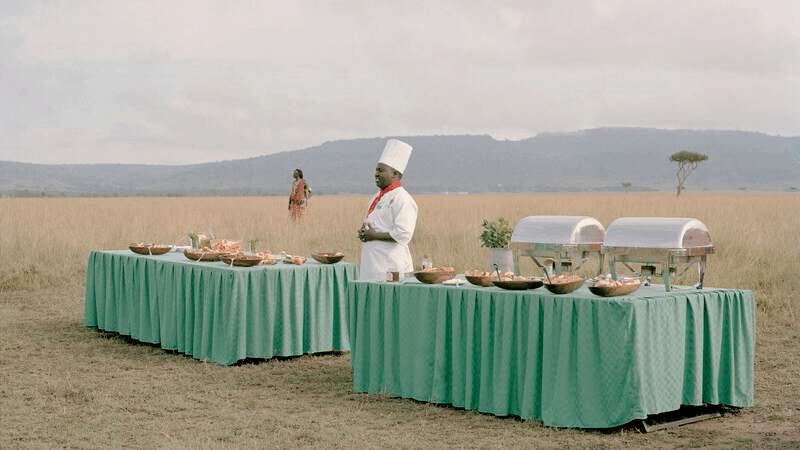
Nelson visits Kenya, where tourists can pay to recreate a scene from the movie Out of Africa.

“The safari outfit lays out the rug, carries an ancient gramophone player, puts the champagne ice bucket, brings a Maasai warrior to stand close by to add authenticity to the scene,” says Nelson. “The Maasai is paid. That particular guy, he’s a super nice guy, I’m Instagram friends with him now.”
In Sri Lanka, Nelson stood back from a popular Instagram spot where well-to-do tourists to snap selfies in an infinity pool against a backdrop of seemingly wild elephants. “It’s actually the largest captive herd of elephants in the world,” says Nelson. “They bring these elephants down to the river every day, and the large males are chained by the ankle and the chains are fixed to the rocks under water.”

The national parks Nelson visited “are very real,” he says, “but it’s a demarcated zone for the last survivors of these species, corralled into ever-decreasing areas where we go to see them, ultimately to be reassured that they still exist.” That creates a kind of illusion, he says, that can give us a kind of peace of mind while we continue destroying these habitats.

Animals in zoos feature prominently in the project. Nelson catches some creatures looking listless in the painted facsimiles of the natural world humans plucked them from. Others look mournful.
“It’s a terrible conundrum,” he says. “Our society is driving us in one direction, but we have a sense of loss for what we’re leaving behind, so we seek out these choreographed versions to satisfy some kind of craving.”

Nelson spent two days watching a polar bear in Dalian Forest Zoo in China. Its enclosure is meant to mimic the icy expanse of its natural arctic environment, but the stained and chipped walls betray the artifice.
“To me, that is the most depressing image in the book. It’s the most cruel manifestation of how we treat animals,” he says. “It wasn’t much of an illusion, it was just an appalling scene. The illusion almost crumbles.”
Nelson’s photos reveal the cracks in many of these illusions. An idyllic landscape mural in front of a Chinese factory does little to distract from the industrial haze. A rainforest museum exhibit looks overstuffed with an unlikely menagerie of taxidermied creatures that appear to have been encased in the museum for a bit too long.

“The irony is that all of these things that we create become unwitting monuments to the very things that we’ve lost,” says Nelson. “Our only hope is that we reassess what we value. The project for me is being a part of that conversation.”

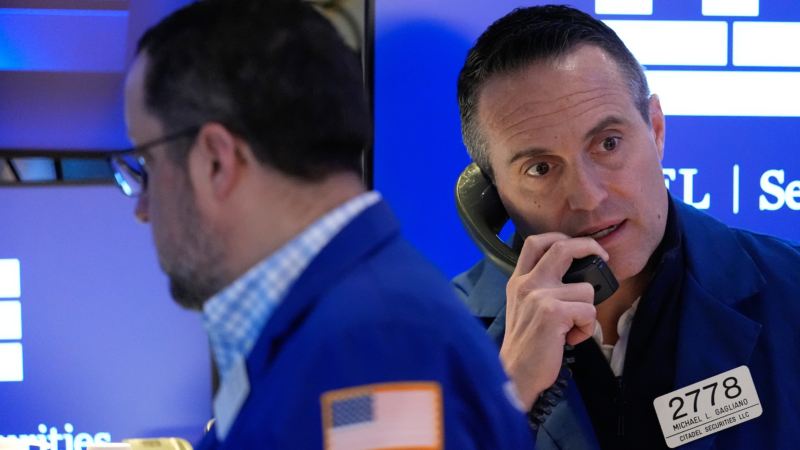
Oil surges to its highest price since 2023, and stocks drop after U.S. jobs report
Stocks fell Friday on worries that the economy could become stuck in a worst-case scenario of stagnating growth and high inflation. Oil prices touched their highest levels since 2023 after surging again because of the Iran war.
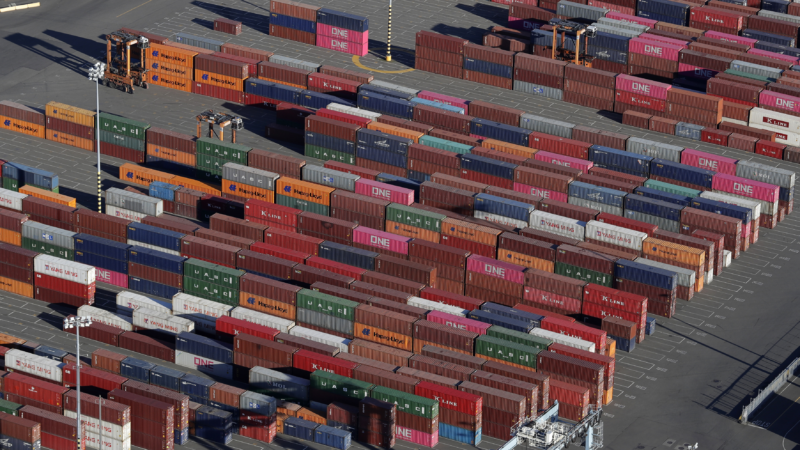
No lawsuits required: U.S. Customs is working on a system to refund tariffs
U.S. Customs told the trade court it aims for a streamlined process in 45 days to return importers' money without requiring individual lawsuits.
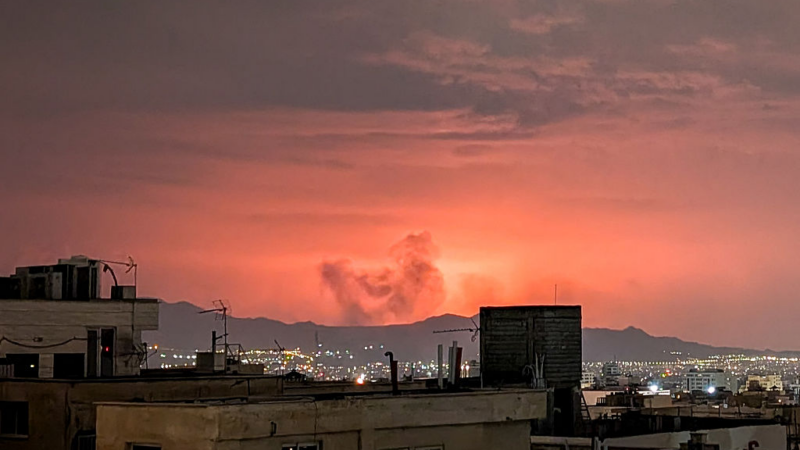
Poll: A majority of Americans opposes U.S. military action in Iran
Most Americans disapprove of President Trump's handling of Iran, and a majority sees Iran as either only a minor threat or no threat at all, an NPR/PBS News/Marist poll finds.
Your Winter Paralympics primer: What, who and how to watch
Hundreds of para athletes are competing in Italy through March 15. Many Americans are defending past titles, with the U.S. sled hockey team hoping to fend off rival Canada for its fifth straight gold.

After the U.S. sinks an Iranian warship, Sri Lanka takes custody of an Iranian vessel
The move followed Wednesday's sinking of another Iranian warship by a U.S. submarine. Australia confirmed three Australians were on that submarine.
Olympian Alysa Liu has also inspired fans off the ice — in the hair salon
The gold medal-winning figure skater came to the Milano Cortina winter games with a distinctive "raccoon" hairstyle — alternating rings of dark and light hair. Now, fans are following her lead.
