
PHOTOS: Laundry is a chore but there’s a beauty and serenity in the way it hangs out
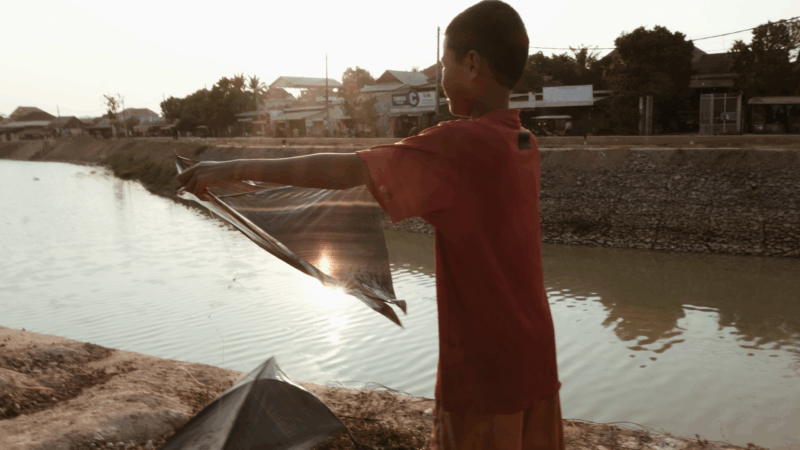
In early February, Macy Castañeda Lee took a motorbike ride along the Siem Reap River out to the large green swaths of rice and lotus fields that pepper the outskirts of the Cambodian city. Miles from the city center, they stumbled across a booming industry that filled the streets, homes and riverside.
“There was laundry everywhere,” remembers Castañeda Lee, a Filipino photographer who was in Siem Reap for the Angkor Photo Festival and Workshop. “Visually, it was very striking.”
Camera in hand, Castañeda Lee started documenting the varied loads of laundry, and in the process learned what laundry means to the community: “Laundry is a symbol for Cambodian and Khmer people of their economic and health standards.”
Invisible workers

(Macy Castañeda-Lee)
Siem Reap is known primarily for its sprawling 400-acre complex of Hindu-Buddhist temples, a UNESCO World Heritage site that brought in nearly a million foreign tourists in 2025. Outside of the city, laundry services have sprung up to support the boom in tourism and supplement the incomes of rural communities. The fee for a small load of laundry is typically 4,000 riel, or about one U.S. dollar.
Castañeda Lee photographed locals in hopes of appreciating the invisible workers on the other side of Cambodian tourism, who spend hours each day doing the laundry of tourists.
A double benefit

(Macy Castañeda-Lee)
Roughly halfway between the Siem Reap city center and Tonlé Sap lake, Castañeda Lee visited two Khmer brothers, Sothea and Bong Chea, in their home of scrap fabric and found objects. Laundry offers a two-fold protection for them, says Castañeda Lee: the hanging laundry acts as a makeshift wall to keep out bugs at night and gives them a little extra financial support when they wash the neighbors’ clothes for a small fee.


(Macy Castañeda-Lee)
A community affair

While exploring the communities around the Siem Reap river, Castañeda Lee noticed how many children help their families with laundry, including scrubbing clothes in round basins.
Many families juggle several businesses, like Vonn Da Li Na and his wife, who run the P Salon & Laundry. In a conversation with Vonn Da Li Na, Castañeda Lee says he noted that it takes his family hours to do laundry for their business on top of their own laundry. Castañeda Lee shared with NPR a quote from him: “It is our work, along with the salon, so we just try to have fun with it. I let my daughter have fun. But I wish we had a washing machine and other resources to make the process faster.”

(Macy Castañeda-Lee)
Castañeda Lee spent evenings with these families. “There is this slow, time-consuming labor of doing laundry and farming rice for hours on end each and every day,” they say. “The hard work ethic and care that people put toward their everyday tasks in life — that’s the symbol of laundry for me.”

(Macy Castañeda-Lee)
Working with what you have

(Macy Castañeda-Lee)
The Siem Reap River is a common source of water for many laundry businesses. “They rely on the natural resources they have, like the rivers,” says Castañeda Lee. “But at the same time, I see that it’s not the most sanitary thing for them to do.”
Still, laundry workers make it work, like Honme Thana, a mother of three who owns a laundry business south of the river. She relies on the river as her water source, since she doesn’t have much access to water in her community, according to Castañeda Lee: “She told me she’s learning how to work with nature.”
Time and patience

Castañeda Lee was drawn to the serene nature that surrounds doing laundry in these communities. “What calmed me throughout this project was that these people weren’t on their phones while waiting for the laundry,” they say. “Sometimes they would just sit and be still,” perhaps a reflection of the Buddhist beliefs in Cambodia that center on stillness and meditation. “They’re in no rush; that’s really changed my perspective.”
The photographer hopes to return to Siem Reap for a second part of this series one day, since laundry will always be around. “It’ll evolve throughout the years,” Castañeda Lee says, but will always reflect the hands of the community that washed it.
Bec Roldan is an independent science journalist based in Brooklyn, N.Y. They cover health and science topics and previously served as a AAAS Mass Media Fellow at NPR.
Chicagoans pay respects to Jesse Jackson as cross-country memorial services begin
Memorial services for the Rev. Jesse Jackson Sr. to honor his long civil rights legacy begin in Chicago. Events will also take place in Washington, D.C., and South Carolina, where he was born and began his activism.
In reversal, Warner Bros. jilts Netflix for Paramount
Warner Bros. says Paramount's sweetened bid to buy the whole company is "superior" to an $83 billion deal it struck with Netflix for just its streaming services, studios, and intellectual property.

Trump’s ballroom project can continue for now, court says
A US District Judge denied a preservation group's effort to put a pause on construction

NASA lost a lunar spacecraft one day after launch. A new report details what went wrong
Why did a $72 million mission to study water on the moon fail so soon after launch? A new NASA report has the answer.
Columbia student detained by ICE is abruptly released after Mamdani meets with Trump
Hours after the student was taken into custody in her campus apartment, she was released, after New York City Mayor Zohran Mamdani expressed concerns about the arrest to President Trump.

These major issues have brought together Democrats and Republicans in states
Across the country, Republicans and Democrats have found bipartisan agreement on regulating artificial intelligence and data centers. But it's not just big tech aligning the two parties.
