
Panic, fury, and some hope, in Iran as U.S. launches strikes
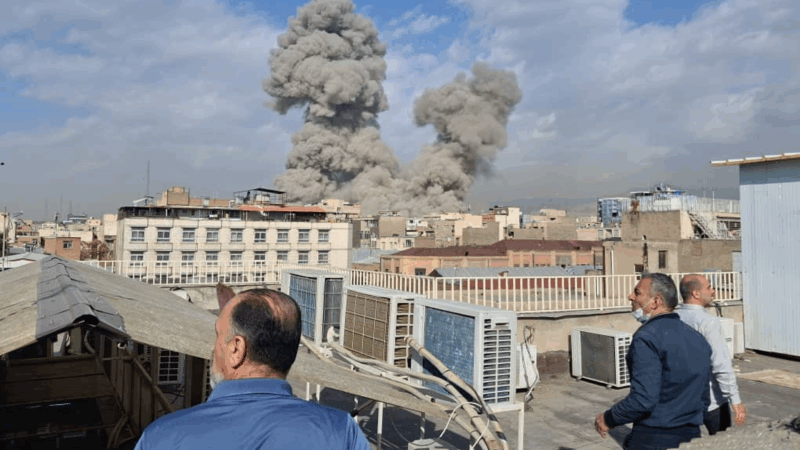
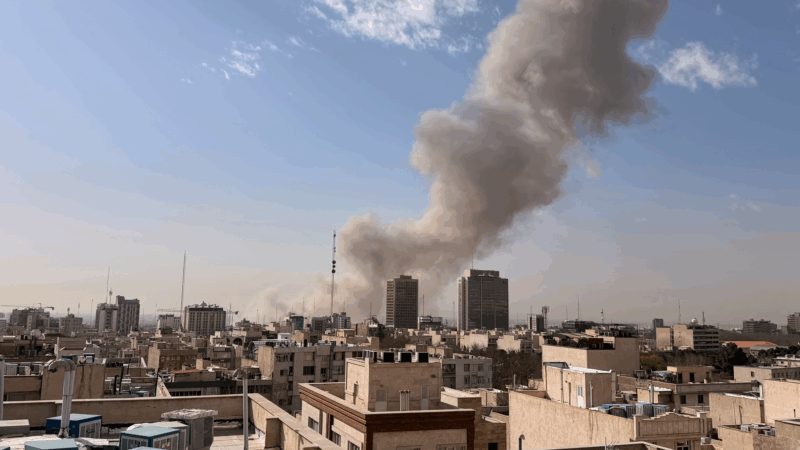
Amman, Jordan — In Tehran, panicked residents rushed home to shelter and terrified children poured out of classrooms as U.S. air strikes hit the capitol, Iranians reached by phone told NPR.
The Iranian government said one of the missiles hit a girl’s elementary school in Minab city in Iran’s southern Hormozgan province, killing at least 53 students.
“They have hit many targets around me and we hear fighter jets and missiles exploding,” said a resident in Western Tehran reached by phone before communications were cut in Iran. “People were panicking and trying to get to their homes,” she said. “Children are running out of school.”
Speaking on condition of anonymity due to fears of arrest, she said there had been no warning from the Iranian government of a potential attack and people were caught unprepared. The airstrikes hit on the first day of Iran’s work week while many were at work or in school.
Iran responded to the attacks by launching strikes against Israel and U.S. bases in the Gulf.
It declared that following the airstrikes in Iran early Saturday, it considered all U.S. and Israeli interests and assets in the region legitimate targets.
“Our country’s armed forces will teach America and Israel a big lesson,” said Brigadier General Abolfazl Shekarchi, spokesman for the military general staff.
The Bahraini government said an Iranian airstrike had hit the U.S. naval base in Bahrain which is home to the U.S. Fifth Fleet. The United Arab Emirates, another U.S. ally, said it intercepted Iranian missiles. It said shrapnel from one of the intercepted missiles killed a national of an unspecified Asian country in Abu Dhabi.
In Jordan, several explosions believed to be missiles being intercepted were heard along with the sound of fighter jets. The Jordanian military said its forces had shot down two ballistic missiles.
Iran’s foreign ministry said the U.S. and Israeli airstrikes had hit defense infrastructure and civilian sites across Iran.
It noted that Tehran had been in the middle of diplomatic negotiations with the U.S. aimed at preventing war when it was hit and called for the UN security council to meet immediately to discuss the attacks.
Oman’s foreign minister, who mediated the U.S.-Iran indirect talks on Thursday flew to Washington on Friday to brief U.S. officials, saying he believed they had made progress in the negotiations.
U.S. President Trump, in announcing that ‘major combat operations’ had started, urged Iranians to rise up.
“When we are finished, take over your government. It will be yours to take. This will be probably your only chance for generations,” he said in a video address.
Israel had pressed the U.S. to attack Iran while most U.S. Arab allies had cautioned against it, saying it could destabilize the entire region.
In Tehran, another resident, Roxanna, whom NPR spoke with during Israel’s 12-day war with Iran last June said she and others who have protested against the Iranian regime were less afraid than they were then.
“We are really hopeful that the regime will fall this time,” she said, speaking from central Tehran. “We have stored food and will wait for now.”
The extent of support for the regime within Iran remains difficult to gauge following the latest Iranian crackdown on protest in which thousands of Iranians were killed. Most of the casualties were protestors shot by security forces.
There is no clear successor to Iran’s Islamic leadership, with opposition groups divided and considered to have no large bases of support within the country.
Why is the U.S. attacking Iran? Six things to know
The U.S. and Israel launched military strikes in Iran, targeting Khamenei and the Iranian president. "Operation Epic Fury" will be "massive and ongoing," President Trump said Saturday morning.
Sen. Tim Kaine calls on the Senate to vote on the war powers resolution
NPR's Scott Simon talks to Sen. Tim Kaine, D-Va., about the U.S. strikes on Iran.
Political science expert weighs in on Iran’s nuclear program in light of U.S. strikes
NPR's Scott Simon speaks to Ariane Tabatabai, the Public Service Fellow at Lawfare, about U.S. attacks on Iran and how President Trump's calls for regime change might be received there.
Week in Politics: Does Trump have political support for his actions in Iran?
We look at what President Trump's decision to attack Iran means, what kind of support he has in Iran and what this moment means for his administration.
Unlocking the secrets of an ancient plague
The first historically recorded pandemic is believed to have struck the walled city of Jirash, in what is now modern-day Jordan, in the 7th century. A new study reveals details about those who died.

‘The Fall and Rise of Reggie Dinkins’ falls before it rises — but then it soars
The unlikely pairing of Tracy Morgan and Daniel Radcliffe isn't quite what makes the show work — it's the exquisite, perfectly-timed jokes that just keep coming.
