
Opinion: Why I’m handing in my Pentagon press pass
Today, NPR will lose access to the Pentagon because we will not sign an unprecedented Defense Department document, which warns that journalists may lose their press credentials for “soliciting” even unclassified information from federal employees that has not been officially approved for release. That policy prevents us from doing our job. Signing that document would make us stenographers parroting press releases, not watchdogs holding government officials accountable.
No reputable news organization signed the new rule — not mainstream outlets like NPR, the Washington Post, CNN, and the New York Times, nor the conservative Washington Times or the right-wing Newsmax, run by a noted ally of President Trump. Some 100 resident Pentagon press will be barred from the building if they don’t sign by the end of business on Tuesday.
I’ve held my Pentagon press pass for 28 years. For most of that time, when I wasn’t overseas in combat zones embedding with troops, I walked the halls, talking to and getting to know officers from all over the globe, at times visiting them in their offices.
Did I as a reporter solicit information? Of course. It’s called journalism: finding out what’s really going on behind the scenes and not accepting wholesale what any government or administration says.
I remember how then-Defense Secretary Donald Rumsfeld was ecstatic after the fall of Baghdad in 2003, insisting that it showed the success of the U.S. invasion. Not long after, I ran into an officer at the Pentagon who told me, “No, Tom. It’s not a success. Saddam Hussein’s supporters are attacking our supply lines. Now, we have to send more troops back to guard them.” That was because the United States, at Rumsfeld’s insistence, never sent an adequate number of forces to Iraq to begin with — a fact another Army general warned me about, unsolicited — and I reported on, before the war even began.
Instead of toeing the official line, that reporting helped people understand what U.S. troops were really facing. Far from being a success, the fall of Baghdad marked the beginning of an insurgency that stretched on for years.
(Defense Department officials, by the way, have already restricted reporter movements in the Pentagon. They closed that particular hallway to reporters several months ago.)
In 2009, when the Obama administration announced a “surge” of State Department employees to Afghanistan to help the military keep the peace in restive, far-flung provinces, one Marine officer told me months later: “If there was a surge, we never saw it.” And when the administration touted an Afghan “government in a box,” to bring experienced Afghans to the provinces, it proved to be a failure. One general told me: “Next time they tell you there’s a government in a box, check the box.”
Again, I reported both stories. That’s my job.
Over the years, to be able to inform the public and hold the government to account for the wars being waged in Iraq and Afghanistan and the fight against the Islamic State in Syria, NPR reporters, producers, photographers and I have spent a lot of time in combat zones.
We got to know soldiers and Marines over the years while embedding with them, talking with them and getting their perspective, which was often far different from what we were told officially at the Pentagon. Sometimes officials at the Pentagon would declare progress or success. Out in dusty combat outposts or on patrols, we would learn the truth was far more complicated. I’m still in touch with many of those soldiers and Marines we met long ago. I’m having a beer with one of them the end of this week. They want the truth to get out, too.
In June 2016, U.S. officials were insisting that Afghan troops were making progress against the Taliban. I was part of a team of NPR reporters that embedded with Afghan forces to find out if that official line was indeed true, trying to get the ground truth about what had become America’s longest war. We were travelling in an Afghan convoy in western Afghanistan when we were ambushed. I lost two friends and NPR lost two brave colleagues, photographer David Gilkey and translator Zabihullah Tammana, that day. Producer and colleague Monika Evstatieva and I were in that convoy, took small arms fire, but were unharmed.
When we flew by helicopter to bring David and Zabi’s bodies to a nearby American base, the U.S. general there ordered an honor cordon, a tribute that is usually reserved for fallen troops, not civilians from the United States and Afghanistan. Out of respect for two people who’d lost their lives in their line of duty, doing their jobs documenting the truth as journalists, U.S. soldiers lined up in the darkness on either side as David and Zabi were carried off the helicopter. I fought hard not to weep at one of the most decent, humane, and heartfelt gestures I’ve ever seen.
In NPR’s lobby, there’s a memorial to David and Zabi, including one of the cameras David was carrying that day, scorched and damaged.
So yes, we’ve received solicited and unsolicited information on everything from failed policies and botched military operations that led to unnecessary military and civilian deaths, to wasteful government projects that both Democratic and Republicans administrations would rather stay in the shadows.
That’s our job.
Now, we’re barely getting any information at all from the Pentagon. In the 10 months that the Trump administration has been in office, Defense Secretary Pete Hegseth has given just two briefings.
And there have been virtually no background briefings, which were common in the past whenever there has been military action anywhere in the world, as there has been with the recent bombings of Iran’s nuclear facilities and of boats off the coast of Venezuela alleged to be carrying illicit drugs. In previous administrations, Defense Department officials — including the acerbic Rumsfeld — would hold regular press briefings, often twice a week. They knew the American people deserved to know what was going on.
Thomas Jefferson, no fan of the press himself, once wrote that our liberty depends on the freedom of the press, “and that cannot be limited without being lost.” He knew a free and fair press is an essential safeguard to a functioning democracy.
So now, how will the American people find out what is being done at the Pentagon in their name, with their hard-earned tax dollars, and more importantly, the decisions that may put their sons and daughters in harm’s way? With no reporters able to ask questions, it seems the Pentagon leadership will continue to rely on slick social media posts, carefully orchestrated short videos and interviews with partisan commentators and podcasters.
No one should think that’s good enough.
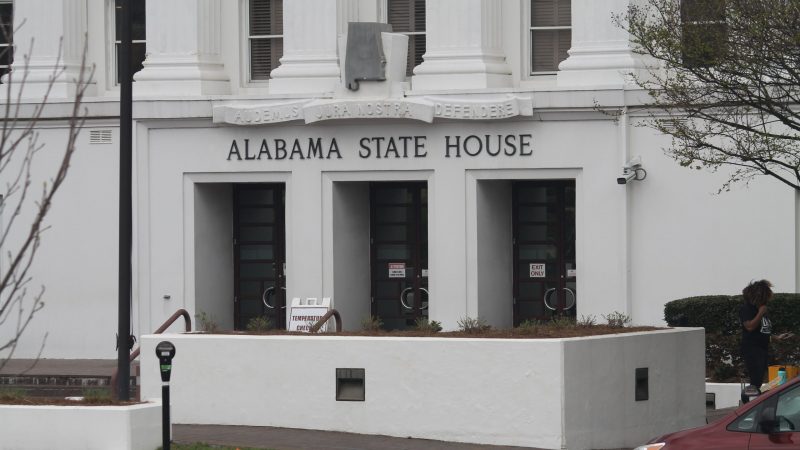
Bill making the Public Service Commission an appointed board is dead for the session
Usually when discussing legislative action, the focus is on what's moving forward. But plenty of bills in a legislature stall or even die. Leaders in the Alabama legislature say a bill involving the Public Service Commission is dead for the session. We get details on that from Todd Stacy, host of Capitol Journal on Alabama Public Television.
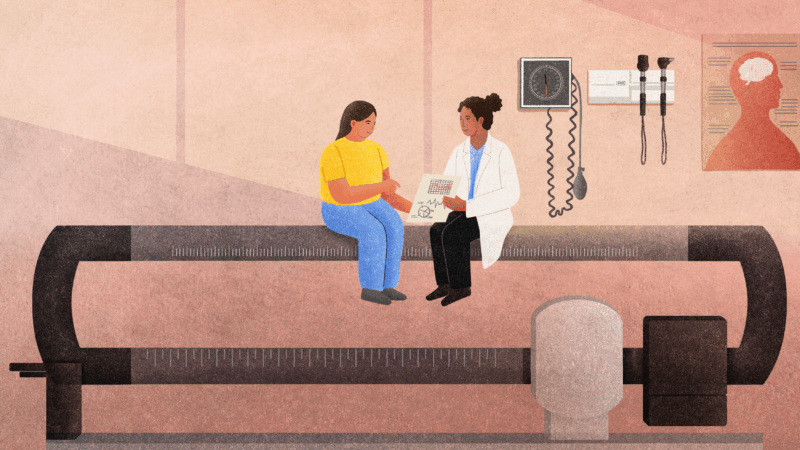
My doctor keeps focusing on my weight. What other health metrics matter more?
Our Real Talk with a Doc columnist explains how to push back if your doctor's obsessed with weight loss. And what other health metrics matter more instead.
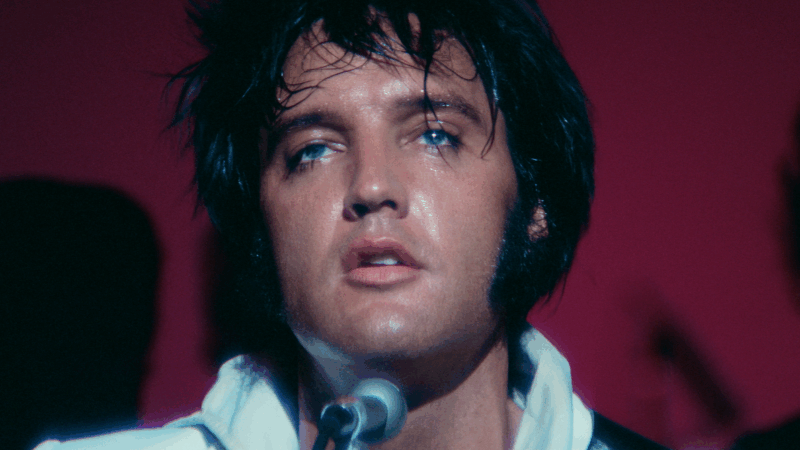
Baz Luhrmann will make you fall in love with Elvis Presley
The new movie is made up of footage originally shot in the early 1970s, which Luhrmann found in storage in a Kansas salt mine.
Forget the State of the Union. What’s the state of your quiz score?
What's the state of your union, quiz-wise? Find out!
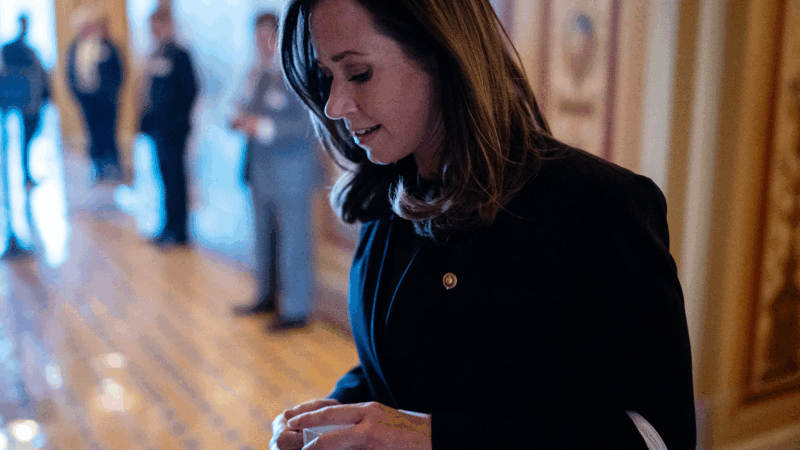
SNL mocked her as a ‘scary mom.’ In the Senate, Katie Britt is an emerging dealmaker
Sen. Katie Britt, Republican of Alabama, is a budding bipartisan dealmaker. Her latest assignment: helping negotiate changes to immigration enforcement tactics.

As the U.S. celebrates its 250th birthday, many Latinos question whether they belong
Many U.S.-born Latinos feel afraid and anxious amid the political rhetoric. Still, others wouldn't miss celebrating their country
