
Opinion: The immorality of betting on war
You can place a bet on just about anything these days. Not just who will win the Super Bowl, or the Kentucky Derby, but what we still call “the news.” Who will be elected? Will interest rates go up or down? You can even bet on weather events, and acts of war.
As NPR’s Bobby Allyn has reported, an account on the prediction market Polymarket with the username “Magamyman,” made more than $500,000 by predicting the strike on Iran last Saturday that killed the Ayatollah Ali Khamenei.
This comes after an unnamed trader made hundreds of thousands predicting the ouster of Venezuelan leader Nicolas Maduro in January, just hours before the U.S. raid that captured him.
Prediction markets are exchanges where people can place bets on the outcome of almost anything. It could be a Formula One race. But it could also be — and I quote the wording of an offering on Polymarket — “Nuclear detonation by…?
Senate Democrats have introduced a bill to ban members of Congress and senior administration officials — including the president and vice president — from putting money on specific events in these markets.
Rep. Mike Levin, a Democrat from California, wrote on X, “Prediction markets cannot be a vehicle for profiting off advance knowledge of military action.”
But even if the rest of us can legally make such bets, should we?
I have been with families in refugee camps in Ethiopia, Kosovo, and Iraq, who had to run from their homes with just the clothes they wore, and a few family photos if they had time to grab them, as soldiers rushed into their towns. Those families risked their lives to leave, betting on an unknown future.
I have been with people in Sarajevo who had to decide when to run across a street clutching food or medicine for their loved ones. They knew their steps might catch the eyes of snipers. We’d crouch alongside them behind a wall, where they often muttered a prayer and told us before running into the open, “Here goes…”
We saw quite a few brave people make it to safety; and quite a few brave people die trying.
The bets they placed were to risk their lives for those they loved. Prediction market users make their wartime gambits from someplace comfortable and safe, and hope to hit it big off of someone else’s misfortune.
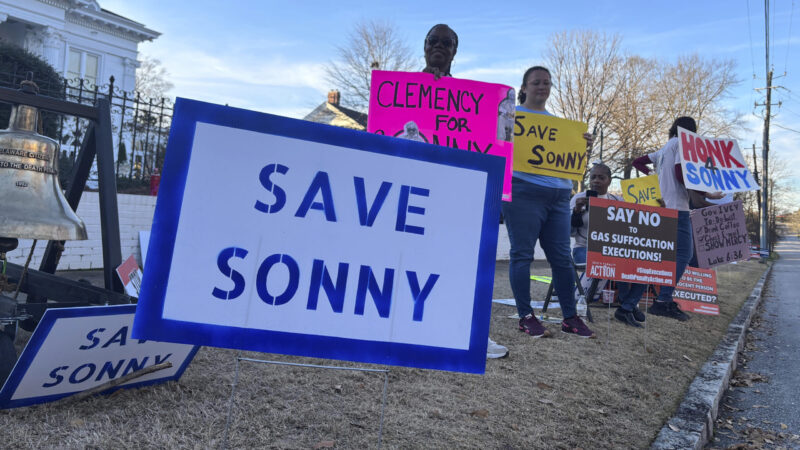
Alabama man facing execution for deadly robbery asks for clemency as he didn’t kill victim
Charles “Sonny” Burton is scheduled to be executed March 12 for his role in a 1991 robbery in which a man was fatally shot. His supporters and attorney are asking the governor for clemency, arguing that his life should be spared because Burton didn’t fire the gun or witness the killing.

Curling had its moment at the Olympics and now Paralympics. It sparked a curling bonanza in America
Hundreds of people become interested in curling every four years and the 2026 numbers already show that boom.
One week into the Iran war, the fallout is global
The war is no longer just about the U.S., Israel and Iran. More countries are getting caught in the political crossfire or being drawn into the fighting themselves.
Iran’s president defies U.S. demands while apologizing for strikes on neighbors
President Masoud Pezeshkian said Saturday that a demand by the U.S. for an unconditional surrender is a "dream that they should take to their grave." He also apologized for Iran's attacks on regional countries.
What the Trump administration says about why it went to war with Iran
The Trump administration says it is "laser focused" and mission driven, but the messaging has been varied. The range of cited motivations for striking Iran now are sometimes at odds with each other.
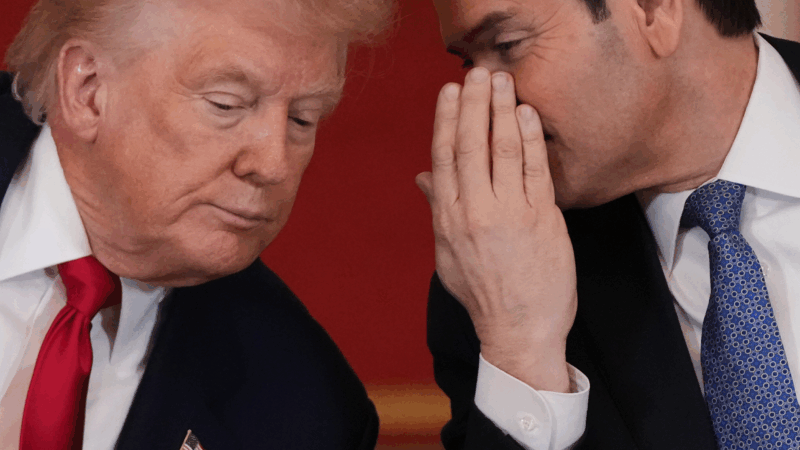
Trump looks to turn attention to Western Hemisphere at Americas summit
President Trump is set to gather with Latin American leaders on Saturday at his Miami-area golf club as his administration looks to turn attention to the Western Hemisphere, at least for a moment.
