
Opinion: Susan Stamberg gave NPR its voice
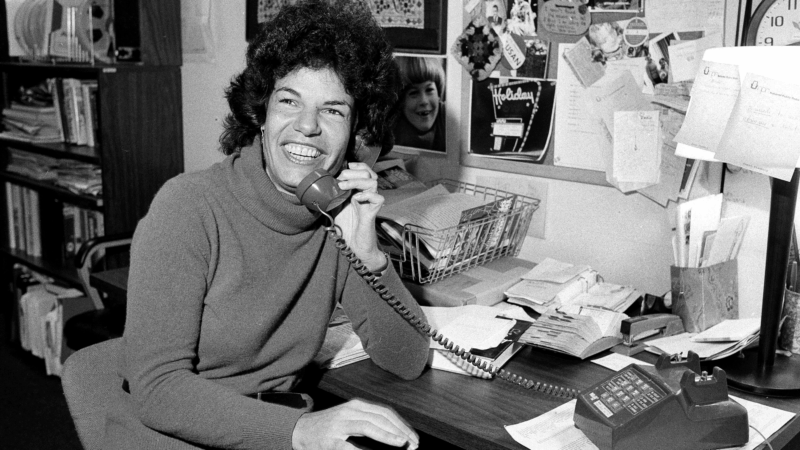
We are here — and I mean on the air with you today — because of Susan Stamberg. There are of course others who helped turn the idea of National Public Radio into a distinctive sound. But a little over 50 years ago, when Susan’s voice began to crackle into kitchens and cars all over America, the people who heard her didn’t ask, “What’s NPR?” but, “Who is that?”
She was the first woman to co-host a nightly news broadcast, and she didn’t sound like a sonorous news anchor. Susan sounded irreverent, not official. Boisterous, not boring. She was courteous, and often hilarious.
Susan Stamberg gave NPR a voice, and that laugh that could make microphones tremble.
We saluted Susan at NPR — and on this show — when she retired last month. I’m glad she got to hear at least a portion of our gratitude and love before she died this week at the age of 87. Those of us who work here know we stand atop the partnership that Susan and a few other scrappy journalists began more than 50 years ago, with what has become millions of listeners across America.
I’ve been trying to recount all I learned from Susan over the years.
She often reminded me that the most important thing you can do in an interview is to listen. Journalists often try to plot out extensive questions in advance, packed with pertinent facts. But sometimes we’re so eager to get through our questions we neglect to really hear the answers and respond to them.
“You’ve got to be prepared to let all that prep hit the floor,” Susan once told me, “and let the interview go someplace else.”
She also showed us how the best questions can be as short as, “Why?” Or as ingenuously simple as when Susan asked an orchestra conductor, “Don’t your arms ever get tired?”
And Susan showed us all that for a news program to become a companion in people’s lives, it has to try to play all the notes in the human symphony, high and low; dark and light; and you play them with style. You can pack all the important facts into a story and a show, but if you don’t hold the interest of listeners, they won’t stay with you long enough to hear any of it.
When NPR was a set of little-known initials, Susan Stamberg gave this place personality.
I find it telling that the recorded voice in the elevators here at NPR headquarters is Susan’s. She continues to tell us which way is up.

Between Megan Moroney and Ella Langley, country women rule the charts
It's a big week for women in country music — and, it turns out, for women whose songs are favored by women in figure skating.
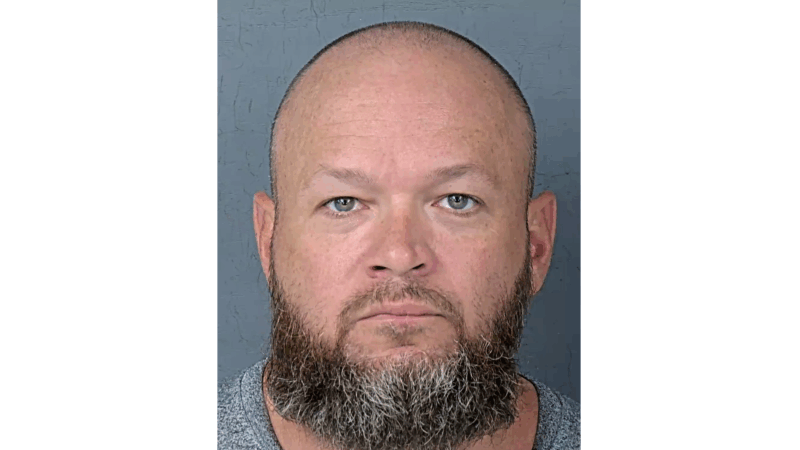
A Jan. 6 rioter pardoned by Trump was sentenced to life in prison for child sex abuse
Since receiving presidential pardons, dozens of former Capitol rioters have gotten into more legal trouble. In Florida, Andrew Paul Johnson was sentenced to life in prison for child sex abuse.

President Trump, Pam Bondi sued over sale of TikTok assets
The case, filed in a federal court in Washington, D.C., accuses the Trump administration of ignoring legislation designed to stop the spread of Chinese propaganda — and instead helping to broker a partial sale to businessmen close to Trump.

A rift between Spain and Trump widens over Spanish opposition to the Iran war
The Spanish government reiterated it would not let U.S. forces use two joint military bases in Spain as the U.S.-Israeli war in Iran escalates, widening a rift with the Trump administration.
Blackpink, modern K-pop’s trailblazing group, tries to find its way home
A new mini-album finds the world's biggest girl group in a tight spot: competing with its own legacy.
If you loved ‘Sinners,’ here’s what to watch next
So you loved best picture nominee Sinners. What should you watch next? We asked our audience to share their recommendations. They suggested Near Dark, The Wailing and other vampire horror films.
