
One week into the Iran war, the fallout is global
What began last Saturday as coordinated attacks on Iran by the U.S. and Israel has sprawled into a wider conflict with repercussions around the world.
The American-Israeli military campaign set off a series of attacks and counterattacks that have hit or threatened several Gulf nations. The conflict also triggered political tensions and economic upheaval, drawing in countries far beyond the Middle East.
Loading…
More than 1,300 people in Iran have been killed as a result of the ongoing fighting, according to the Iranian Red Crescent Society. American and Israeli strikes killed Iranian Supreme Leader Ayatollah Ali Khamenei, as well as dozens of his top officials. The Iranian navy and air force have also been wiped out and soon, Israel and the U.S. will have complete control of Iranian skies, according to the Pentagon.
On Friday, President Trump said he would not negotiate with Iran unless it was prepared to unconditionally surrender — making it unclear when the fighting will cease and how many more nations may be pulled into the conflict.
Here’s what to know:
Countries caught in the war’s crossfire
Soon after the U.S. and Israel launched their first strikes, Iran carried out retaliatory attacks targeting Israel and U.S. military bases in Kuwait, Qatar, Bahrain, Jordan and the United Arab Emirates. Some of the strikes also hit civilian areas, including hotels and airports, as well as oil and gas infrastructure.
American forces intercepted many of the Iranian missile and drone attacks. But six U.S. soldiers were killed by an Iranian strike on a command center in Kuwait. At least 10 people in Israel have been killed as a result of the clashes, according to Israeli authorities. A drone strike also hit a British air force base on the Mediterranean island of Cyprus last Sunday, and the U.K. says it has intercepted more drones there since.
Iranian drones also struck its neighbor and former Soviet republic of Azerbaijan. Before the conflict, Azerbaijan wanted to stay neutral. But on Thursday, President Ilham Aliyev said in a speech, “We will not tolerate this unprovoked act of terror and aggression against Azerbaijan. Our Armed Forces have been instructed to prepare and implement appropriate retaliatory measures.”
Earlier this week, an Iranian missile headed toward Turkey, but was shot down by a U.S. warship, NPR previously reported. Turkey is also where many Iranians are fleeing amid continued bombardment in Iran by U.S. and Israeli militaries.
Meanwhile, fighting has spread to Lebanon after Hezbollah, the Iran-backed Lebanese militant group, launched attacks on Israel. Hezbollah initially said its strikes were in revenge for the assassination of Iran’s supreme leader but later added they were because of ongoing Israeli attacks in Lebanon despite a ceasefire. Israeli forces, in turn, ordered Lebanese residents to evacuate as they unleashed attacks across southern and eastern Lebanon, including around the capital city of Beirut.
According to Lebanon’s Health Ministry, the Israeli strikes have killed at least 123 people as of Thursday. The Lebanese government has also taken steps to distance itself from Hezbollah, including issuing arrest warrants for members behind the strikes into Israel and calling for the dismantling of Hezbollah’s military wing.
Countries in South Asia are also on edge after a U.S. submarine sank an Iranian warship near Sri Lanka on Wednesday. The government of the small island off the coast of India has called for peace, adding that it does not want to become a victim of this war.
Testing of allies
Loading…
Beyond the fighting, the war has been a major test for allies of the U.S. and Iran.
France, Italy and the U.K. were initially wary of how the U.S. and Israel toppled Iran’s top leadership. But now, in order to protect their expatriate citizens and interests in the Middle East, as well as to prevent further escalation, the European nations have bolstered their military presence in the region.
The conflict has put a particular strain on the U.K.’s friendship with the U.S. Britain had initially rebuffed America’s request to use British military bases. Later, Britain walked back that decision somewhat, allowing the U.S. to use its bases for what it called “limited defensive action against missile facilities in Iran,” but President Trump has remained frustrated.
The war is also deepening a feud between the U.S. and Spain. Earlier this week, Spain refused to allow the U.S. to use its two joint military bases, which serve as a strategic stopover for U.S. operations in the Middle East. In response, Trump has threatened to cut off all trade with Spain if the government did not cooperate.
At the same time, Spain, France, Italy, Britain, Greece and the Netherlands have all pledged to help protect European Union member Cyprus, Reuters reported.
Iran’s relationships with Gulf Arab states have also been shaken; while they have centuries-old trade and cultural ties, Iran has struck several of these states this past week. The conflict also threatens the region’s tourism and reputation as a global trade hub. It’s especially concerning for Dubai, which has prided itself as a safe haven in the Middle East but has been hit hard by Iranian strikes.
Global superpower China also has stepped in, sending an envoy to the Middle East. Though the country is considered an ally of Iran, China has urged both Iran and the U.S. to stop military operations and return to negotiations. Part of China’s concern is how the war will affect global energy markets, since the country is the world’s largest importer of oil and gas.
One of Iran’s biggest allies Russia has provided intelligence about targets to Iran, NPR independently confirmed. But for the most part, Russia has been watching from the sidelines. President Vladimir Putin issued a condolence letter following the assassination of Iran’s supreme leader. But the country has not stepped into the fighting nor has Iran asked for the help, the Kremlin said on Thursday.
Part of Russia’s hesitancy may be that it’s already dealing with the grinding war it launched in Ukraine. Russia could also potentially benefit from the attack on Iran if countries turn to Russia for oil.
Stakes for oil and financial markets
The conflict is also taking a toll on the global economy.
The shake-up is largely due to oil and the Strait of Hormuz, a waterway that borders Iran and serves as a transit point for about a fifth of the world’s oil supply.
Iran declared the strait closed on Monday, which led Iraq, a major oil producer, to shut down some of its production. Meanwhile, the ongoing fighting caused Saudi Arabia’s largest oil refinery to suspend production. Bahrain, Kuwait, Qatar and the United Arab Emirates have reported their oil refineries were struck over the past week.
Loading…
Threats to the flow of oil are already sinking stock markets and stoking fears of high inflation. On Friday, oil prices surged above $90 per barrel — the highest since September 2023. The disruptions have already pushed up the average price of gasoline in the U.S. to $3.32 per gallon as of Friday, according to AAA.
India, a major buyer of crude oil from the Persian Gulf, is especially vulnerable to the shortage of oil. On Friday, the U.S. Treasury Department issued a 30-day waiver to allow Indian refineries to purchase Russian oil, which was previously under U.S. sanctions.
NPR’s Aya Batrawy in Dubai, Carrie Kahn in Tel Aviv, Hadeel Al-Shalchi in Beirut, Ruth Sherlock on the Turkish border with Iran, Charles Maynes in Moscow, Jennifer Pak in Beijing, Tom Bowman and Scott Horsley contributed reporting.
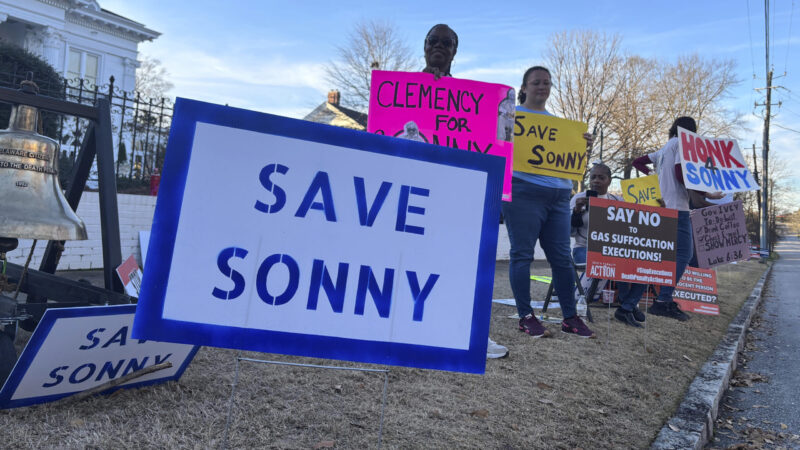
Alabama man facing execution for deadly robbery asks for clemency as he didn’t kill victim
Charles “Sonny” Burton is scheduled to be executed March 12 for his role in a 1991 robbery in which a man was fatally shot. His supporters and attorney are asking the governor for clemency, arguing that his life should be spared because Burton didn’t fire the gun or witness the killing.
Iran’s president defies U.S. demands while apologizing for strikes on neighbors
President Masoud Pezeshkian said Saturday that a demand by the U.S. for an unconditional surrender is a "dream that they should take to their grave." He also apologized for Iran's attacks on regional countries.
What the Trump administration says about why it went to war with Iran
The Trump administration says it is "laser focused" and mission driven, but the messaging has been varied. The range of cited motivations for striking Iran now are sometimes at odds with each other.
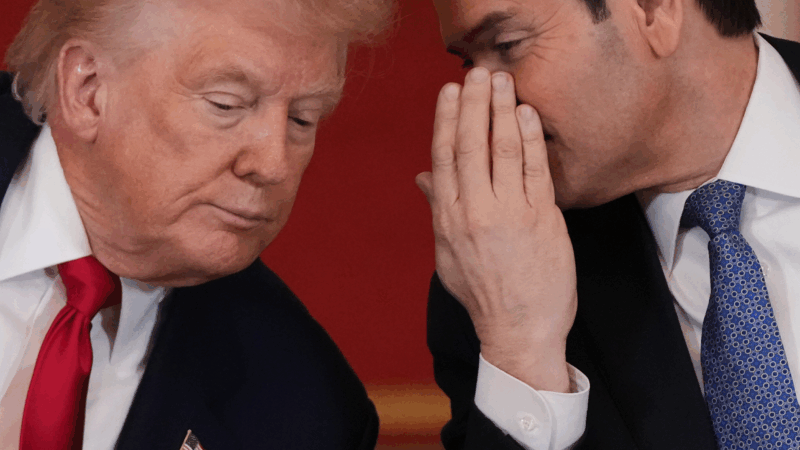
Trump looks to turn attention to Western Hemisphere at Americas summit
President Trump is set to gather with Latin American leaders on Saturday at his Miami-area golf club as his administration looks to turn attention to the Western Hemisphere, at least for a moment.
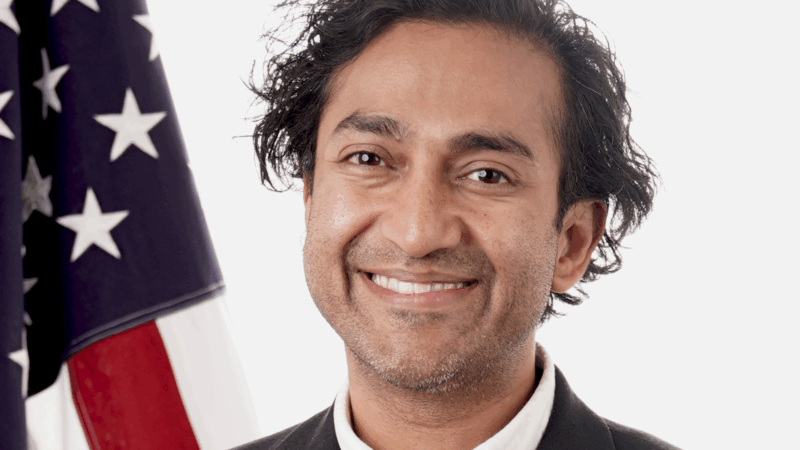
Trump administration’s embattled FDA vaccine chief is leaving for the second time
The FDA's controversial vaccine chief, Dr. Vinay Prasad, is leaving the agency. It's the second time he has abruptly departed following decisions involving the review of vaccinations and specialty drugs.
Family, former presidents and a Hall of Famer give Rev. Jesse Jackson a final sendoff
Several speakers at Jackson's funeral invoked his hallmark catchphrases: "Keep hope alive" and "I am somebody."
