
‘One Battle After Another’ wants a revolution

The revolution is sexy, until it’s not.
Paul Thomas Anderson’s tenth feature, One Battle After Another, finds the director working in what might be his most thematically of-the-moment mode yet, an electric thriller set against the backdrop of political resistance and the resurgence of unbridled white supremacy. At its most basic, it’s standard action movie stuff: Leonardo DiCaprio plays Bob Ferguson, an ex-revolutionary searching for his missing daughter. But it’s also about the unfulfilled promises of protest and rebellion, and what can happen to a movement deferred. As the brazen Perfidia Beverly Hills (Teyana Taylor), a leader of the militant activist group French 75 and Bob’s partner in crime and romance, aptly notes, “Every revolution begins fighting demons,” but then they “just end up fighting themselves.”
The setting is vaguely contemporary — other than the background placement of a pop song or two from the 2010s, I didn’t spy any markers to suggest a specific year. The French 75 are raging against the machine, and in the film’s exciting opening act, the group smuggles migrants out of a detention center; they have no qualms with setting fire to government buildings and robbing banks. That last demonstration turns deadly and marks the beginning of the end of the French 75 as they know it. Members are arrested, killed or forced to go underground.
Some 16 years later, Bob is living quietly with Willa (Chase Infiniti), his daughter with Perfidia; Perfidia hasn’t been in the picture since the bank robbery fallout, when Willa was an infant. Bob, no longer the idealistic radical he once was — or at least imagined himself to be — is now a paranoid stoner who keeps close tabs on teenage Willa and does little else besides watch old movies on TV. But his past comes back to haunt him in the form of the old foe responsible for the dissolution of the French 75 — the racist, xenophobic and corrupt Col. Steven J. Lockjaw, played by a very colorful and sinister Sean Penn.
This barely scratches the surface of One Battle After Another, which echoes Anderson’s other sprawling ensemble pieces like Magnolia and Inherent Vice in its deep interconnectedness and strategically placed dominoes setting off a profound chain reaction of events. Those dominoes tip over in all sorts of directions and down many long hallways, tunnels and supremely hilly desert roads. Most of it blends seamlessly. As the action ramps up and Bob sets out to find Willa, who has been kidnapped, Anderson finds ways to balance the narrative focus with some of the sordid realities of America: A cool-as-ice Benicio del Toro shows up as Sergio, Willa’s karate instructor who also happens to be operating a modern-day underground railroad for migrants. Elsewhere, Lockjaw seeks admission into a politically powerful secret society that’s basically a bougie Ku Klux Klan.
The timing of One Battle‘s release helps avoid it seeming too far-fetched — Lockjaw is the kind of broadly buffoonish character who’d fit in fine on a show like South Park or a far-right podcast bemoaning “woke” politics, which is to say that he feels scarily true to the moment. Penn relishes the villain role, leaving no room for sympathy but plenty for understanding his twisted psychology.
If Lockjaw is the extremity of conservative ideology, doing everything in his power to get what he wants, however clumsily, Bob is the bitter disappointment of abandoned liberal dreams, swathed in a Dude-like bath robe, vape pen in mouth. In one sequence, a hapless Bob grows increasingly exasperated because his brain is so fried he can’t remember the emergency code a French 75 member gave him 16 years earlier, right before he went incognito. The revolution has left him behind.

Anderson’s grasp is looser when it comes to Perfidia, the catalyst for much of what befalls the film’s primary characters in the second and third acts. She’s a striking figure played by a striking performer, a radical agent whose life’s work – which crucially involves political violence – is practically inextricable, for her, from sex. (“Let’s f*** when the bomb goes off!” she giddily says to Bob at one point.) In almost every scene, she’s presented as forthrightly sexual, either out of her own desire, necessity, or a bit of both, and it teeters precariously on the edge of exploitation.
One way of reading this is to put it in Audre Lorde’s terms: Perfidia understands her erotic self, “the measure between the beginnings of our sense of self and the chaos of our strongest feelings.” As Lorde also described it, “In touch with the erotic, I become less willing to accept powerlessness, or those other supplied states of being which are not native to me, such as resignation, despair, self-effacement, depression, self-denial.”
That rejecting of powerlessness comes through most strongly in Taylor’s performance, which exudes confidence and vulnerability in a fleeting amount of screentime. But I’m not so sure the character as written winds up being all that much deeper than a character in your run-of-the-mill blaxploitation film from 50 years ago, and Perfidia certainly isn’t the primary focus of One Battle, at least not her physical presence. The seeds are there; through those early scenes, Anderson presents interesting ideas about liberation and personal sacrifice — especially the difficult choices Perfidia’s forced to make as a Black woman fighting oppression, which prove she’s damned no matter what. Yet they whiz by, often in montage, a manner that ends up only skimming the headlines. (As one of the other steadfast French 75 members, Regina Hall is even more criminally underused, so much so I wondered if some of her scenes were cut from the final running time of nearly three hours.) Interiority is more readily rendered through Bob and Lockjaw and, to a different but notable degree, the savvy Willa.
It’s a quibble. One Battle After Another is still, to put it plainly, a fun time — it won’t be an escape from the awful, absurdist realities we’re living with now, but will serve as a reminder that Anderson knows how to make a damn good movie.
Nancy Guthrie search enters its second week as a purported deadline looms
"This is very valuable to us, and we will pay," Savannah Guthrie said in a new video message, seeking to communicate with people who say they're holding her mother.

Immigration courts fast-track hearings for Somali asylum claims
Their lawyers fear the notices are merely the first step toward the removal without due process of Somali asylum applicants in the country.
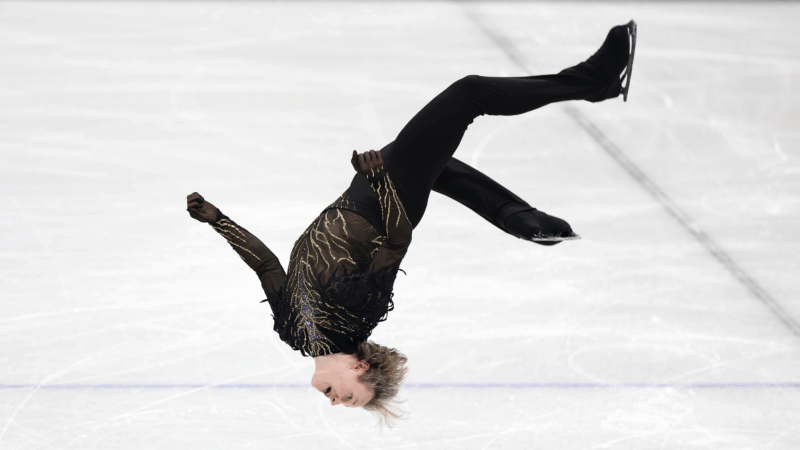
Ilia Malinin’s Olympic backflip made history. But he’s not the first to do it
U.S. figure skating phenom Ilia Malinin did a backflip in his Olympic debut, and another the next day. The controversial move was banned from competition for decades until 2024.

‘Dizzy’ author recounts a decade of being marooned by chronic illness
Rachel Weaver worked for the Forest Service in Alaska where she scaled towering trees to study nature. But in 2006, she woke up and felt like she was being spun in a hurricane. Her memoir is Dizzy.
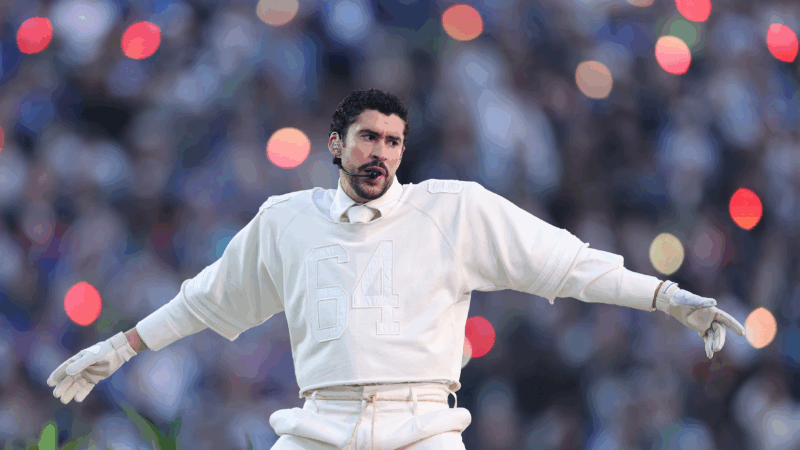
Bad Bunny makes Puerto Rico the home team in a vivid Super Bowl halftime show
The star filled his set with hits and familiar images from home, but also expanded his lens to make an argument about the place of Puerto Rico within a larger American context.
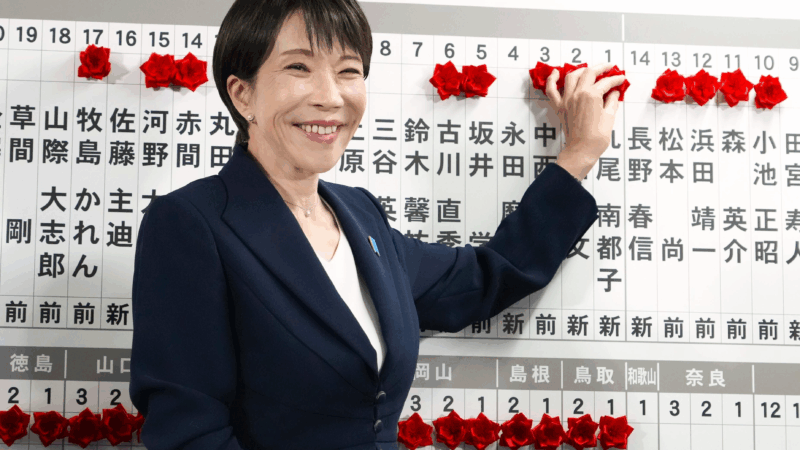
Japan’s Takaichi to pursue conservative agenda after election landslide
Japan's first female Prime Minister, Sanae Takaichi, brought the ruling Liberal Democratic Party its biggest-ever electoral victory, fueling her ambitions to pursue to a political agenda which she says could "split public opinion."
