
Once the Gaza ceasefire goes into effect, what happens next? Here’s what to know
Israel and Hamas have reached an agreement for the “first phase” of a plan promoted by President Donald Trump to end the devastating conflict in Gaza.
The initiative begins with a ceasefire that is expected to go into effect after Israel’s Cabinet votes on the truce agreement reached with Hamas following indirect talks in the Egyptian beach resort of Sharm el-Sheikh. That Cabinet vote to approve the deal is expected Thursday.
Here is what to expect after the Israeli Cabinet approves the deal, according to a person briefed by Egyptian officials close to the talks who was not authorized to speak publicly. NPR has also seen a copy of the agreement that the Israeli Cabinet is voting on.
- On Thursday night or Friday, a ceasefire goes into effect. (It must begin within 24 hours of Israeli Cabinet approval).
- Also Thursday night or Friday, within 24 hours of Israel cabinet approval, Israel begins pulling back its troops from parts of Gaza to an agreed line.
- After the 24-hour period, Hamas then has 72 hours to free the 20 hostages that are still alive. President Trump says this could happen on Monday or Tuesday.
- As the hostages are released, Israel begins freeing some 2,000 Palestinian prisoners.
- A further 28 hostages are presumed dead and Hamas says recovering their bodies — some of which lie under the rubble of destroyed buildings — will take much more time.
- By Monday, hundreds of trucks of humanitarian aid are expected to be allowed to enter Gaza. Tom Fletcher, the U.N. humanitarian chief, told reporters that officials have 170,000 metric tons of medicine, aid and other supplies ready for Gaza once they are given a green light.
President Trump says he expects to visit the region and that the White House is “working on the timing.” Trump says he plans to go to Egypt for an “official signing.” He’s also been invited to speak to the Israeli parliament.
But this remains a delicate moment where much could still go awry. For example, Reuters reports that the list of Palestinian prisoners Israel will free is still being debated.
Reaching a lasting peace may be harder still. The next phases of President Trump’s 20-point plan require further negotiation on essential issues, including the fate of Hamas and who will rule Gaza when the fighting ends.
Here are some of the key points in the plan:
- It requires Gaza to be initially governed by a temporary committee of technocrats, including “qualified Palestinians and international experts” responsible for running public services in Gaza. It says this body will be supervised by a new international transitional body called “the Board of Peace,” to be headed and chaired by Trump.
- Palestinians are to be allowed to remain in Gaza and “those who wish to leave will be free to do so and free to return.” The plan says, “We will encourage people to stay and offer them the opportunity to build a better Gaza.”
- Hamas and allied factions give up any role in governing Gaza and agree to disarm, handing over weapons in a decommissioning process overseen by “independent” monitors.
- A temporary “International Stabilization Force” organized by the U.S. with Arab nations and other countries would “immediately deploy” in Gaza. The force would train “vetted Palestinian police forces” and act longer-term as an internal security force — and have a role in securing border areas with Israel and Egypt.
- Israel will not occupy or annex Gaza. The Israeli military is expected to gradually withdraw completely from Gaza “save for a security perimeter presence.”
- The plan includes a provision for creating a “credible pathway to Palestinian self-determination and statehood, which we recognize as the aspiration of the Palestinian people.”
Hamas has repeatedly rejected Israel’s call for it to disarm, and after the plan was announced, Israeli Prime Minister Benjamin Netanyahu said publicly that Israel has not agreed to a Palestinian state.
And President Trump’s proposed “Board of Peace” has attracted controversy for giving a role to former British Prime Minister Tony Blair. Blair is widely reviled — especially in the Middle East for deciding that Britain should join the U.S.-led invasion of Iraq in 2003. Blair’s think tank has also been criticized over leaked plans to turn Gaza into a “Trump Riviera.”
Getting both sides to agree to all these terms remains a complicated prospect. And even once a peace agreement is negotiated, applying a deal to the reality of a shattered Gaza — where entire areas have been reduced to rubble by airstrikes and bulldozers, and the population traumatized in a conflict that has forced the vast majority — will be a perhaps even bigger challenge.
NPR’s Aya Batrawy contributed to this report from Dubai. Itay Stern contributed from Tel Aviv. Michele Kelemen contributed from Washington, D.C.
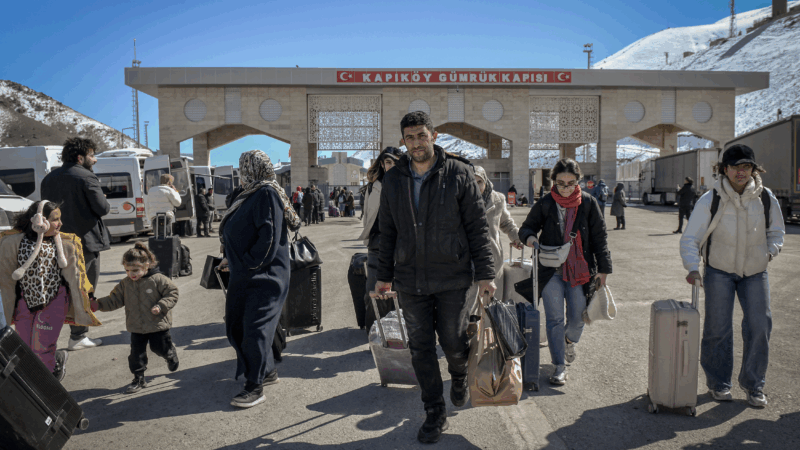
U.S-Israeli strikes continue across Iran, Iranian drones hit Azerbaijan
The U.S. and Israel said they conducted new strikes inside Iran overnight, targeting ballistic missile launchers. Iran claimed it struck a U.S. oil tanker in the northern Persian Gulf.
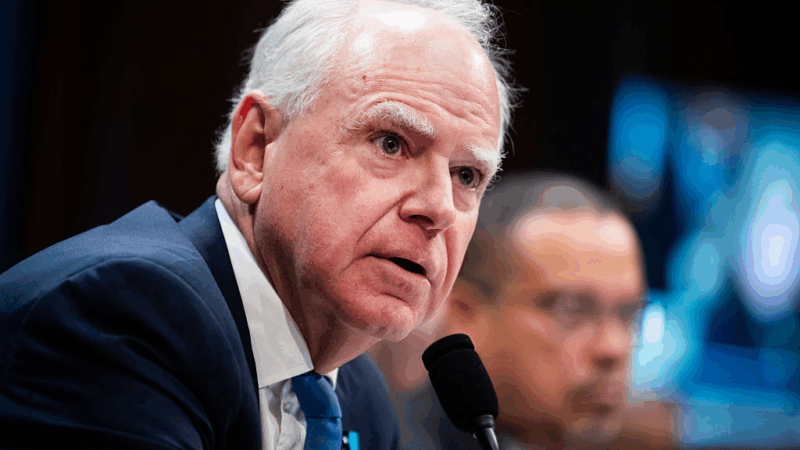
In lawsuit, Minnesota accuses Trump administration of ‘weaponizing’ Medicaid funding
The federal government said the state should do more to fight fraud and is holding back funds. Minnesota officials say the attack is unfair as the state's fraud rate is well below national averages.

Wall Street is betting on tariff refunds after Supreme Court ruling
When the Supreme Court struck down many of President Trump's tariffs, it left importers wondering how long they'd have to wait to get their money back. Hedge funds are offering to help out.

Announcing the 2025 NPR College Podcast Challenge Honorable Mentions
Here are some of the best entries in NPR's 2025 College Podcast Challenge.
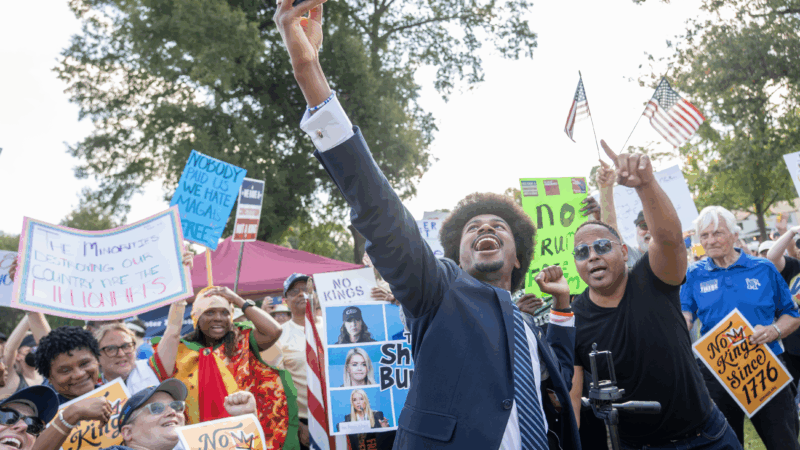
A run for their money: Young candidates rival older incumbents in midterm fundraising
As a growing crop of young candidates challenge longtime Democratic incumbents, some are not just breaking through in the money race, but outraising their opponents altogether.

When ICE came, Minneapolis created underground health networks. Should other cities?
The Trump administration's immigration crackdown in Minneapolis forced some families into hiding and catalyzed informal medical networks to deliver critical health care services inside homes.
