
On winter’s coldest days, this classic Kashmiri coat offers warmth — and wisdom
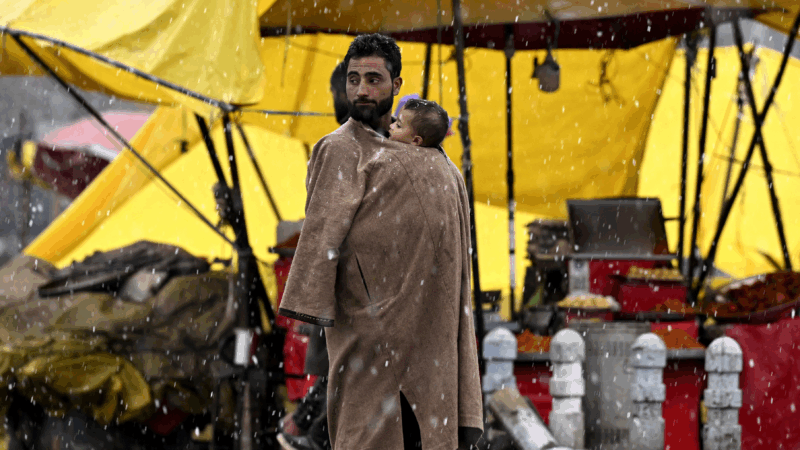
When I was growing up in Kashmir, my grandfather would hide me inside his pheran on the coldest days of winter. Bundled together beneath the loose woolen robe, he would tell me stories about Kashmir’s Chillai Kalan — the 40 harshest days of the year when temperatures plunge below freezing and snow blankets the valley. The phrase is derived from the Persian: Chillai means 40 days and Kalan means grand.
I loved winter, loved those days tucked against his chest, but I did not yet understand what he was teaching me: that we must not despair when conditions turn harsh, because difficulty creates what we need to flourish. The brutal cold of Chillai Kalan, he explained, brings the heavy snowfall that feeds our rivers through spring and summer. Without winter’s severity, there is no abundance.
On December 21, Kashmiris around the world will celebrate World Pheran Day, marking the first of the bitter days that define Chillai Kalan. The pheran (also derived from the Persian, meaning cloak) — that loose woolen robe my grandfather wrapped around both of us — represents more than warmth. It is a testament to ingenuity born from necessity, typically paired with a kangri, an earthen pot of embers carried beneath the fabric. My ancestors didn’t wait for someone from elsewhere to solve their problems. They looked at what they had and engineered solutions that worked.
I think about this often now, working in global health, where we talk endlessly about innovation and technology. We speak of artificial intelligence as if it were a panacea, capable of revolutionizing health care delivery in the world’s most under-resourced communities. And perhaps it can. But watching how quickly we deploy sophisticated algorithms into contexts we barely understand, I am reminded of something crucial: The people living through harsh conditions already know things global health innovators don’t. They have been solving their problems long before we arrived with our solutions.
Take Rwanda, where Babyl has become the largest digital health service provider since launching in 2016. A private enterprise that’s partnered with the government, this platform delivers more than 5,000 virtual consultations daily, has registered over two million users, and completed more than 1.2 million consultations. It uses machine learning to interact with users for triage and connects rural Rwandans to doctors via their mobile phones.
Like the pheran that worked with materials Kashmiris already had — wool and embers — Babyl succeeded by working with the technology people in Rwanda already possessed. Babyl doesn’t require smartphones or high-speed internet. It runs on SMS and basic voice calls, meeting people where they are in a country with 98% mobile network coverage but limited access to advanced devices. The Rwandan government didn’t just import Western technology — they partnered with Babyl for ten years, integrating the platform with the community-based health insurance scheme so members of the country’s community-based health insurance plan could access prescriptions and lab tests through mobile money services they already used.
The technology is impressive, certainly. But what makes it transformative is that someone took the time to understand how Rwandans actually communicate, how they pay for things, and what barriers prevent them from accessing health care. Someone built relationships before building platforms.
In Kenya, Rology offers another example. The country faces a critical shortage of radiologists, leaving hospitals and imaging centers unable to interpret scans quickly. Rology, a private, for-profit health tech company, created an AI-assisted teleradiology platform that connects hospitals with specialized radiologists across Africa and beyond, enabling quick interpretation of scans that would otherwise sit unread for days or weeks. In trauma, cancer, and infectious disease cases where quick diagnosis can mean life or death, this matters profoundly.
What makes Rology transformative is deeper: the founders spent time in Kenyan hospitals understanding that the real barrier wasn’t just scarcity of expertise — it was the mismatch between what was needed (expertise in trauma, oncology, infectious diseases) and what was available (general radiologists overwhelmed by volume). They designed workflows that respected the time constraints of local clinicians, integrated with existing hospital systems rather than requiring entirely new infrastructure and priced services affordably for resource-constrained facilities.
This is where we often fail. We see a problem, develop an elegant technological solution and assume deployment is straightforward. We forget that every community has already developed its own systems — some formal, many informal — for managing health challenges. We forget that the kangri existed long before electric heaters. And that there is wisdom in understanding why people chose clay and embers over solutions that required resources they did not have.
As Chillai Kalan begins, I remember being warm beneath my grandfather’s pheran, learning that hardship has purpose. Global health needs that same humility — recognizing that the challenging work of truly understanding communities, of building deep connections and high empathy, is not a barrier to innovation. It is the foundation upon which meaningful innovation becomes possible.
Dr. Junaid Nabi is a physician-scientist advancing digital health strategy, value-based healthcare, and global health innovations. His latest research examines how innovations in machine learning can enhance patient care outcomes. He serves as a Senior Fellow at the Aspen Institute and a Millennium Fellow at The Atlantic Council. Connect with him on X: JunaidNabiMD

Pentagon says it’s cutting ties with ‘woke’ Harvard, ending military training
Amid an ongoing standoff between Harvard and the White House, the Defense Department said it plans to cut ties with the Ivy League — ending military training, fellowships and certificate programs.

‘Washington Post’ CEO resigns after going AWOL during massive job cuts
Washington Post chief executive and publisher Will Lewis has resigned just days after the newspaper announced massive layoffs.
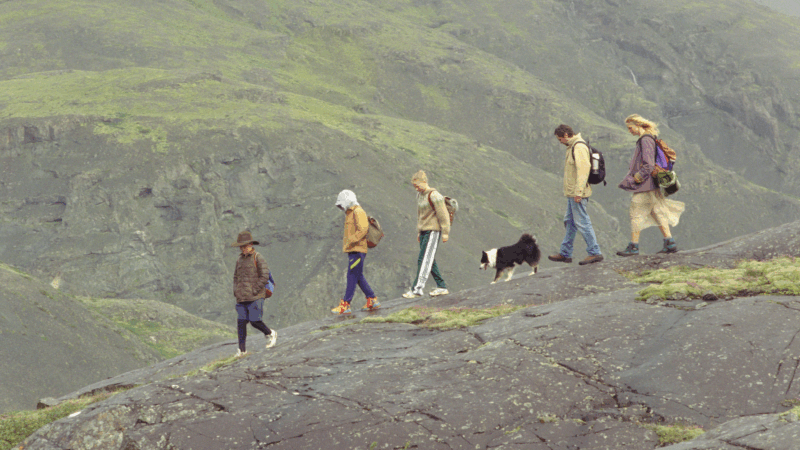
In this Icelandic drama, a couple quietly drifts apart
Icelandic director Hlynur Pálmason weaves scenes of quiet domestic life against the backdrop of an arresting landscape in his newest film.

After the Fall: How Olympic figure skaters soar after stumbling on the ice
Olympic figure skating is often seems to take athletes to the very edge of perfection, but even the greatest stumble and fall. How do they pull themselves together again on the biggest world stage? Toughness, poise and practice.
They’re cured of leprosy. Why do they still live in leprosy colonies?
Leprosy is one of the least contagious diseases around — and perhaps one of the most misunderstood. The colonies are relics of a not-too-distant past when those diagnosed with leprosy were exiled.
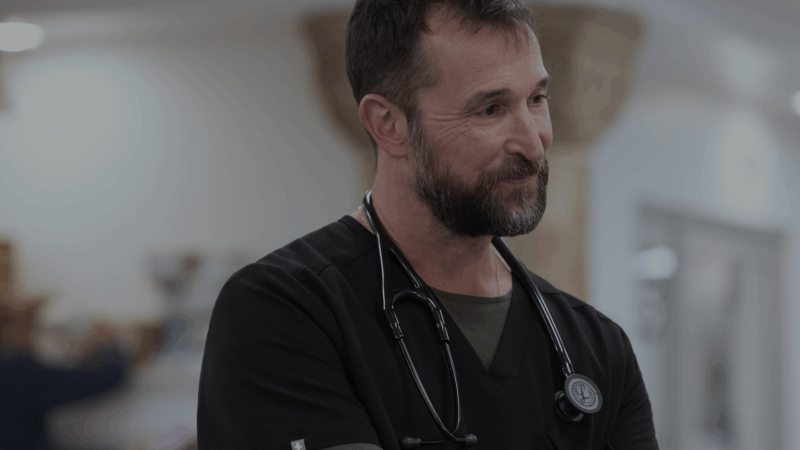
This season, ‘The Pitt’ is about what doesn’t happen in one day
The first season of The Pitt was about acute problems. The second is about chronic ones.
