
On Juneteenth, she celebrates the role quilts may have played in Underground Railroad
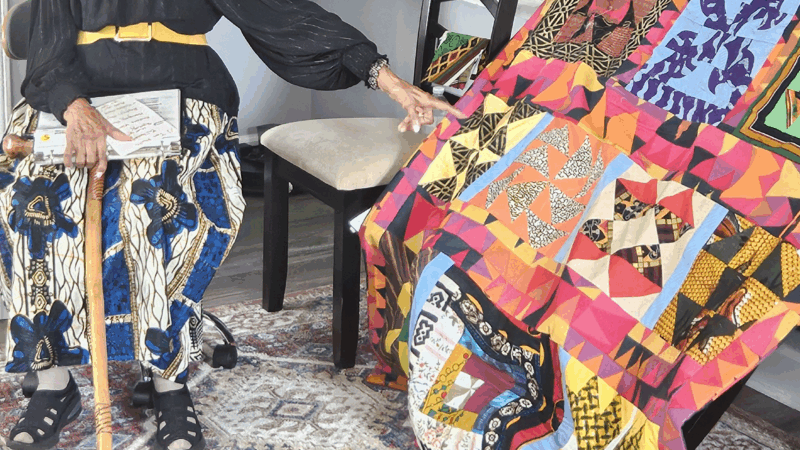
For Edith Edmunds, the art of quilt making is inextricably linked to the Black struggle for freedom. That’s why she plans to be sewing on Juneteenth.
“It’s what I love to do,” she told NPR in a phone interview.
Edmunds, who is 99 years old, has been making quilts since she was seven, when she first learned to sew on a pedal-powered treadle machine using scraps of fabric. But it wasn’t until 50 years ago, after reading a magazine article, that she learned how runaway enslaved people in the South used encoded messages in quilts to make their way north along the Underground Railroad.
“In the spring and summer it was common for people to hang their quilts and wall hangings outside on fences, or bushes, or out of windows and it happened that that was the same time of year many enslaved people tried to escape,” Edmunds explained.
For those not in the know, the decorated quilts would simply go unnoticed, but for those looking for signs, “the quilts conveyed messages to people who were about to escape, who were planning to escape, and also for people that were on the run,” she said. She becomes emotional when thinking about the lengths people went to to help one another reach freedom.
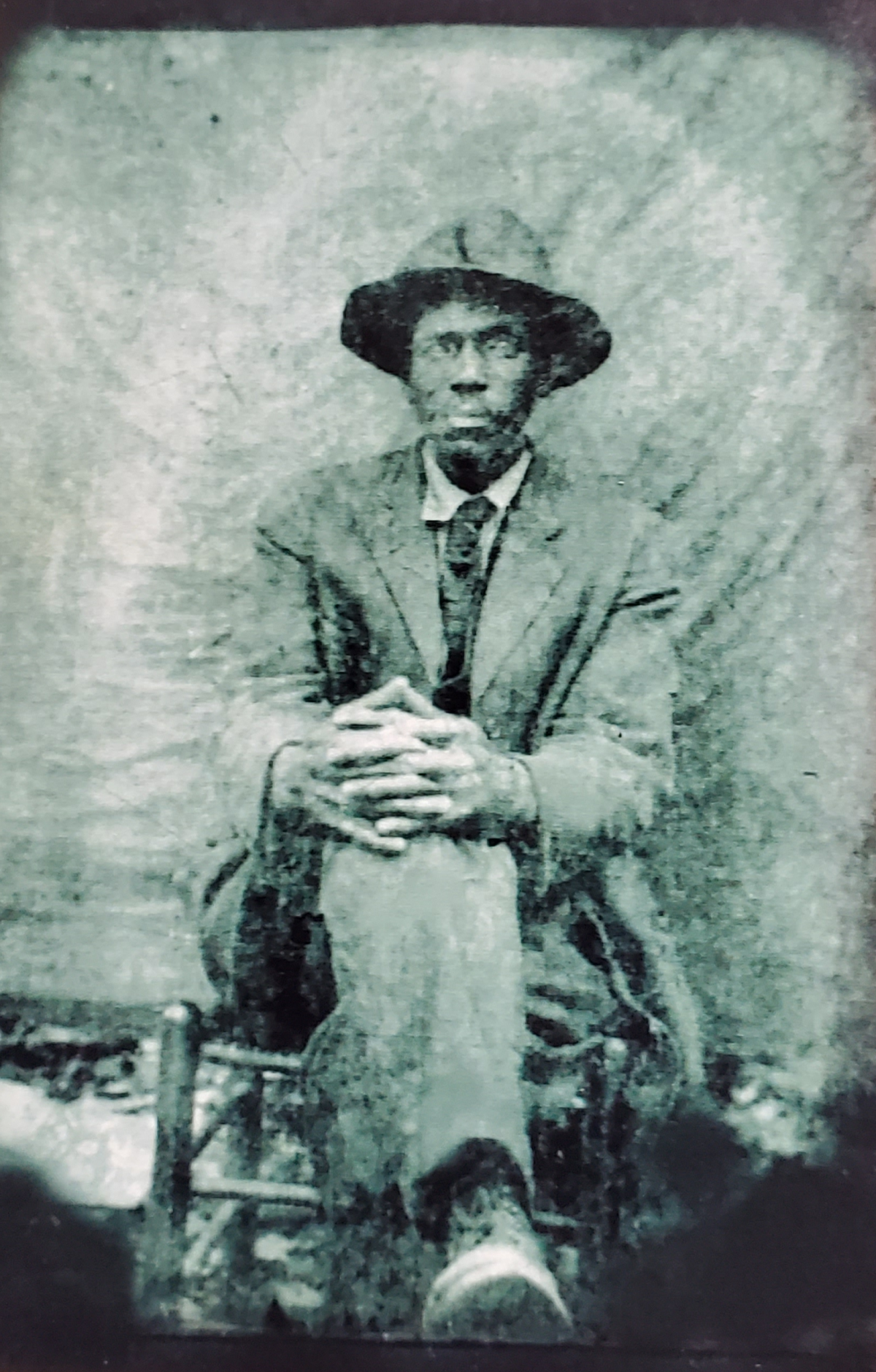
Both of Edmunds’ grandfathers were born into slavery in Halifax County, Va. They were still children when President Abraham Lincoln signed the Emancipation Proclamation. But the stories of how they learned of their own liberation have been lost to time, so Edmunds said she often thinks about them while she’s sewing.
“I think about what my ancestors must have gone through in slavery,” she said.
So, what better way to mark the day 160 years ago when Maj. Gen. Gordon Granger rode into Galveston, Texas, on to spread the news that slavery had been outlawed — two years earlier — than to spend it in communion with her family’s past.
Edmunds’ daughter, Amy Edmunds, told NPR that she’s been helping her mother learn more about the secret language of quilts. They were especially inspired after reading Hidden in Plain View: A Secret Story of Quilts and the Underground Railroad, which relies on an oral history relayed by the descendants of enslaved people in South Carolina. In the 1999 book, the authors decode the 10 patterns that make up the Underground Railroad Quilt Codes.
The first pattern Edmunds learned to make — the one she read about in the magazine decades ago — is called the “monkey wrench.”
“It tells the enslaved to get ready for a journey, so when they saw it they knew the time was near,” she said.

Since then she’s completed several quilts, mastering each of the coded blocks. The “north star” told runaways to follow the light of the north star as they traveled at night. A “bow tie” square warned a fleeing slave to clean up and change their clothes so they wouldn’t stand out among free Black people. The “drunken pair” told the enslaved not to walk straight but to walk zigzag so that they couldn’t be tracked. A log cabin with a black center indicated a safe house, while a log cabin with a light center conveyed they should stay away.
If a person on the run stumbled upon a quilt with a “shoofly” block on it, it meant they’d reached someone who could provide safe, temporary shelter, Edmunds said.
“This was a person who would secretly hide the enslaved in a cave, in a church, or even in a graveyard,” she said, adding that they could be a Black or white person who was involved in the Underground Railroad. “A shoofly risked their own freedom for a stranger.”
Some doubt the quilts were used as codes
Over the years, Edmunds and her daughter have sought to learn as much as they can about their family history and the history of the coded quilts. Amy Edmunds said it’s been a challenging endeavor, “considering that the whole point of it was that it was supposed to be secret.”
She and the elder Edmunds are aware that there is some doubt about the claims of embedded messages — largely because of the absence of a written history about the practice.
“There is no evidence of it at all,” Tracy Vaughn-Manley, a Black Studies professor at Northwestern University, told NPR in an interview last year.
Vaughn-Manley, who studies Black quilting, said the theories posited by Jacqueline Tobin, a women’s studies professor at the University of Denver, and Raymond Dobard, an art historian from Howard University, who co-wrote Hidden in Plain View, are not substantiated.
“Based on my research, and the research of highly regarded slave historians, there has been no evidence: No letters, no notes, nothing that would signify that quilts were used as codes,” Vaughn-Manley said.
But other academics, including Mary Twining-Baird, an Atlanta-based quilt scholar and emeritus professor of English and Folklore at Clark Atlanta University, have stood by Tobin and Dobard’s research.
“If people’s lives are at stake, then it stands to reason that there would be no trace of the quilts,” Twining-Baird told the Smithsonian in 2019.
She added: “Of course there is no documentation! Literally, if anyone found out they could lose their lives.”
This is the argument Amy and Edith Edmunds make as well. In fact, the younger Edmunds notes the long history of pictographs and symbols, like the Adinkra, which are used in fabric and pottery across West Africa.
“They’re a form of language to help people to be able to communicate, across boundaries. And so. It would make sense that these designs and these symbols would be used to convey messages. It would be something that was already a part of the culture,” she said.
“I hope I’m opening somebody’s eyes and their minds”
Edith Edmunds, who is two months shy of her 100th birthday, joked that Juneteenth is actually a new holiday for her.
Born and raised in Halifax County, Va., she said she didn’t know that there was this other celebration of freedom happening in other parts of the country. It wasn’t until her son moved to Texas a few years ago, that she first heard about it, she said. That coincided with a broader conversation about Juneteenth that began when President Joe Biden declared it a national holiday in 2021.
Ever since then she’s used the day as an opportunity to talk about the brave plight of the people who traveled the Underground Railroad and those who made it possible.
Now, under President Trump, as the administration rolls back federal efforts to expand diversity, equity and inclusion programs, and conservatives move to ban books and change school curriculum about the nation’s history of slavery, she said it’s become even more important to share how hard enslaved people fought to free themselves.
“It gives me a chance to talk about the Underground Railroad with urgency,” Edmunds said. “The younger generations don’t know what really happened back then — with the Underground Railroad. So I hope I’m opening somebody’s eyes and their minds.”
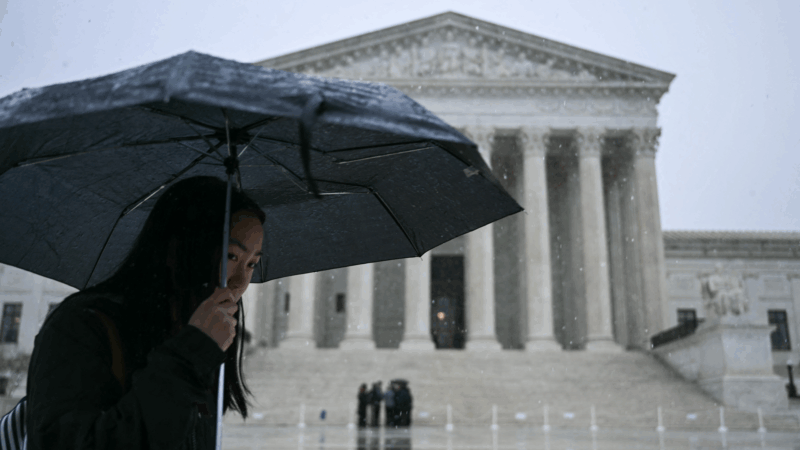
Snow and wind batter parts of US, with threat of thunderstorms and tornadoes
A broad and erratic patchwork of severe weather rumbled across much of the U.S. on Sunday, dumping heavy snow in the Upper Midwest while damaging high winds swept across the Plains.

Crew of fatal US military crash included Alabama father recently deployed
The six U.S. service members who died in the crash of a U.S. military refueling aircraft included an Alabama father who had just been promoted and deployed. The U.S. government released the identities of the deceased service members Saturday.

Israeli soldiers fire on family car in occupied West Bank, killing 4
Israeli soldiers fired on a car carrying a family in the northern West Bank, killing four people including two children, the Palestinian Authority's Health Ministry said.
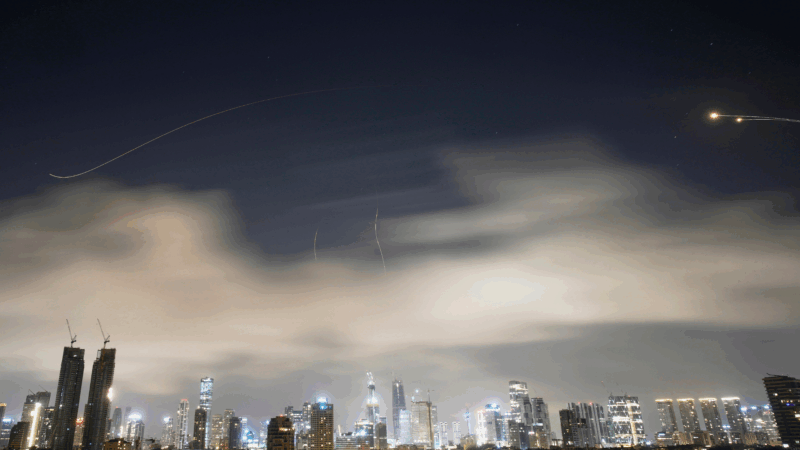
U.S. military names six killed in plane crash as Iran war enters third week
The conflict in the Middle East has entered a third week, with Israel announcing a barrage of new strikes on western Iran on Sunday, while the U.S. defense department released the names of six service members who died when their military refueling aircraft crashed.
Alabama poised to drastically overhaul utility regulation. Will it lower electric bills?
The Alabama Senate unanimously voted to expand the public service commission, and create a Secretary of Energy to address rising electricity prices. A bill in the House would go even further, requiring rate case hearings and limiting utility profits.

Sunday Puzzle: BAD!
Ayesha Rascoe plays the puzzle with KCUR listener Justin Marciniak and Weekend Edition Puzzlemaster Will Shortz.
