
Oil companies expected a big business boom under Trump. Now they’re worried
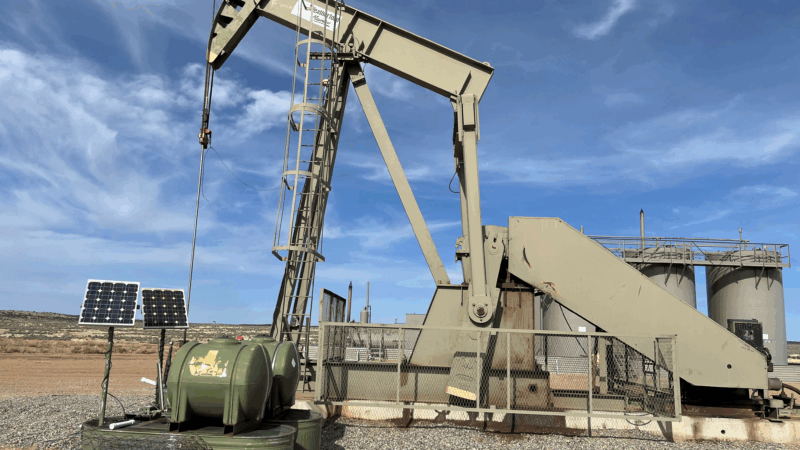
FARMINGTON, N.M. — The San Juan Basin, in the northwestern part of the state, is one of the oldest federal lands drilling areas in the U.S. It’s a huge swath of barren, brown high desert that first started booming in the 1950s.
Today, some 40,000 wells pockmark the rolling hills of the Four Corners region, several thousand of them still reliably pump up light sweet crude oil and natural gas through the old iconic pumpjacks.
But this historic and remote drilling region has struggled for the last decade or more.
“It used to be an epicenter,” says Sean Dugan, the third-generation president of Dugan Production, a family drilling business in the boom-and-bust town of Farmington. “When the majors left, they took all their rigs with them.”
He’s talking about the major international companies like Chevron and BP that started pulling out of the basin after the 2008 financial crisis, namely when natural gas prices slumped.
Many left for shale drilling areas like the Bakken in North Dakota or the Permian Basin in southern New Mexico and Texas where drilling on private land was more productive, lucrative and economical.
Today it’s only the smaller independents like Dugan still hanging on. But he sees potential for another boom out here.
“Oh yeah, we’ve got a lot of tricks up our sleeves,” says the cheerful and charismatic Dugan. “The basin has a lot to give. We’ve barely begun to tap its potential.”

Local drillers say more than half the natural gas reserves in this region have yet to be tapped. And the hope is all the new computer data centers being built in places like Phoenix will want cheaper gas-powered electricity.
But watching a group of roughnecks on a rig in grubby overalls moving huge, long steel pipes, Dugan’s smile begins to fade to a smirk.
“Your polypipe, which is what these pipelines are made out of now. That all comes from the Asian markets,” Dugan says.
Dugan says the cost of doing business out here was already expensive and President Trump’s trade war is making it worse.
Trump’s trade war is causing anxiety in the oil patch
Many oil and gas company executives, particularly the larger ones, initially celebrated Trump’s return to the White House. But lately, that optimism for higher oil company profits appears to have faded amid growing fears of a recession.
“You know, drill baby drill and lower oil prices are not simpatico,” says George Sharpe, investment manager for Merrion Oil and Gas, one of the San Juan Basin’s oldest drillers.
In other words, Sharpe says, if Trump tanks the economy and oil prices hover at or below the cost of production, you can remove all the regulatory barriers you want, but companies will be wary of drilling new wells.
“I think the whole tariff thing is going to backfire on Trump,” Sharpe says.

Dugan says he wakes up every morning and checks the news on tariffs. He used to spend about $80,000 on a load of pipes that come from South Korea. Now, he figures it could be up to $120,000. His company was one of the few locally to avoid mass layoffs at the start of the pandemic in 2020 when oil prices tanked.
Today Dugan says he wants to plan for ten years out. But he doesn’t even know what’s going to happen tomorrow.
“It just kneecaps ya when all this uncertainty and volatility is in the air,” Dugan says.
President Trump lost New Mexico handily in the presidential election last year, but he did rack up big wins in rural counties like this. In interviews with local industry and community leaders, it’s clear there is still plenty of hope that the Trump administration’s newer, revised slogan of “build baby build” will make it easier to get a new gas pipeline built between the San Juan Basin and Mexico.
“There is optimism in the air. Our workers welcome energy policies that put American energy first,” Farmington Mayor Nate Duckett said, noting in an email that his town was built on top of one of the richest gas and coal fields in the U.S.
Boom and bust energy towns are in limbo
On the day President Trump issued four new executive orders to revive America’s coal industry, local environmentalist Dave Fosdeck was driving his four-wheel drive truck to the top of a hogback for what turned out to be a bit of an apocalyptic view.
“Here we are up on top,” Fosdeck said, hopping out for a 360 view. “Four Corners power plant about 11 o’clock there, and San Juan Generating station up to our left at 9 o’clock.”

There was the enormous San Juan coal plant — currently being dismantled — a hulking gash of twisted metal and steel glaring in the desert sun. The Four Corners plant on the Navajo Nation is supposed to be decommissioned in 2031, but Trump has promised to stop coal plants from closing.
“It’s about supply and demand and also the cost of producing in this remote region compared to like, Texas or Louisiana,” Fosdeck says.
But people here are tired of seeing Farmington in the headlines as a town that’s losing population.
“There’s opportunity, but, ugh, it’s hard,” Fosdeck says. “It’s hard to find an area like this that has been so dependent on oil and gas trying to transition to something else.”
Farmington has tried to diversify by promoting tourism and outdoor recreation on all the federal public lands in the region. But those jobs don’t pay nearly as much. With virtually no new drilling here for now, most of the oilfield work is in servicing existing wells, or decommissioning them, to prevent the leaking of methane.
Alex Prieto is supervising a crew that’s laying production pipe into a shuttered well, before they’ll pump cement and cap it.
He’s grateful for the job in a time when so much feels uncertain.
“I love it, just keeping my head busy,” Prieto says. “I provide for my family which is the most important thing.”
It also means he doesn’t have to travel to other oil patches out of state for work.
“As long as we’re working we’re happy. The oil field is the main thing out here,” Prieto says.
But no one seems to be preparing for a lot of new hiring here at this point, despite promises of a new oil and gas boom on federal land.
This is the latest report in an occasional NPR National Desk series examining how President Trump’s early actions are playing out across America.
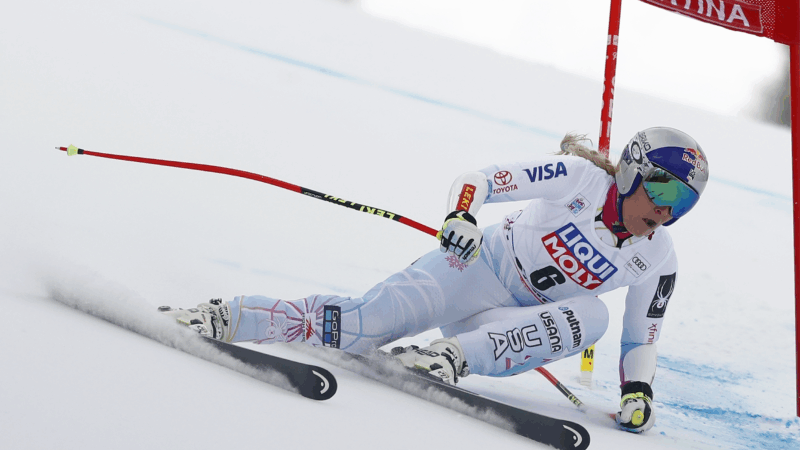
For many U.S. Olympic athletes, Italy feels like home turf
Many spent their careers training on the mountains they'll be competing on at the Winter Games. Lindsey Vonn wanted to stage a comeback on these slopes and Jessie Diggins won her first World Cup there.
Immigrant whose skull was broken in 8 places during ICE arrest says beating was unprovoked
Alberto Castañeda Mondragón was hospitalized with eight skull fractures and five life-threatening brain hemorrhages. Officers claimed he ran into a wall, but medical staff doubted that account.

Pentagon says it’s cutting ties with ‘woke’ Harvard, ending military training
Amid an ongoing standoff between Harvard and the White House, the Defense Department said it plans to cut ties with the Ivy League — ending military training, fellowships and certificate programs.
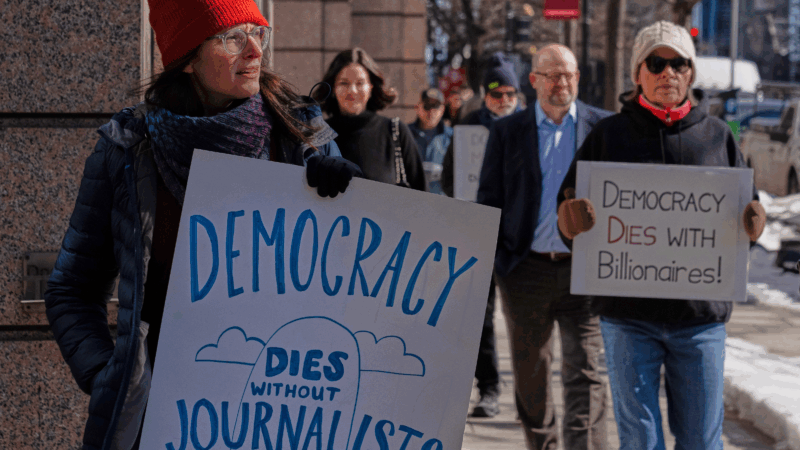
‘Washington Post’ CEO resigns after going AWOL during massive job cuts
Washington Post chief executive and publisher Will Lewis has resigned just days after the newspaper announced massive layoffs.
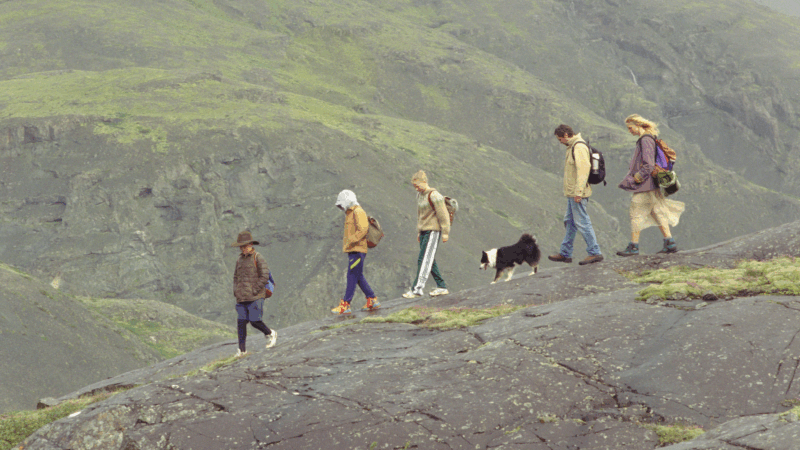
In this Icelandic drama, a couple quietly drifts apart
Icelandic director Hlynur Pálmason weaves scenes of quiet domestic life against the backdrop of an arresting landscape in his newest film.

After the Fall: How Olympic figure skaters soar after stumbling on the ice
Olympic figure skating is often seems to take athletes to the very edge of perfection, but even the greatest stumble and fall. How do they pull themselves together again on the biggest world stage? Toughness, poise and practice.
