
Nuclear submarine arms race heats up between North and South Korea
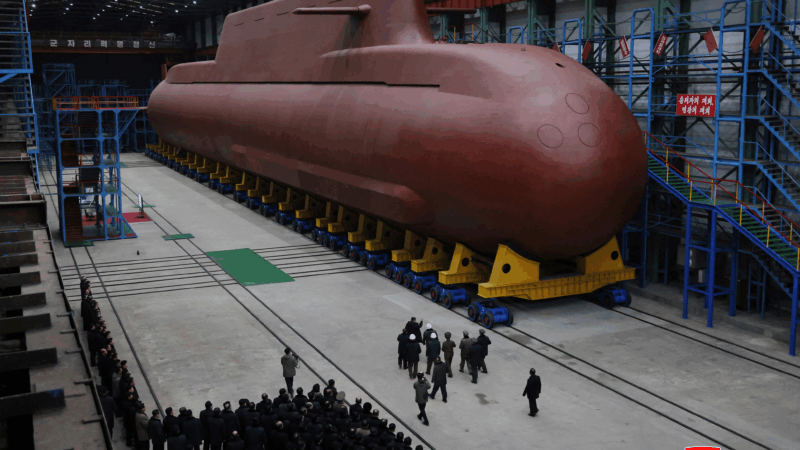
SEOUL, South Korea — An arms race for nuclear-powered submarines is accelerating between North and South Korea amid shifts in the United States’ security strategy in the region.
North Korea’s state media revealed on Thursday a picture of what it called a “8,700-ton nuclear-powered strategic guided missile submarine.” It’s the first time North Korea disclosed the tonnage and the apparently completed hull of the submarine since it declared its pursuit for nuclear subs in 2021.
North Korean leader Kim Jong Un said that the new vessel will help defend his country against “the negative security situation that has come as present reality,” according to the country’s state media. Kim criticized South Korea’s plan to build its own nuclear subs as “an offensive act … that must be countered.”
South Korea has moved quickly to build its own nuclear subs, since receiving President Trump’s approval in October. A pan-government task force launched last week in Seoul, while the country’s national security adviser Wi Sung-lac said South Korea will work on a pact for the U.S. to supply it with military-use nuclear fuel.
The green light for South Korea’s underwater ambitions came as the U.S. pushes its allies to shoulder more of their own security burden and spend more to beef up defense capabilities.
South Korea has sought to build nuclear subs for decades against North Korea’s nuclear threats, which quickly expanded to the maritime sphere in recent years. In addition to making the nuclear-powered submarine, it has tested submarine-launched nuclear missiles and claimed to have developed a nuclear-capable torpedo.
South Korea’s defense minister, Ahn Gyu-back, said in October that conventional, diesel-powered subs “can’t compete with nuclear subs North Korea is building in underwater endurance and speed.”
U.S. expects subs to help counter China
The U.S. expects future South Korean nuclear subs to do more in the region than countering North Korea. Admiral Daryl Caudle, the chief of naval operations of the U.S. Navy, said during his visit in Seoul in November that it’s “a natural expectation” that they be used “to meet our combined goals on what the United States considers to be our pacing threat, which is China.”

South Korea President Lee Jae Myung appeared to make a nod to that expectation, with a rare mention of China during his October summit with Trump. “The limited underwater range of diesel submarines restricts our ability to track subs on the North Korean or Chinese side,” he said.
Yoon Sukjoon, a retired South Korean navy captain, tells NPR that it’s a “given” that South Korean nuclear subs will operate in a wider underwater domain beyond the Korean Peninsula.
Yoon says the waters around the peninsula are too shallow for submarine operations. “But if the South Korean Navy expands its nuclear submarine operations to China,” he says, “it can contribute some strategic deterrence against the Chinese Navy’s threats in the Indo-Pacific.”
But South Korea has been wary of suggesting military confrontation with China — its largest trading partner, as China also rapidly expands its navy. President Lee’s office later said that his remarks to Trump “simply referred to submarines near our waters toward the direction of the North and China,” not vessels belonging to certain countries.
The government’s careful stance reflects the attitude of the South Korean public, of whom a majority says South Korea must remain neutral should a serious conflict erupt between the U.S. and China, according to a recent survey.
“Entry point toward a much bigger goal”
But South Korea — and Japan, which has signaled willingness to develop nuclear-powered submarines — is also concerned about China’s growing sphere of influence and does not want to fall under it, says Kim Heungkyu, a political scientist and director of the China Policy Institute at Ajou University.
As the U.S. shifts its defense focus closer to home, he says, its allies are growing increasingly distrustful of its security commitment in Asia.
In a poll by the private think tank Asan Institute from March, less than half of Koreans said they believe the U.S. would respond with nuclear weapons if North Korea attacks the South with one. Meanwhile, a majority of South Koreans said they support nuclear armament, even at the cost of international sanctions or withdrawal of U.S. troops.
“In a new international order without the U.S. in the Western Pacific, South Korea needs a survival strategy based on nuclear weapons,” says Kim. And, he adds, nuclear-powered submarines would allow the country an “entry point toward a much bigger goal” of nuclear armament.
The South Korean government, which is separately pursuing access to enriching uranium and reprocessing spent fuel in talks with the U.S., has denied that it wants to go nuclear.
But Kim says the Trump administration is “pushing South Korea and Japan toward the direction of nuclear armament, whether it intends or not.”
NPR’s Anthony Kuhn contributed to this report in Seoul.
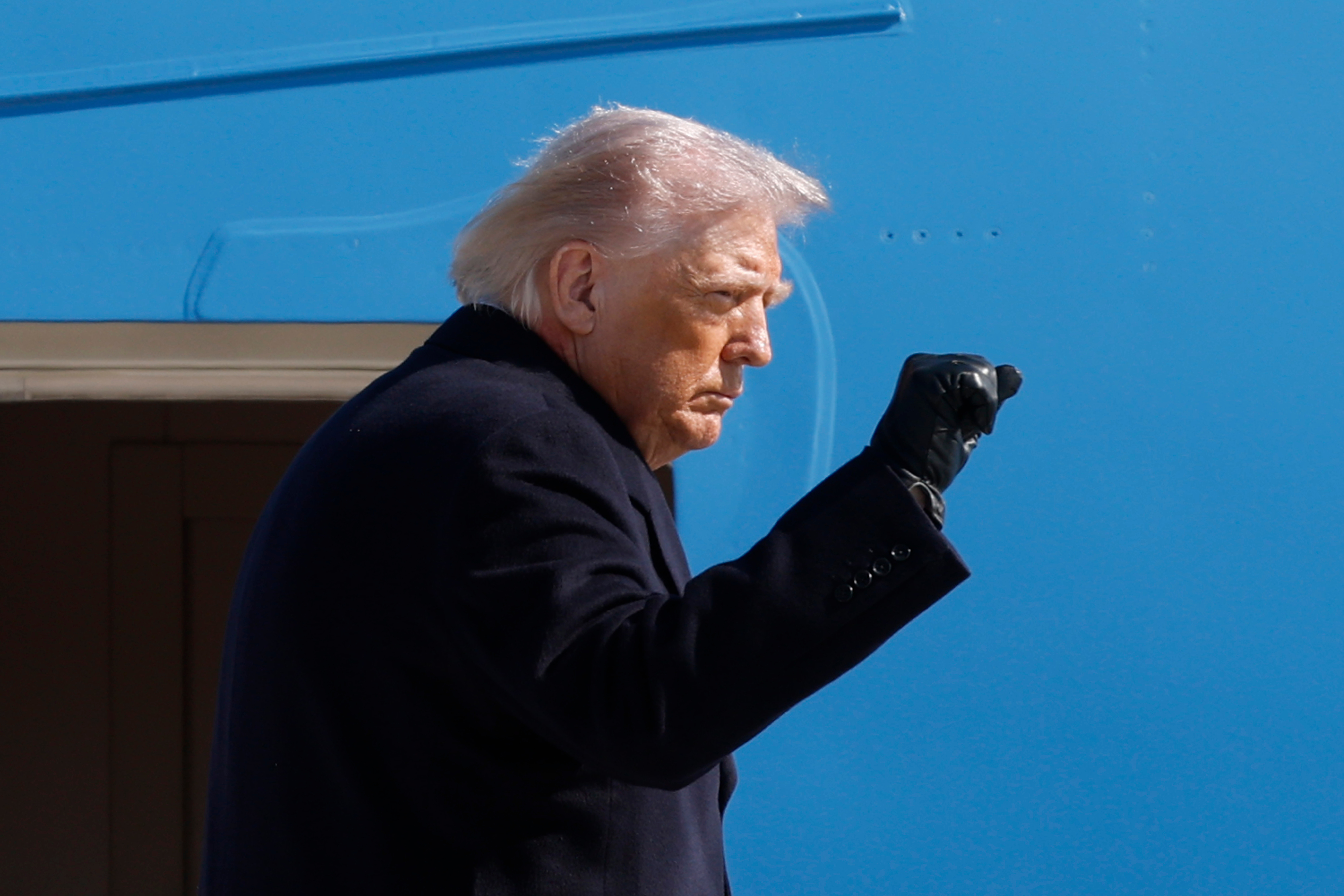
Trump says he is ‘not happy’ with the Iran nuclear talks but indicates he’ll give them more time
U.S. President Donald Trump said Friday he's "not happy" with the latest talks over Iran's nuclear program but indicated he would give negotiators more time to reach a deal to avert another war in the Middle East.
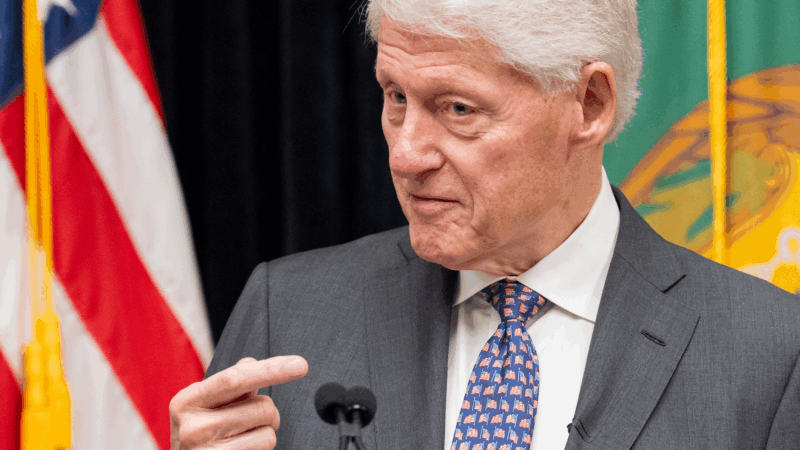
Bill Clinton says he ‘did nothing wrong’ with Epstein as he faced grilling over their relationship
Former President Bill Clinton told members of Congress on Friday that he "did nothing wrong" in his relationship with Jeffrey Epstein and saw no signs of Epstein's sexual abuse as he faced hours of grilling from lawmakers over his connections to the disgraced financier from more than two decades ago.
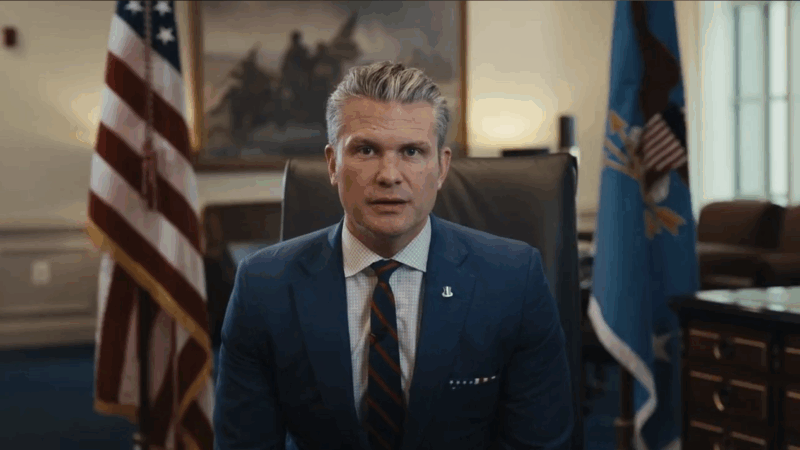
Pentagon puts Scouts ‘on notice’ over DEI and girl-centered policies
After threatening to sever ties with the organization formerly known as the Boy Scouts, Defense Secretary Hegseth announced a 6-month reprieve
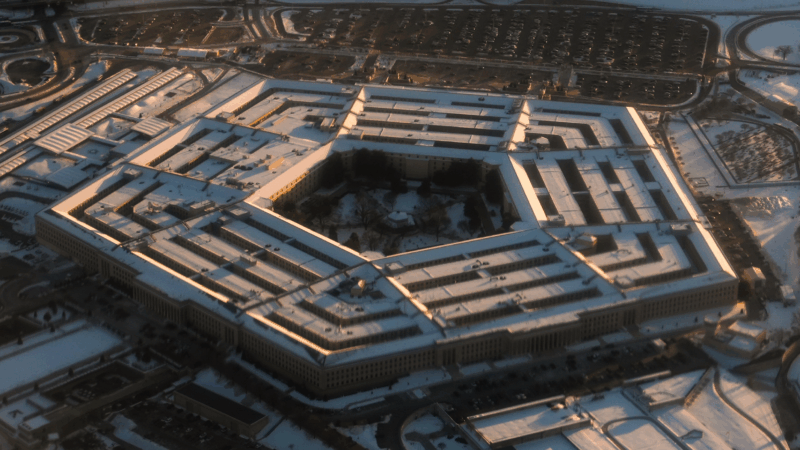
President Trump bans Anthropic from use in government systems
Trump called the AI lab a "RADICAL LEFT, WOKE COMPANY" in a social media post. The Pentagon also ordered all military contractors to stop doing business with Anthropic.

HUD proposes time limits and work requirements for rental aid
The rule would allow housing agencies and landlords to impose such requirements "to encourage self-sufficiency." Critics say most who can work already do, but their wages are low.
Paramount and Warner Bros’ deal is about merging studios, and a whole lot more
The nearly $111 billion marriage would unite Paramount and Warner film studios, streamers and television properties — including CNN — under the control of the wealthy Ellison family.
