
North Carolina’s Lumbee Tribe receives full federal recognition after 137-year effort
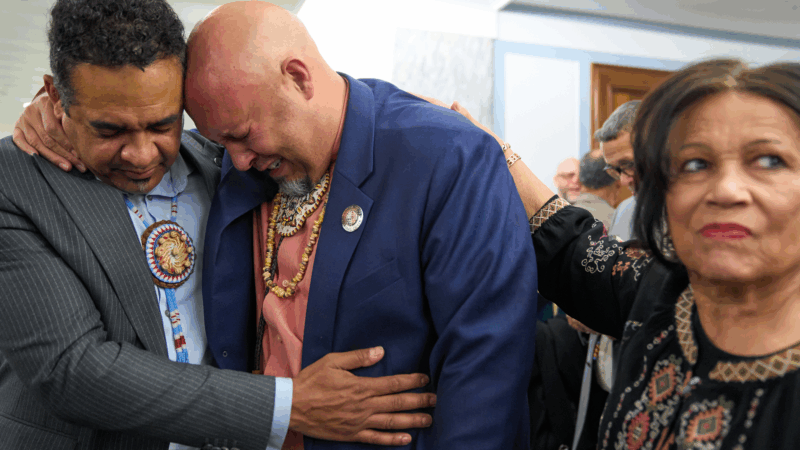
After a 137-year struggle, the Lumbee Tribe of North Carolina has finally received full federal recognition from the U.S. government.
Members of the Native American tribe shed tears as it reached the historic milestone in Washington, D.C., this week. Tribal Chairman John L. Lowery witnessed President Trump sign the bill that extended acknowledgment to the tribe at the White House on Thursday.
“I’m so thankful today for everyone who has helped us along this way — everyone from our ancestors from the late 1880s all the way up to present day. So many people have been a part of this fight,” Lowery said in a video posted to the tribe’s social media accounts.
Federal lawmakers included the Lumbee Fairness Act in the $900 billion annual military spending package.
The Lumbee Tribe of North Carolina has 55,000 members. The tribal territory is located in the southeastern part of the state in Robeson, Hoke, Cumberland, and Scotland Counties.
Federal recognition opens the door to an expanse of federal resources for tribes. Federally recognized tribes are eligible to receive federal funding from the Bureau of Indian Affairs (BIA). Benefits include support for housing, education and health care.
“I do believe that the biggest benefit we’re going to receive as a tribe is Indian Health Services,” Lowery said during a press conference Friday. “For our people who do not have health care insurance, or our people who have high health care insurance, they will be able to work through Indian Health Services to get services provided to them.”
In 2022, after the measure was introduced in the House, the Congressional Budget Office estimated the federal government would spend nearly $250 million in providing health benefits to Lumbee Tribe members over four years through the Indian Health Service.
Federally recognized tribes hold certain rights to self-governance. The designation expands tribal control over economic development by authorizing the BIA to take land into trust for the benefit of the tribe.
The Lumbee first petitioned Congress for federal recognition in 1888. The tribe then only received partial recognition in 1956.
North Carolina Gov. Josh Stein applauded this week’s milestone. “The state has long recognized the Lumbee Tribe,” he said in a news release. “Full federal recognition will allow members access to the federal health care, education, housing, child care, and disaster relief benefits afforded other federally recognized tribes. These benefits will in turn create economic opportunities for the Tribe and the surrounding community.”
Sen. Thom Tillis, R-N.C., sponsored the bipartisan Lumbee Fairness Act in the upper chamber. He credited Trump in a statement, calling the designation long overdue for the Lumbee people.
He said “a historic injustice has been corrected, and the Lumbee people can finally access the full federal benefits they have long earned and deserve.”
Trump issued a memo in January directing the Interior Department to develop a plan to assist the tribe in obtaining full federal recognition.
The Eastern Band of Cherokee Indians opposed the recognition. Tribal leaders said the Lumbee circumvented proper federal eligibility procedures that require historical evidence of Native heritage. The Eastern Band of Cherokee Indians had been the only federally recognized Native American tribe in North Carolina. The Lumbee is now the 575th federally recognized tribe in the United States.
“I know with every fiber of my being that our ancestors are smiling down on us today,” Lowery said in a statement as the bill was headed to Trump’s desk. “After decades of waiting, praying, and fighting, our Tribe has finally crossed a barrier that once seemed impossible to overcome.”
More than a dozen tribes from several states are listed online as petitioning the Interior Department for federal acknowledgment. The Office of Federal Acknowledgement website says decisions are based on factors that include anthropological, genealogical, and historical research.
The Department has denied petitions that it deems fail to meet its seven-part criteria that define an Indian tribe under federal law. The requirements include that “the petitioner comprises a distinct community and demonstrates that it existed as a community from 1900 until the present.”
Petitioners may wait decades for a resolution.

HUD proposes time limits and work requirements for rental aid
The rule would allow housing agencies and landlords to impose such requirements "to encourage self-sufficiency." Critics say most who can work already do, but their wages are low.
Paramount and Warner Bros’ deal is about merging studios, and a whole lot more
The nearly $111 billion marriage would unite Paramount and Warner film studios, streamers and television properties — including CNN — under the control of the wealthy Ellison family.

A new film follows Paul McCartney’s 2nd act after The Beatles’ breakup
While previous documentaries captured the frenzy of Beatlemania, Man on the Run focuses on McCartney in the years between the band's breakup and John Lennon's death.

An aspiring dancer. A wealthy benefactor. And ‘Dreams’ turned to nightmare
A new psychological drama from Mexican filmmaker Michel Franco centers on the torrid affair between a wealthy San Francisco philanthropist and an undocumented immigrant who aspires to be a dancer.
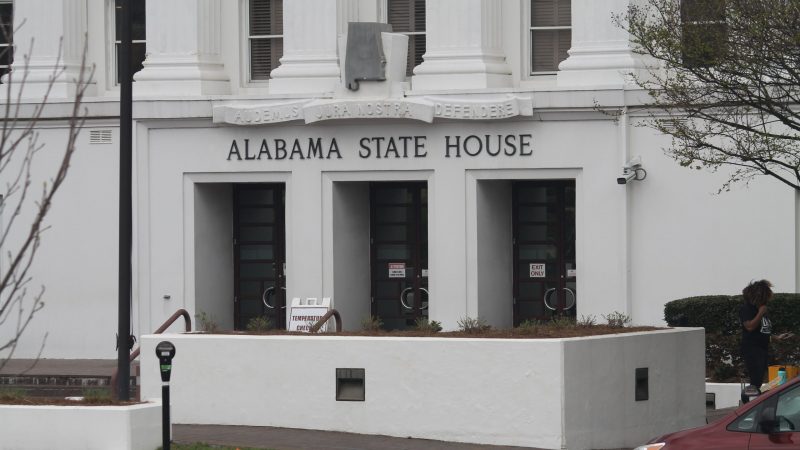
Bill making the Public Service Commission an appointed board is dead for the session
Usually when discussing legislative action, the focus is on what's moving forward. But plenty of bills in a legislature stall or even die. Leaders in the Alabama legislature say a bill involving the Public Service Commission is dead for the session. We get details on that from Todd Stacy, host of Capitol Journal on Alabama Public Television.

My doctor keeps focusing on my weight. What other health metrics matter more?
Our Real Talk with a Doc columnist explains how to push back if your doctor's obsessed with weight loss. And what other health metrics matter more instead.
