
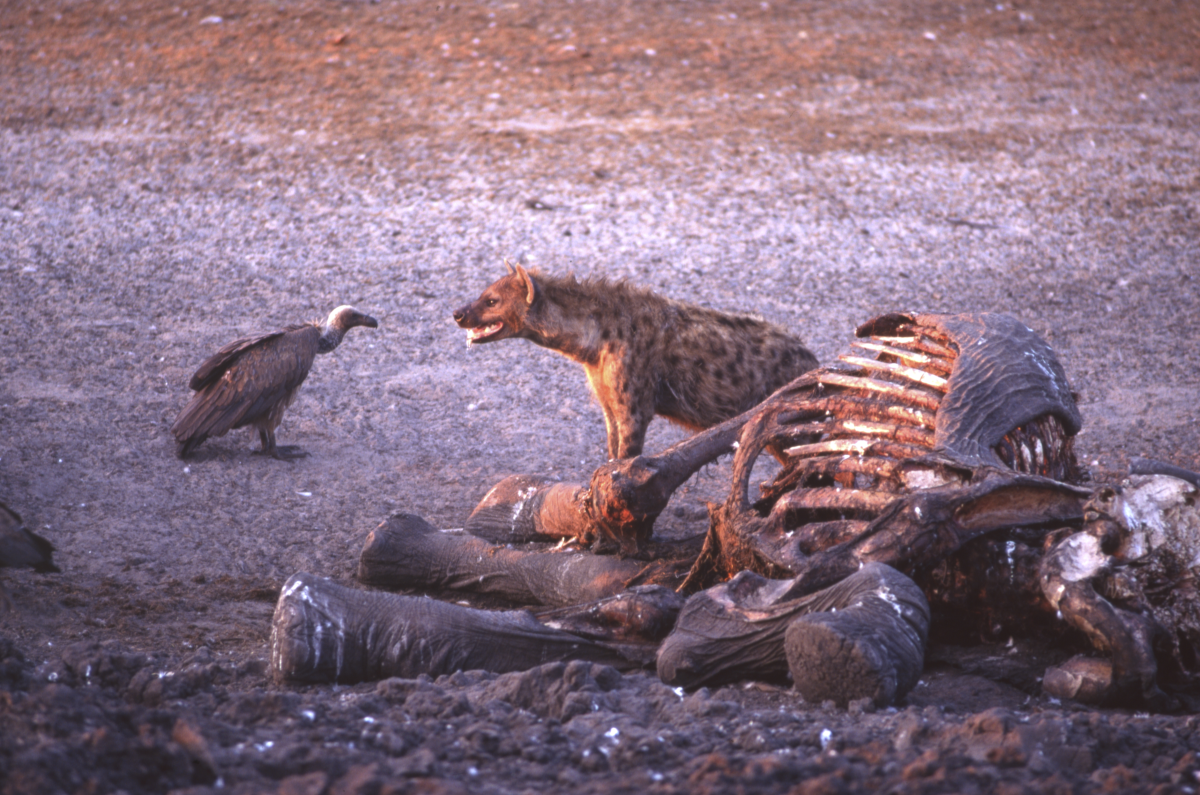
Next time you see a vulture picking over a carcass, say ‘thank you!’

Growing up in India, environmental economist Anant Sudarshan remembers the vultures.
“When I used to go to school, the school bus would cross the river. And you always saw these vultures in vast quantities,” he said. “They would feed on carcasses from these leather industries along the side of the river.”
“Then they just sort of disappeared,” says Sudarshan, now at the University of Warwick.
Starting in the mid-1990s, their numbers dropped in India from as many as 50 million to just thousands. The killer turned out to be diclofenac, a painkiller given to livestock that just so happens to be toxic to vultures. Usage took off after the patent was lifted in 1994, effectively poisoning vultures that feasted on the carcasses of treated animals, pushing the birds to the brink of extinction across South Asia.
The vultures weren’t the only creatures harmed. Roughly 100,000 people died each year in the early 2000s because of the cascading effects of losing these important scavengers, Sudarshan and his colleague reported last year in the American Economic Review.
Vultures are uniquely good at cleaning up a carcass and can leave an entire cow spotless within 40 minutes. Without them, rotting carrion — and the potentially harmful bacteria contained within — can proliferate and then spread disease if humans come into close contact or by contaminating water. Furthermore, all that extra rotting meat may have provided the food that fueled a rise in the number of feral dogs, which another study estimates led to tens of thousands more cases of rabies.
“To a certain extent, vultures were controlling these possible routes of disease but weren’t when they declined,” says Chinmay Sonawane, a biologist at Stanford University.
Sonawane says Sudarshan’s work on vultures is one of the clearest examples of how scavengers can influence human health, but it’s far from the only one. Vultures also aren’t the only scavengers in trouble.
Roughly one third of scavenging species are also declining or threatened with extinction, Sonawane and his colleagues reported last month in PNAS. They argue that decline, especially among specialized scavengers like vultures, could mean even more disease for humans.
“Our health is very much contingent on the stability and conservation of the natural world,” says Sonawane. “If we are to address the threats, the key threats to our human health, then we have to start thinking more about wildlife.”
Taking stock of scavengers
Over the last several years, “there’s been a burst of case studies looking at the relationship between scavenging species and human health,” says Sonawane.
In addition to Sudarshan’s paper, researchers have shown how hyenas reduce risk of anthrax from cattle carcasses and how catlike civets in Malaysia, by quickly devouring rancid meat, cut down on diarrhea-causing bacteria that can spread through flies.
To look for broader patterns on how scavengers influence human health and see how these species are faring overall, Sonawane and his colleagues analyzed previously published data on over 1,300 scavenging species.
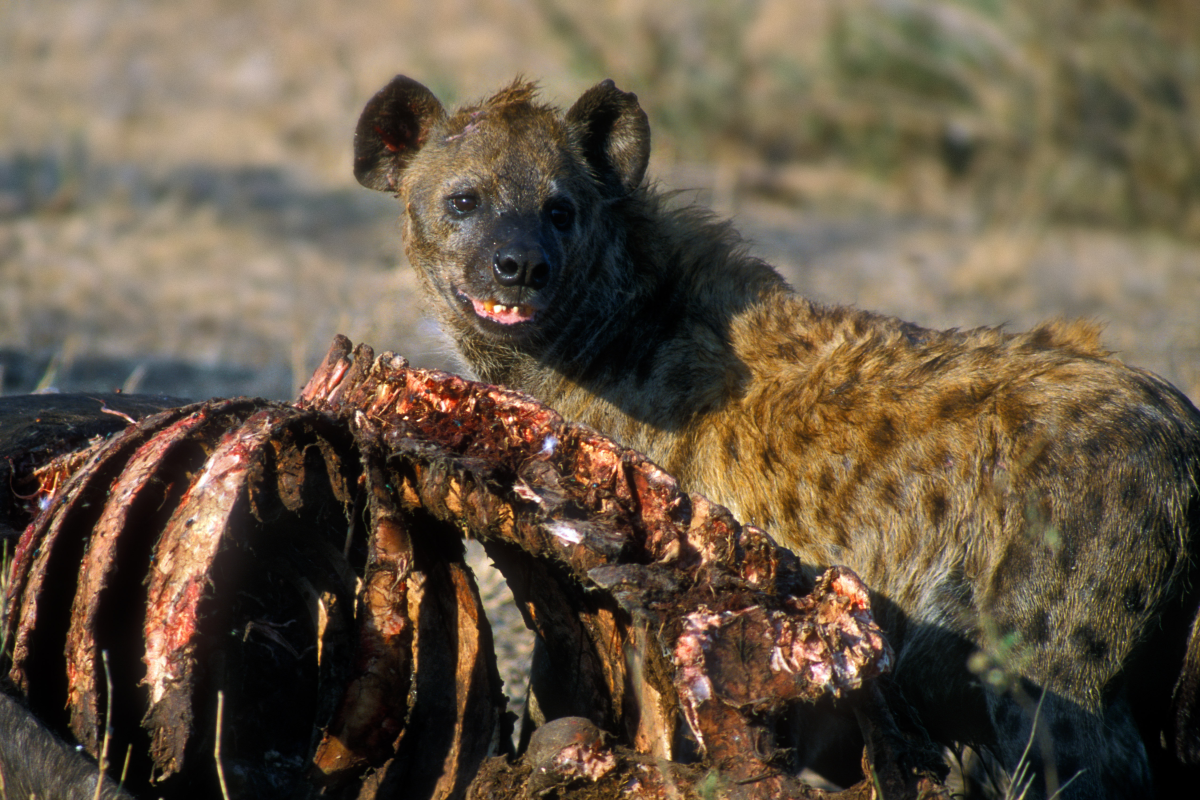
They found that 36% are declining or threatened with extinction, but that risk wasn’t equally distributed. Apex scavengers, animals like vultures that are the best at what they do and tend to only eat carrion, were more at risk than smaller scavengers, which sometimes scavenge but can eat living things too.
In fact, the decline of apex scavengers can sometimes facilitate a boom in smaller scavengers, Sonawane explains. “When we lose these large wildlife, smaller wildlife tend to replace them.”
The case of vulture decline shows how that can be a problem. In the absence of vultures, carrion accumulated and fueled a rise in smaller scavengers, namely feral dogs and rats. These smaller scavengers just aren’t as efficient at cleaning up carcasses as apex scavengers, says Sonawane.
“Therefore there’s more carcass waste, therefore more pathogens in the environment, and therefore people are more likely to pick up disease from these sources,” he says.
These smaller scavengers are also more likely to spread diseases themselves. Feral dogs can disseminate rabies or fleas, and rats can host a variety of pathogens that cause leptospirosis or hantavirus. Such critters tend to come into closer contact with humans than apex scavengers and so pose a greater risk.
Overall, the study does “quite an elegant job at connecting the link between ecosystem stability and human well-being,” says Christopher O’Bryan, a biologist at Maastricht University who wasn’t involved in the research.
While there’s still much to learn about the role specific scavengers play in limiting certain diseases, O’Bryan says: “The take-home message is that we need to be always factoring nature into the equation of human health. We can’t ignore it.”
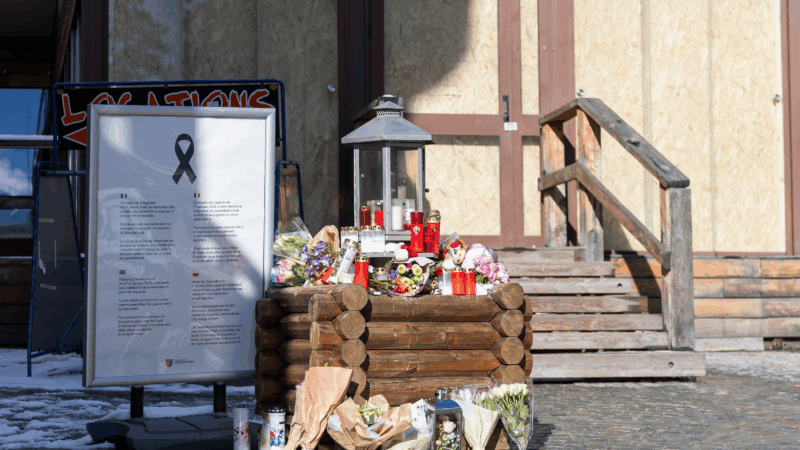
Swiss Alpine bar fire claims 41st victim, an 18-year-old Swiss national
Swiss prosecutors have opened a criminal investigation into the owners of Le Constellation bar in the ski resort of Crans-Montana, where a fire in the early hours of Jan. 1 killed dozens.

Sunday Puzzle: Rhyme Time
NPR's Ayesha Rascoe plays the puzzle with WBUR listener Laurie Rose and Weekend Edition Puzzlemaster Will Shortz.
Alcaraz beats Djokovic to become the youngest man to complete a career Grand Slam
The 22-year-old Spaniard's win against 38-year-old rival Novak Djokovic at Sunday's Australian Open makes him the youngest male player to win all four major tournaments.
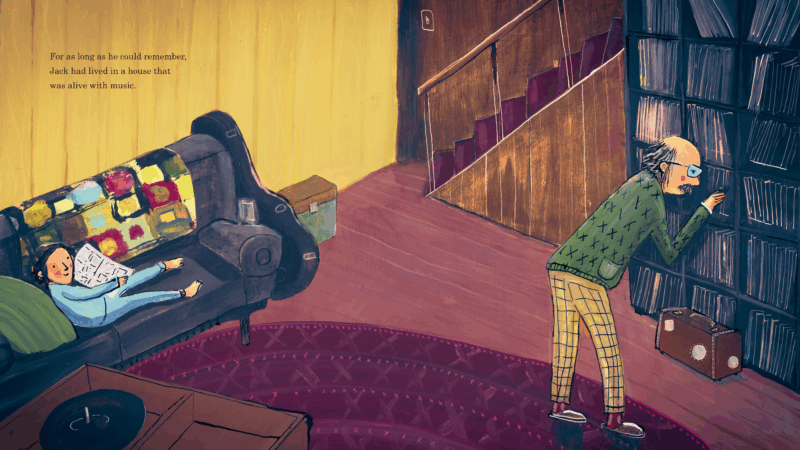
You already know the song — now, ‘The One About the Blackbird’ is also a picture book
In The One About the Blackbird, a young boy learns to play guitar from his grandfather. And there's one song in particular that they love…

At a clown school near Paris, failure is the lesson
For decades, students at the Ecole Philippe Gaulier have been paying to bomb onstage. The goal isn't laughs — it's learning how to take the humiliation and keep going.
In the world’s driest desert, Chile freezes its future to protect plants
Tucked away in a remote desert town, a hidden vault safeguards Chile's most precious natural treasures. From long-forgotten flowers to endangered crops.
