
Newly released court records reveal misconduct inquiry into federal judge
New information is emerging that could complicate the retirement last year of a prominent federal judge.
Mark Wolf, 79, retired from the federal district court in Massachusetts last November, after more than 40 years of service. He penned an essay in The Atlantic tying his departure to actions by President Trump.
“My reason is simple: I no longer can bear to be restrained by what judges can say publicly or do outside the courtroom,” Wolf wrote Nov. 9. “The White House’s assault on the rule of law is so deeply disturbing to me that I feel compelled to speak out.”
Later, he told PBS NewsHour, “Well, I’m worried in part because I think all of the abuse that’s been showered on the courts and the judges is causing people to lose confidence in the integrity and the impartiality of the judicial process.”
Wolf’s decision to retire coincided with an inquiry by another federal judge into potential misconduct, according to newly published orders. That inquiry found probable cause to believe an unnamed jurist had engaged in misconduct by creating a hostile workplace for court employees.
In an order dated Nov. 24, 2025, U.S. Appeals Court Judge David Barron wrote he conducted a “limited inquiry” into misconduct allegations, including interviews with the judge in question and the judge’s former law clerk. The inquiry ended when the judge retired.
The order did not provide details about the alleged misconduct but stated it could include “treating litigants, attorneys, judicial employees or others in a demonstrably egregious and hostile manner” or creating a hostile workplace for court employees. Judge Barron ultimately concluded that further action was unnecessary because of “intervening events.”
A source familiar with the inquiry, who spoke on condition of anonymity to discuss the sensitive internal investigation, said the judge in question is Wolf and his resignation terminated the review of his conduct.
Wolf, who was appointed by President Ronald Reagan and confirmed by the U.S. Senate in 1985, built a national reputation in part through his work exposing corruption by the FBI in its handling of mafia informants in the case involving mobster Whitey Bulger.
Earlier in his career, Wolf worked as a special assistant to the Attorney General after the Watergate scandal. He also led the public corruption unit in the federal prosecutor’s office in Massachusetts.
Reached by phone Tuesday, Wolf offered no direct comment.
“I don’t know what to say but at the moment nothing. I’m sitting here getting ready to leave for two weeks and working frantically,” the retired judge said. “All right, my phone number’s public; you called it.”
Susan Goldberg, the executive for the First Circuit, referred a reporter to the Administrative Office of the U.S. Courts in Washington. A spokeswoman there had no comment.
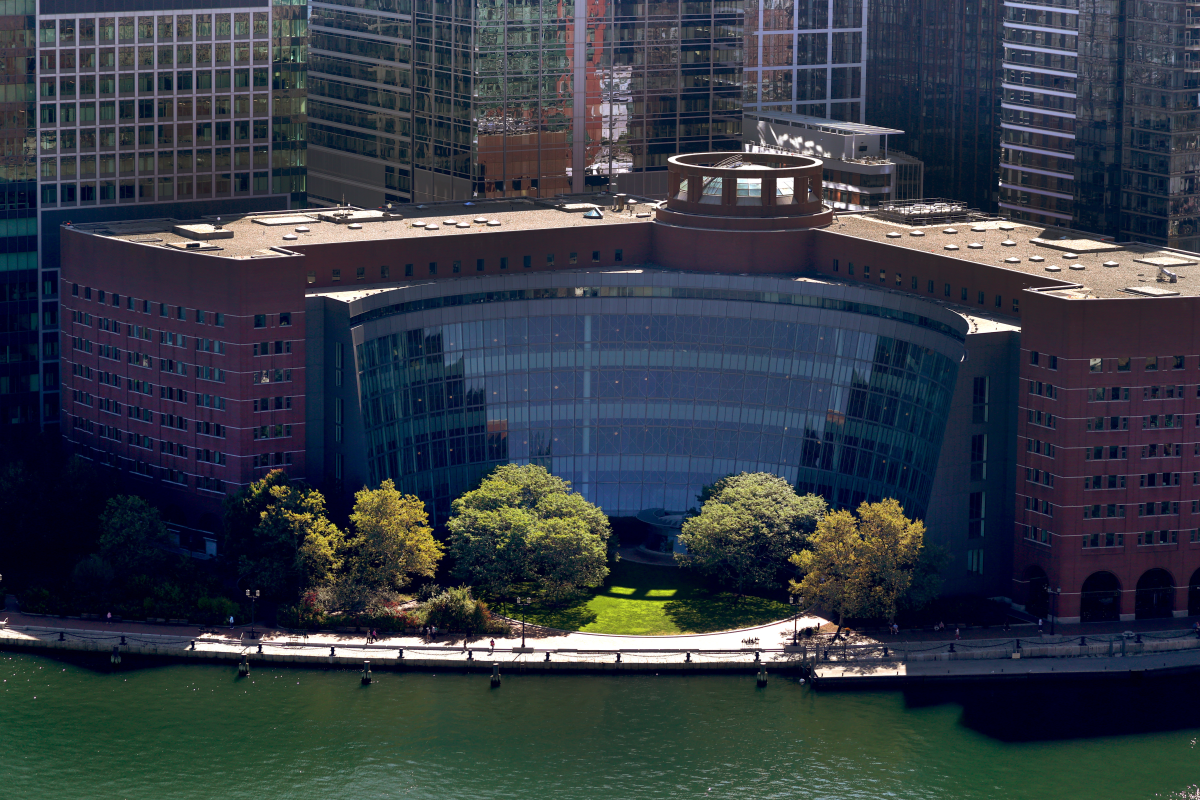
(David L. Ryan/The Boston Globe via Getty Images)
At the time of Wolf’s retirement, the chief judge of the Massachusetts court Denise J. Casper said he had served with “distinction” for decades.
“His steadfast commitment to the rule of law, determination in wrestling with novel issues of fact and law and dedication to making fair, equitable and legally sound decisions without fear or favor are the hallmarks of his time on the bench,” Caspar said in a Nov. 7 press release.
The newly released orders describing the limited review of misconduct allegations shine a fresh light on the system the federal courts use to police themselves. Court employees are not covered by federal anti-discrimination laws, and an NPR investigation uncovered problems with the courts’ internal system, including a pervasive fear of retaliation for whistleblowers.
The power imbalance between federal judges and the law clerks who rely on them for mentorship and lifelong career support, can foster a culture of silence.
A court order suggests the First Circuit Appeals Court began digging after officials there received a letter from a judge who relayed “reliable information” about potential misconduct learned from a former law clerk.
Aliza Shatzman, founder of the Legal Accountability Project, a group that helps law clerks learn about problematic judges, said the newly public allegations highlight the lack of accountability for judges and the need for congressional oversight.
“A judge’s departure from the bench amid a misconduct investigation does not eliminate the need for accountability or transparency,” said Shatzman. “This outcome represents neither justice for the mistreated clerk who bravely reported the misconduct…nor accountability for one of many federal judges who abuse their power by mistreating clerks and staff.”
Last year a member of Congress introduced a bill called the Trust Act, that would require pending investigations of misconduct to continue even if a judge retires, resigns or dies.https://www.npr.org/2025/05/01/g-s1-63714/judges-accountability-abuse-congress
Congress has not acted to advance the measure.
“Our vaunted federal judiciary, now more than ever, should not tolerate this,” said Gabe Roth, executive director of Fix the Court, a group that seeks to promote transparency in the federal courts.

Feds announce $4.1 billion loan for electric power expansion in Alabama
Federal energy officials said the loan will save customers money as the companies undertake a huge expansion driven by demand from computer data centers.

Mortgage rates fall below 6% for the first time in years
The average home loan rate has dropped below 6% for the first time since 2022. Will that help thaw the frozen housing market?

Baby Keem’s boulevard of broken dreams
Ca$ino, the rapper's second album for his cousin Kendrick Lamar's label, is whiplash embodied, a mirror for the extreme highs and lows of his Sin City hometown.

Pentagon shifts toward maintaining ties to Scouting
Months after NPR reported on the Pentagon's efforts to sever ties with Scouting America, efforts to maintain the partnership have new momentum

Why farmers in California are backing a giant solar farm
Many farmers have had to fallow land as a state law comes into effect limiting their access to water. There's now a push to develop some of that land… into solar farms.
Civil rights leaders say the racial progress Jesse Jackson fought for is under threat
Activists say racial progress won by the Rev. Jesse Jackson is under threat, as a new generation of leaders works to preserve hard-fought civil rights gains.
