
Netflix’s ‘The Eternaut’ makes a haunting series of an esteemed Argentine comic
The Eternaut begins on Netflix with a shot of a borrowed sailboat on a beautiful summer’s night. The lights of Buenos Aires twinkle in the background as three high school girls who’ve been drinking more than they should toast to “all the beautiful things that await.”
As they hug, they don’t notice the lights of the city blacking out behind them. They’re looking the other way, at a strange green glow in the heavens — the first indication that their story is based on a sci-fi graphic novel of uncommon staying power.
Their boat begins to rock, and one of the girls pops below deck to discover their GPS isn’t working. Neither is her cellphone. Then she hears a thump, and looks out a window in horror as first one, then the other of her friends collapse. Her eyes and the camera fix on a single flake of snow.
In the city, when the electricity goes out, some old friends who’ve gathered to play cards chalk it up to yet another power outage. But as they joke about that, they hear loud bangs outside. They go to the window and also see what looks like snow.
“In summer?” one wonders. Then cars crash and people drop in the street, and they realize something outside is toxic.
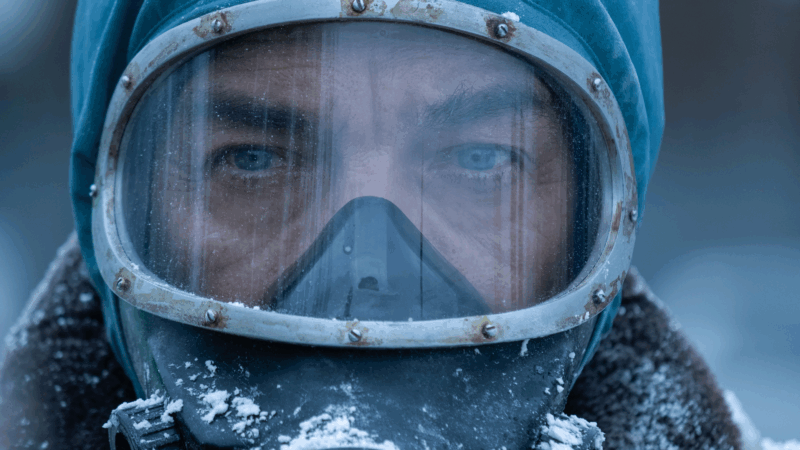
One of the card-players, Juan, tries to call his daughter, but nothing electronic is working. So the others scramble to help him turn what they can find around the cluttered house – an old gas mask, waterproofed clothing, gloves – into some sort of protection. Protection against what, they’re not sure.
And Juan heads out — looking like a cross between an astronaut and a deep sea diver — into a Buenos Aires at once familiar and ghostly. He walks past corpses seemingly felled in mid-gesture — two policemen who’d been chatting through a car window, a power line repairman suspended high in the air, leaning back in his harness, lifeless atop a telephone pole. And everywhere he goes, there’s a light dusting of apparently toxic snow.

Chilling for any viewer — I’ll stop here, just a few minutes into the first episode so you can discover the rest for yourself — these scenes have a special resonance in Argentina, where the story originated as a comic book serial almost 70 years ago.
Like audiences everywhere, Argentine movie patrons are mostly accustomed to disaster films set in cities north of the equator. But El Eternauta is homegrown, politically freighted, and has acquired near mythic status since it was first published in 1957.
Partly that’s because it’s a terrific sci-fi mystery – set in familiar locales, with muscular illustrations by Francisco Solano López. And partly, it’s because writer Héctor Germán Oesterheld, a committed leftist whose work grew more overtly political as his career went on, rebooted the story a dozen years later, amplifying what had always driven the story — the need for collective action to overcome societal horrors.
That in 1977, during a brutal military dictatorship, Oesterheld and his four daughters were all “disappeared” added immeasurably to the graphic novel’s resonance. Today it’s regarded as an Argentine pop culture classic.
Oesterheld’s widow was adamant that the story be filmed in Spanish and shot in Buenos Aires. After decades of copyright disputes and false starts by an array of Argentine and Spanish filmmakers, director Bruno Stagnaro was finally able to begin filming in 2023, after pandemic shutdowns turned much of Buenos Aires into a real-life ghost-town during COVID-19. Masked figures roaming deserted streets became haunting in a freshly traumatic way.
The series, with its protagonist played soulfully by Ricardo Darín, Argentina’s most famous actor, brings the action from the 1950s to an age of cellphones, and fills in characters in ways the original didn’t. But it’s a largely faithful adaptation, and with Argentine society currently roiled by political and social frustration, it has been well received.

That was not a given, considering the esteem in which the graphic novel is held. An esteem that led decades ago to the installation of a huge tile mural in the Uruguay subway station in Buenos Aires — a platform-wide El Eternauta illustration to remind commuters that a climactic battle in a story they’ve long taken to heart was fought right where they’re standing.
That’s a battle not in the six Eternaut episodes currently available on Netflix (in Spanish, or dubbed in English). But a title card at the end of the final, cliff-hanging episode notes, “It’s official: a second season is coming.”
Mexico fears more violence after army kills leader of powerful Jalisco cartel
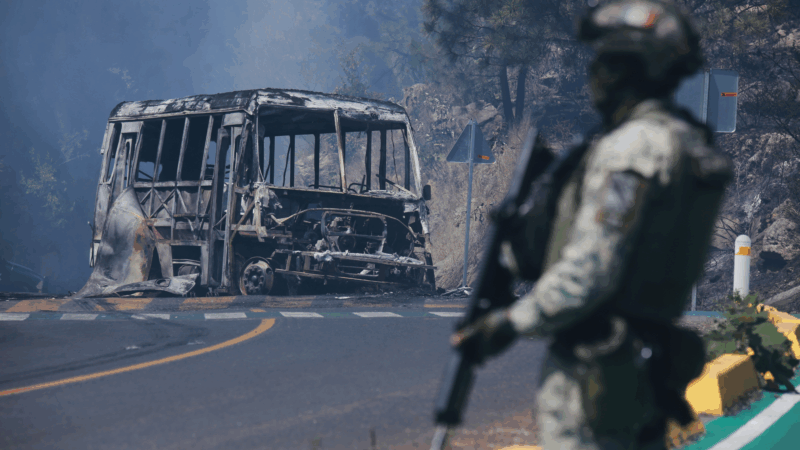
School was canceled in several Mexican states and local and foreign governments alike warned their citizens to stay inside following the army's killing of the leader of the Jalisco New Generation Cartel, Nemesio Rubén Oseguera Cervantes, "El Mencho," and the violence it spurred
Newly discovered dinosaur species was a fish-eater with a huge horn
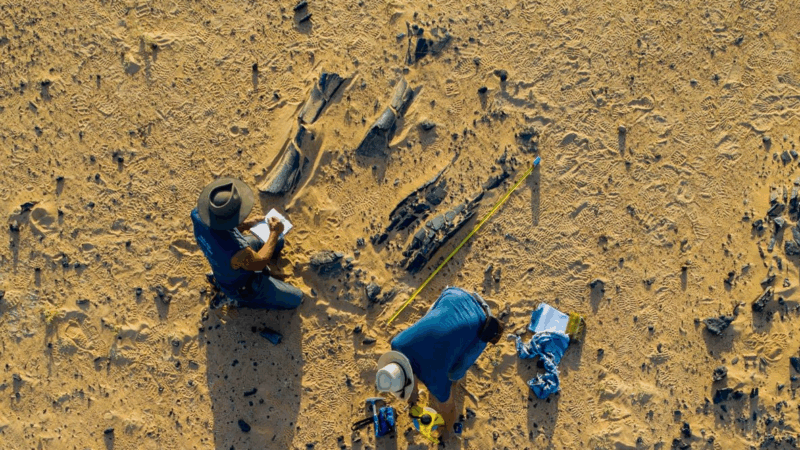
The semi-aquatic dinosaur, Spinosaurus mirabilis, was discovered by an international team of scientists working in Niger.

Reporters’ notebook: The Olympics closing ceremony is way more fun than you’d think
Olympics opening ceremonies tend to get more love than their closing counterparts. But a pair of NPR reporters who watched both in Italy left with a newfound appreciation for the latter.
Northeast readies for a major winter storm, with blizzard warnings in effect
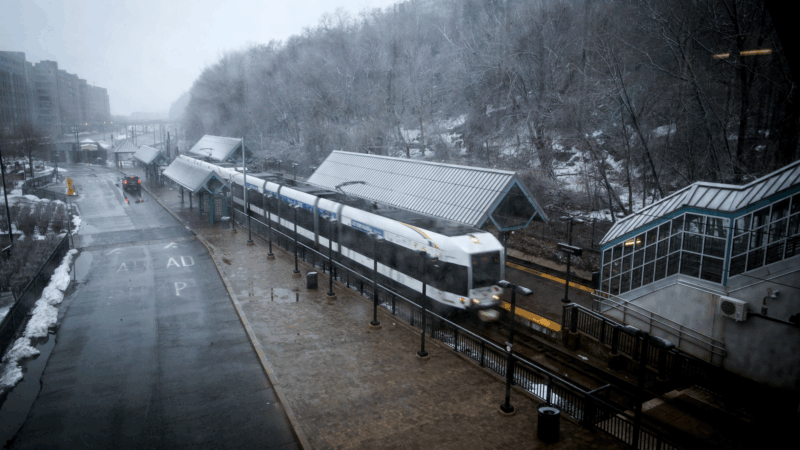
New Jersey through Massachusetts could see 2 feet of snow. New York City's mayor said the city had not "seen a storm like this in a decade."

Mexican army kills leader of Jalisco New Generation Cartel, official says
The Mexican army killed the leader of the powerful Jalisco New Generation Cartel, Nemesio Rubén Oseguera Cervantes, "El Mencho," in an operation Sunday, a federal official said.
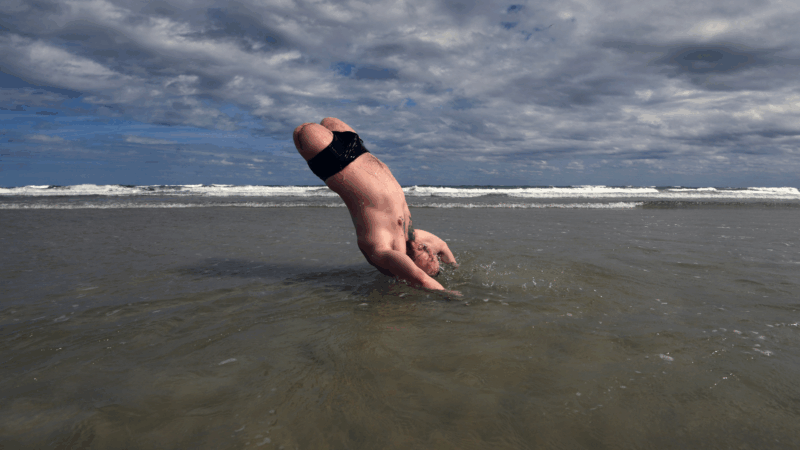
Ukraine’s combat amputees cling to hope as a weapon of war
Along with a growing number of war-wounded amputees, Mykhailo Varvarych and Iryna Botvynska are navigating an altered destiny after Varvarych lost both his legs during the Russian invasion.
