
Nations must act on climate change or could be held responsible, top U.N. court rules

The top United Nations court has ruled that nations are obligated under international law to limit climate change, and countries that don’t act could be held legally responsible for climate damages elsewhere.
The decision is a win for many small countries vulnerable to climate impacts, which pushed for the issue to be heard by the International Court of Justice (ICJ).
It’s the court’s first major ruling on climate change, but the decision is only advisory, meaning that countries are not legally bound by it. Still, legal experts say it could be a boost for other climate change lawsuits pending in national courts around the world.
“It’s really groundbreaking,” says Maria Antonia Tigre, director of Global Climate Change Litigation at Columbia Law School. “I think it will create this new wave of climate litigation.”
The case was championed by the South Pacific island nation of Vanuatu, which has been among the loudest voices calling for stronger international climate action, alongside other island nations. The low-lying countries face dire risks from rising sea levels and more intense cyclones.
In court proceedings in December, Vanuatu and other nations argued that countries have an obligation to act on climate change under international laws protecting the environment and human rights. In a ruling today, the ICJ agreed.
“In order to guarantee the effective enjoyment of human rights, states must take measures to protect the climate system and other parts of the environment,” Judge Yuji Iwasawa read from the court’s opinion.
The court also found that if countries fail to curb their heat-trapping emissions from fossil fuels, they could be on the hook to pay for climate change-related damages in other countries. Those kinds of payments have been a point of contention between major emitters and lower-income counties at annual climate change negotiations.
The U.S. generally doesn’t consider ICJ decisions to be binding. Earlier this year, President Trump also pulled the U.S. out of the major international climate accord, the 2015 Paris climate agreement.
Still, smaller countries say they hope the ICJ’s decision will be a turning point in international climate negotiations.
“Today it’s been a landmark milestone for climate action,” said Vanuatu’s climate minister Ralph Regenvanu. “It’s a very important course correction in this critically important time.”
Island nations push for climate change ruling
For years, low-lying countries around the world have argued that climate change is an existential threat. Sea levels have already risen about 8 inches since the Industrial Revolution, and the pace is accelerating. Vanuatu is looking at relocating entire villages from the coast. Cyclones have taken a toll on the South Pacific country and are getting more intense as the climate heats up.
With a population of around 300,000, Vanuatu has produced a relatively tiny share of global emissions from burning fossil fuels, which trap heat and warm the planet. The majority of emissions have come from larger and richer countries such as the U.S., the European Union and China.
But Vanuatu officials argue it’s bearing the brunt of the problem.
“We find ourselves on the front lines of a crisis we did not create, a crisis that threatens our very existence,” Regenvanu said before the ICJ last December.
Vanutau led a coalition of countries to call for the ICJ to rule on climate change, spurred on by a group of students from the Pacific Islands. The court, based at the Hague, rules on international law and disputes between countries. Close to 100 countries filed testimonies, making it the largest case the court has heard.
Are countries obligated to act on climate change?
The court took up two questions: are countries obligated to act on climate change, and what are the legal consequences if they cause harm?
At the hearings, the U.S. argued that negotiations through international agreements such as the Paris climate accord are the best way to address climate change.
“Cooperative efforts through that regime provide the best hope for protecting the climate system for the benefit of present and future generations,” said Margaret Taylor, who represented the U.S. Department of State in the legal proceedings under the Biden administration.
In its ruling today, the ICJ found that countries are bound to curb emissions of greenhouse gases under international law. That includes taking actions such as limiting the use and production of fossil fuels like coal, oil and natural gas – and even government subsidies for those industries. It also found that states can be held responsible for specific damage caused by climate change. That’s made possible by advances in climate science that are helping to pinpoint how much climate change contributes to specific disasters.
At the same time, the ICJ recognized that the advisory ruling may have a minimal impact.
“International law… has an important but ultimately limited role in resolving this problem,” the judgment reads. “A complete solution to this daunting, and self-inflicted, problem requires the contribution of all fields of human knowledge, whether law, science, economics or any other.”
Potential international impacts
The case could influence hundreds of other climate change lawsuits around the world, adding evidence for plaintiffs who are seeking to spur governments to act. Cases have been filed in the U.S. and European countries like the Netherlands, where a court ruled that the Dutch state must cut its greenhouse gas emissions.
“This being really the biggest case that we have seen in climate litigation, the status and the weight of the court can really influence a lot of these cases,” Tigre says.
The ICJ decision could also be cited at the COP30 international climate negotiations this fall in Brazil. There, smaller nations like Vanuatu will continue to make the case for compensation from wealthier countries for the damages from climate change, known as “loss and damage” payments.
Climate activists, like Vishal Prasad of Pacific Islands Students Fighting Climate Change, say the decision provides new momentum for their movement.
“I think it sends a strong message for all of us and to young people everywhere,” Prasad says. “There is still hope and there is a chance and there’s a reason for us to keep fighting.”
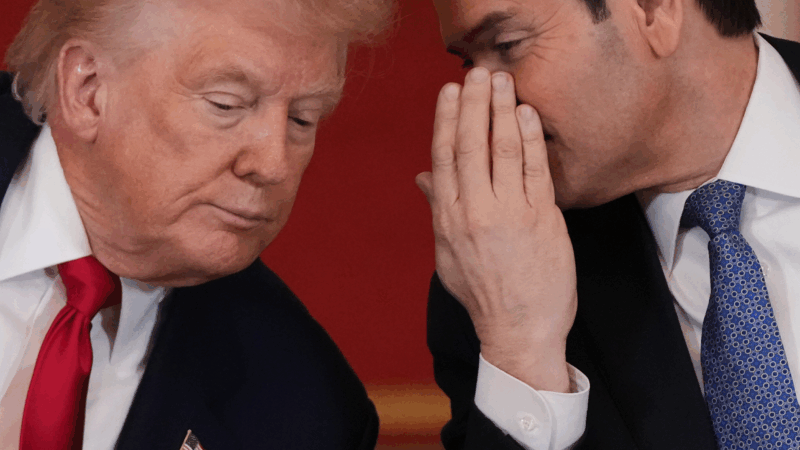
Trump looks to turn attention to Western Hemisphere at Americas summit
President Trump is set to gather with Latin American leaders on Saturday at his Miami-area golf club as his administration looks to turn attention to the Western Hemisphere, at least for a moment.
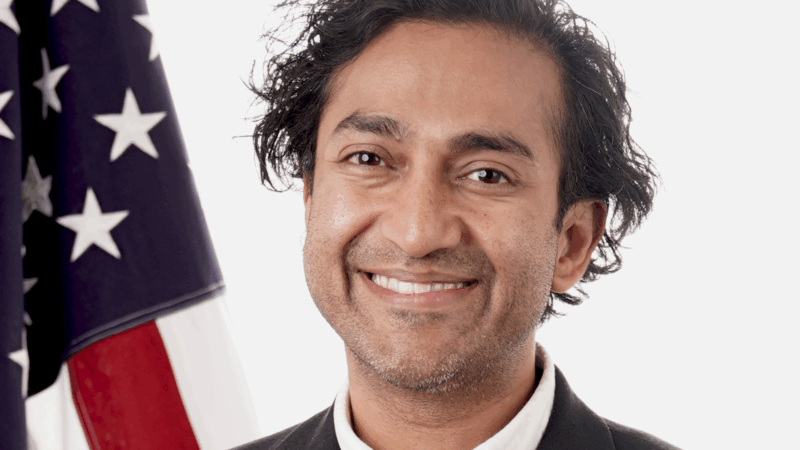
Trump administration’s embattled FDA vaccine chief is leaving for the second time
The FDA's controversial vaccine chief, Dr. Vinay Prasad, is leaving the agency. It's the second time he has abruptly departed following decisions involving the review of vaccinations and specialty drugs.

Family, former presidents and a Hall of Famer give Rev. Jesse Jackson a final sendoff
Several speakers at Jackson's funeral invoked his hallmark catchphrases: "Keep hope alive" and "I am somebody."
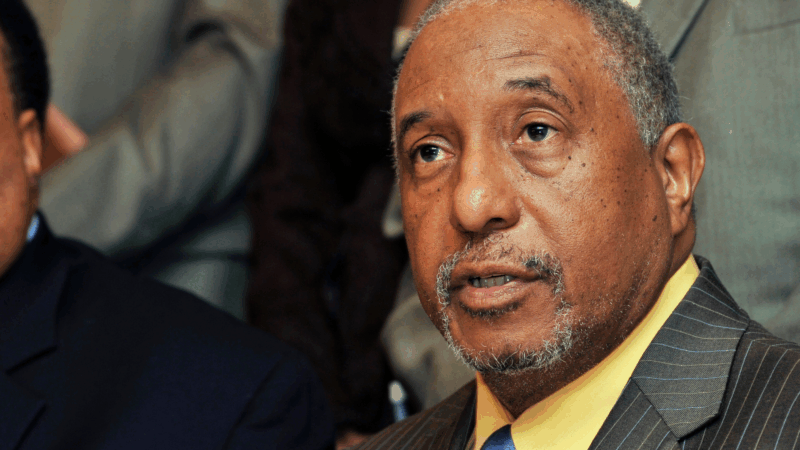
Bernard LaFayette, Selma voting rights organizer, dies at 85
Bernard LaFayette, who died Thursday, laid the foundations of the Selma, Alabama, campaign that culminated in the passage of the Voting Rights Act. He was a Freedom Rider and helped found the Student Nonviolent Coordinating Committee.

Oil surges to its highest price since 2023, and stocks drop after U.S. jobs report
Stocks fell Friday on worries that the economy could become stuck in a worst-case scenario of stagnating growth and high inflation. Oil prices touched their highest levels since 2023 after surging again because of the Iran war.
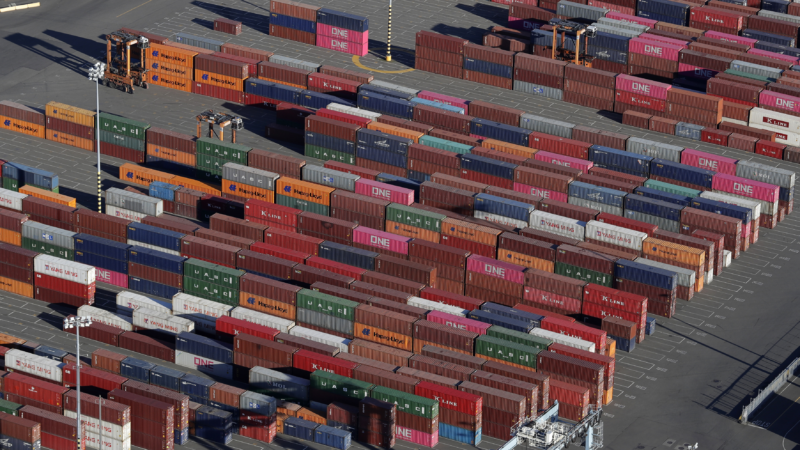
No lawsuits required: U.S. Customs is working on a system to refund tariffs
U.S. Customs told the trade court it aims for a streamlined process in 45 days to return importers' money without requiring individual lawsuits.
