
Mumbai’s iconic pav bread might soon be toast
MUMBAI, India — Every morning, when the city of Mumbai sleeps, the staff of Yazdani Bakery wake up to knead dough, cut it into little pieces and pop it into the oven. By dawn, they’re ready with their most popular offering: a thousand pieces of pav, which flies off the shelves as soon as the bakery opens.
Pav is a soft and fluffy bread, with a crusty top and a distinct smoky flavor. It resembles a Parker House roll except there is no egg in the pav’s dough. The word originates from the Portuguese word for bread — pao. It arrived in India with Portuguese traders who sailed into nearby harbors more than 600 years ago and brought with them a taste of home.
It became a street food fixture in the 19th century, when the port city was emerging as a textile hub, drawing workers from nearby towns and villages to its cotton spinning and weaving factories.
“Pav is what Bombay’s working-class blue-collar workers were eating, especially those who were far from home without the infrastructure to create Indian food for them,” says Mumbai-based food anthropologist Kurush Dalal, referring to the city by its former name.

Since then, Mumbai’s population has grown ten times over the past century to 12 million. This teeming port city is home to Bollywood, stock markets, billionaire industrialists and millions of migrants, of collars blue and white, living in slums and skyscrapers. Mumbai’s textile factories today are hulking shells of their past, overgrown by wild fig trees.
But pav remains a working class staple. A stack of six — called a ladi — costs less than 25 cents.
A bread’s hazy future
But now, pav’s survival is in peril.
In February , the government announced that it would ban wood-fired bakeries across the city in the next six months. The order came a few months after the Mumbai-based Bombay Environmental Action Group published a study claiming that over the course of a year, pollution from Mumbai’s 1,000-odd wood-fired bakeries was as harmful to each resident as smoking 400 cigarettes.
But critics say this is a case of misplaced priorities — of picking on the little guy. “The pollution that is emitted from these bakeries is nothing compared to the pollution that construction sites are contributing or the road repair sites are contributing,” says former town council representative Makarand Narwekar.

He points to the massive makeover being undertaken by Mumbai’s civic body to remake the city’s roads, which has only worsened dust and traffic. A study by the Indian climate-tech group Respirer Living Sciences found Mumbai’s air was unsafe for nearly half of 2024.
Ravi Andhale, chief of the pollution control board, acknowledges that wood-fired bakeries [aha, so mention wood-fired in conjunction with the study] aren’t the worst offenders in Mumbai. According to the Bombay Environmental Action Group study they only contribute 3% of the city’s particulate matter pollution – referring to matter in the air smaller than 10 micrometers in diameter). But “just because your share is little — you should not do anything — is not acceptable,” he says.
And the lead author of the study which spotlighted how polluting wood-fired bakeries are says one reason why they’re being targeted is that it’s just easier to solve that little slice of the problem.
“As far as the pollution from construction, infrastructure and vehicles go, they have a lot of complexities,” says Hema Ramani, an environmental consultant who works on legal and policy issues. “That’s why we said let’s look at faster, quicker, smaller transitions that can happen. Then you move on to the bigger ones.”
Ramani says she doesn’t want the bakeries to shut shop, only switch to a cleaner fuel like natural gas or electricity. The government can help, she says, by subsidizing the equipment or transition costs.
But Nasir Ansari, president of the Bombay Bakers Association, says that would increase the cost of the pav by more than a half. “Pav is often the food of the working-class. Even a small price rise makes a huge difference. A few months ago, we had raised the price of a stack of six by three rupees” — a couple of pennies. “We still had customers asking me why I did that.”

Why pav is beloved
It’s not just about the cost, pav bakers say. The wood-fired bread is part of Mumbai’s cosmopolitan heritage, a melange of indigenous and colonial traditions.
This Portuguese-origin bread is now eaten with a fried potato snack called ‘vada,’ a buttery vegetable mash called ‘bhaji’, or spiced chicken or lamb mince called keema. “They’re also great vessels for mopping up all kinds of gravies and curries — and just about everything Indian,” says Dalal.

Perzon Zend, owner of the Yazdani Bakery, says losing the wood-fired pav would take away something intangible from Mumbai’s cosmopolitan heritage. He points to his own family history: Zend’s ancestors came from Iran more than hundred years ago — and set up Mumbai’s most iconic Iranian restaurants and bakeries — where their key product is a Portuguese-origin bread. It’s been a great business for the family. He taps his potbelly to demonstrate.
“I definitely want clean air in Bombay,” says Zend. “But I don’t want to be the smallest and the easiest target.”
And he thinks the method of baking is the key to success. “You can’t beat the wood-fire,” he says. “In America, you smoke the chops and that smokiness is everything. It’s like that with pav too.” Those made in electric ovens, he says, “taste like cardboard.”
Pakistan claims to have killed at least 70 militants in strikes along Afghan border
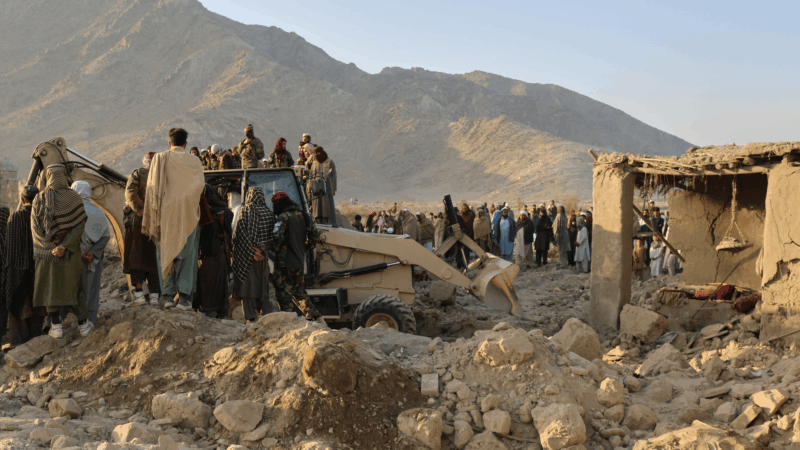
Pakistan's military killed at least 70 militants in strikes along the border with Afghanistan early Sunday, the deputy interior minister said.
Team USA faces tough Canadian squad in Olympic gold medal hockey game
In the first Olympics with stars of the NHL competing in over a decade, a talent-packed Team USA faces a tough test against Canada.

PHOTOS: Your car has a lot to say about who you are
Photographer Martin Roemer visited 22 countries — from the U.S. to Senegal to India — to show how our identities are connected to our mode of transportation.

Looking for life purpose? Start with building social ties
Research shows that having a sense of purpose can lower stress levels and boost our mental health. Finding meaning may not have to be an ambitious project.

Sunday Puzzle: TransformeR
NPR's Ayesha Rascoe plays the puzzle with listener Joan Suits and Weekend Edition Puzzlemaster Will Shortz.
Danish military evacuates US submariner who needed urgent medical care off Greenland
Denmark's military says its arctic command forces evacuated a crew member of a U.S. submarine off the coast of Greenland for urgent medical treatment.
