
More students are going to college. Affordability and workforce training are factors
College enrollment in the U.S. continued to rise last fall, surpassing prepandemic levels, new figures out on Thursday show.
Across undergraduate and graduate programs, total enrollment reached 19.4 million students, growing 1.0% compared with the fall of 2024, according to the National Student Clearinghouse Research Center, a nonprofit that studies higher education.
“Higher education has stabilized and is growing again,” says Matthew Holsapple, senior director of research at the center.
That growth, Holsapple says, is uneven this academic year: Enrollment at private four-year colleges is down, and fewer people are getting master’s degrees. But enrollment rose at four-year public universities and at community colleges, where short-term credentials tied to the workforce grew by 28% when compared with a year ago.
“We’re continuing to see students shifting out of some of the more traditional pathways into these shorter-term, these more flexible, perhaps more job- and career-oriented fields,” explains Holsapple.
Gains and shifts, despite concerns about value
The numbers provide welcome news and some clear insights to college leaders worried about reports showing many Americans questioning the value of a college degree.
“Confidence in college is coming back, but it is conditional,” says Courtney Brown, who studies public opinion on colleges for the Lumina Foundation, an Indianapolis-based nonprofit aimed at improving higher education.
“The public’s been telling us that cost, flexibility and career relevance shape their view of college’s worth,” Brown says. “So people aren’t turning away from education — they’re just getting more precise about what kind of education they want.”
That could reflect uncertainty in the economy and news about hiring slowdowns, says Jeff Strohl, director of the Georgetown University Center on Education and the Workforce. He says when job prospects feel shaky and the economy is struggling, people return to college, especially community college.
“If we think about what’s going on in the U.S. economy as of late, especially a growing economic uncertainty, this kind of follows that pattern,” he says. “It’s easier to test the waters at a local community college than it is necessarily to go through the steps of enrolling in a four-year program, especially if a student doesn’t really know what they want to do.”
A big drop in international students at the graduate level
While the number of international students enrolling in undergraduate programs grew this academic year by 3.2%, it was overshadowed by a significant drop at the graduate level, by about 10,000 students.
That graduate-level drop — mostly in master’s programs — followed several years of strong growth in which the number of international graduate students had risen by about 50%. The downturn reflects federal policies that limited or disrupted the student visa process and the billions of dollars in canceled federal dollars flowing to research universities, disrupting the pipeline.
Another key finding from the latest enrollment data was a big decline in students studying computer and information sciences. The drop in both graduate and undergraduate programs came after years of steady expansion.
In addition to a consequence of fewer international students, Holsapple, at the Clearinghouse, explains that the shift away from CS majors is also influenced by the rise of artificial intelligence.
“Students are seeing the same trends that we all are seeing,” he says. “They see the same news reports of layoffs in the tech field. They see the rise of AI like we do.”
But he’s encouraged by these trends. “Students are making different choices, which I think is a real positive for the field and particularly for students because they have those options.”
He says the colleges that are rising to the occasion — offering nontraditional pathways and more-affordable degrees — will continue to be the ones seeing growth in future years.
Trump’s ballroom project can continue for now, court says
A US District Judge denied a preservation group's effort to put a pause on construction
NASA lost a lunar spacecraft one day after launch. A new report details what went wrong
Why did a $72 million mission to study water on the moon fail so soon after launch? A new NASA report has the answer.
Columbia student detained by ICE is abruptly released after Mamdani meets with Trump
Hours after the student was taken into custody in her campus apartment, she was released, after New York City Mayor Zohran Mamdani expressed concerns about the arrest to President Trump.
These major issues have brought together Democrats and Republicans in states
Across the country, Republicans and Democrats have found bipartisan agreement on regulating artificial intelligence and data centers. But it's not just big tech aligning the two parties.
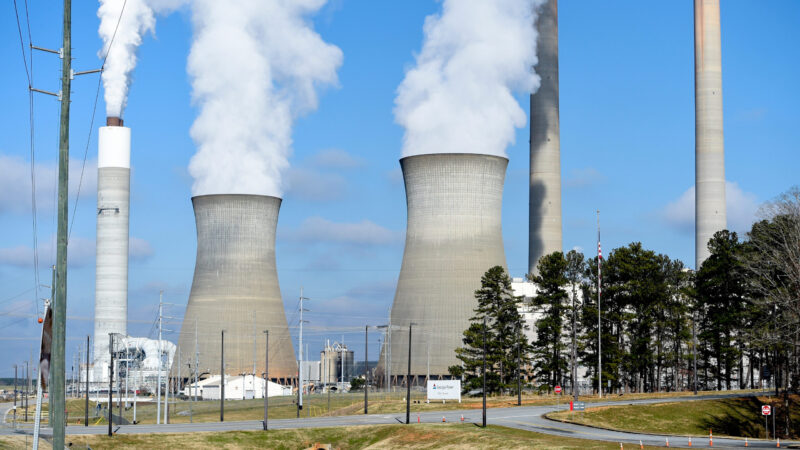
Feds announce $4.1 billion loan for electric power expansion in Alabama
Federal energy officials said the loan will save customers money as the companies undertake a huge expansion driven by demand from computer data centers.
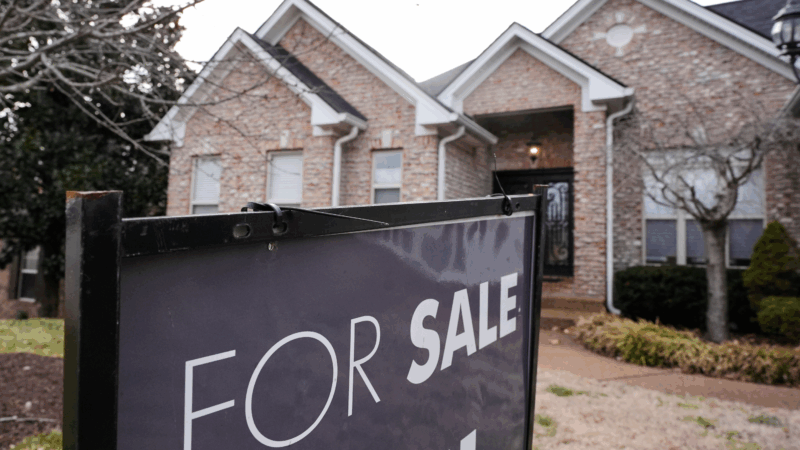
Mortgage rates fall below 6% for the first time in years
The average home loan rate has dropped below 6% for the first time since 2022. Will that help thaw the frozen housing market?
