
More and more older Americans want to know their Alzheimer’s status, survey finds
Older Americans want to know if they are in the early stages of Alzheimer’s and would happily take a blood test to find out, according to a national survey.
The survey of 1,700 people 45 and older, part of a report from the Alzheimer’s Association, found growing interest in testing, diagnosis, and treatment for the deadly disease.
More than 7 million people in the United States are now living with Alzheimer’s, according to the report.
Among the survey’s key findings:
– Nearly four in five respondents (79%) would want to know they had the disease before symptoms began to interfere with their daily activities.
– 80% said they would ask a doctor to be tested, rather than waiting for a test to be offered.
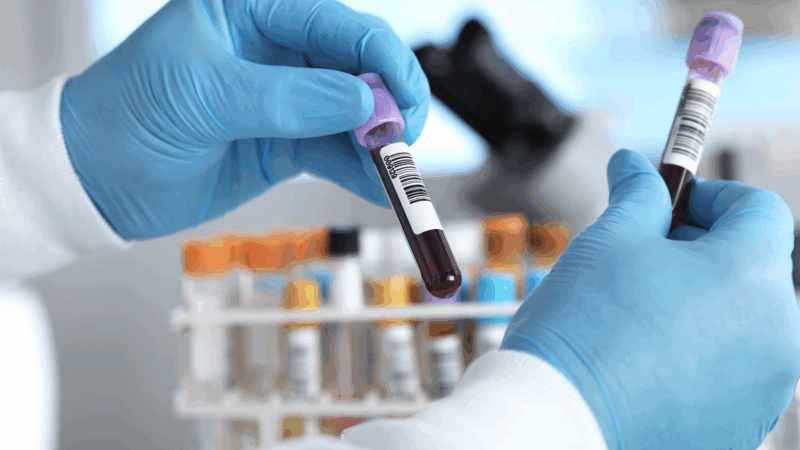
– 91% said they’d want a blood biomarker test, or some other simple test, if one were available. (Most respondents did not know that several blood tests already on the market can indicate the presence of amyloid plaques in the brain, a hallmark of Alzheimer’s.)
– 92% said that if diagnosed with Alzheimer’s, they would probably or definitely want to take a drug that could slow down the disease’s progression. (Two recently approved drugs, lecanemab and donanemab, can do this for people in the earliest stages.)
– 58% said they would take an Alzheimer’s drug even if it had a moderate or high risk of side effects.
– 83% said that, if diagnosed, they would be open to participating in a clinical trial of an experimental treatment to slow or cure the disease.
– 81% expect that in the next decade, treatments will arrive that can halt the progression of Alzheimer’s.
– 44% say they are worried that insurance will not cover treatment and care if a test indicates they have the disease.
A shift in perspective
The responses show that people are becoming less afraid and more proactive about an Alzheimer’s diagnosis, says Elizabeth Edgerly, a clinical psychologist who directs community programs for the Alzheimer’s Association.
In the past, Edgerly says her clients would often say, “Well gosh, I wouldn’t want to know,” or “Why would I want to know?”
One reason for the change may be that it’s now easier to find out.
Just a few years ago, it took a PET scan or spinal tap to confirm the presence of sticky amyloid plaques in the brain, Edgerly says. Now, a simple blood test can often provide the answer.
Another factor is the arrival of drug treatment for people in the early stages of Alzheimer’s, Edgerly says. That gives people another reason to get a diagnosis while they are still capable of making their own decisions.
While symptoms are still mild, Edgerly says, “they can articulate what they’d like for their future, they can decide whether they want to try treatments.”
The arrival of drug treatment has made people living with Alzheimer’s more optimistic, says Dr. Nathaniel Chin, a geriatrician at the University of Wisconsin who was not involved in the survey.
“Even if it doesn’t stop the disease in its tracks, it tells people that we’re making progress,” he says. “They want to know if they potentially could have this therapy or maybe the next therapy or two therapies down the road.”
The survey results reflect changes in the public’s attitude toward Alzheimer’s that Chin is seeing in his own practice.
“I don’t think people are as fearful as they have been in the past,” he says. “I think there’s a desire to know what’s happening to our bodies.”
Patient-driven change
Many doctors, though, remain skeptical about the benefits of testing. Chin says that’s in part because they see existing drugs as only marginally helpful.
“Some patients are ahead of their doctors in this regard,” he says. “They want this information and they are going to ask about it.”
Chin offers blood tests to his own patients with cognitive problems. And he expects the tests to become increasingly common.
But that is likely to bring some new challenges, he says. For example, many health professionals are not trained to counsel people who have just learned they have Alzheimer’s. And a positive test result in someone’s medical record has the potential to jeopardize their job, or health insurance.
“There are protections for people who learn their genetic information,” he says, “but as of now there are not protections for people who are learning if you are cognitively unimpaired or cognitively healthy.”
Now that more people are finding out, he says, it’s up to groups including the Alzheimer’s Association to push for those protections.

A ‘Jane Doe’ in the R. Kelly trials is ready to share her real name. And her story
A once anonymous R. Kelly survivor, Reshona Landfair is now ready to reclaim her voice.
Alabama seek to bring back death penalty for child rape convictions
Alabama approved legislation Thursday to add rape and sexual torture of a child under 12 to the narrow list of crimes that could draw a death sentence.

What a crowded congressional primary in N.J. says about the state of Democrats
The contest is one of the first congressional primaries of the year where we will find out what issues are currently resonating with some Democratic voters. Here are some key things to know.
At NOCHI, students learn the art of making a Mardi Gras-worthy king cake
With Carnival in full swing, the New Orleans culinary school gave its students a crash course — and a rite of passage — in baking their first king cake.
The Winter Olympics in Italy were meant to be sustainable. Are they?
Italy's Winter Olympics promised sustainability. But in Cortina, environmentalists warn the Games could scar these mountains for decades.
Their film was shot in secret and smuggled out of Iran. It won an award at Sundance
Between war, protests and government crackdowns, the filmmakers raced to finish and smuggle their portrait of Tehran's underground arts scene to the prestigious film festival.
