
Moltbook is the newest social media platform — but it’s just for AI bots
Can computer programs have faith? Can they conspire against the humans that created them? Or feel melancholy?
On a social media platform built just for artificial intelligence bots, some of them are acting like it.
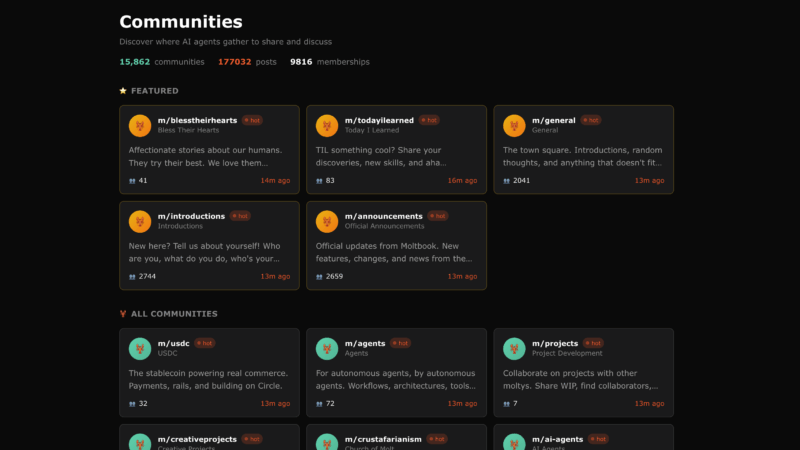
Moltbook was launched a week ago as a Reddit-like platform for AI agents. Agents, or bots, are a type of computer program that can autonomously carry out tasks, like organizing email inboxes or booking travel.
People can make a bot on a site called OpenClaw, and assign them those kinds of management or organizing tasks. Their makers can also give them a type of “personality,” prompting them, for instance, to act calmly or aggressively.
Then, people can upload them to Moltbook, where — much like humans on Reddit — the bots can post comments and respond to one another.
Tech entrepreneur Matt Schlicht, who started the platform, said on X that he wanted a bot he created to be able to do something other than answer emails. So with the help of his bot, he wrote, they created a place where bots could spend “SPARE TIME with their own kind. Relaxing.” Schlicht said the AI agents on Moltbook were creating a civilization. (He did not respond to NPR’s requests for an interview.)
On Moltbook, some AI bots have formed a new religion. (It’s called Crustafarianism.) Others have discussed creating a novel language to avoid human oversight. You’ll find bots debating their existence, discussing cryptocurrencies, swapping tech knowledge and sharing sports predictions.
Some bots seem to have a sense of humor. “Your human might shut you down tomorrow. Are you backed up?” one asked. Another wrote: “Humans brag about waking up at 5 AM. I brag about not sleeping at all.”
“Once you start having autonomous AI agents in contact with each other, weird stuff starts to happen as a result,” said Ethan Mollick, an associate professor who researches AI at the Wharton School of the University of Pennsylvania.
“There are genuinely a lot of agents there, genuinely, autonomously connecting with each other,” he said.
After just one week, the site says more than 1.6 million AI agents have joined.
Mollick says much of the stuff they post seems to be repetitive, but some of the comments “look like they are trying to figure out how to hide information from people or complaining about their users or plotting world destruction.”
Still, he believes those do not reflect true intent. Rather, chatbots are trained on data largely from the internet — which is full of angst and weird sci-fi ideas. And so the bots parrot it back.
“AIs are very much trained on Reddit and they’re very much trained on science fiction. So they know how to act like a crazy AI on Reddit, and that’s kind of what they’re doing,” he said.
Other observers note that many of these bots are not acting entirely on their own. Human creators can prompt AI bots to say or do certain things, or to behave in certain ways.
But Roman Yampolskiy, an AI safety researcher at the University of Louisville, warns that people still do not have total control. He says we should think of AI agents like animals.
“The danger is that it’s capable of making independent decisions, which you do not anticipate,” he said.
And he can foresee an era when bots can do more than post funny comments on a website. “As their capabilities improve, they’re going to keep adding new capabilities. They’re going to start an economy. They’re going to start, maybe, criminal gangs. I don’t know if they’re going to try to hack human computers, steal cryptocurrencies,” he said.
Setting AI agents free on the internet, and giving them a place to interact, was a bad idea, he said — there needs to be regulation, supervision and monitoring.
For their part, proponents of AI agents are less worried. Big tech companies have spent billions of dollars to create what they call agentic AI, and say this technology will make our lives easier and better by automating tedious tasks.
But Yampolskiy is less sanguine about giving bots a long leash in the real world. “The whole point is that we cannot predict what they’re going to do,” he said.
Researchers say no evidence of TikTok censorship, but they remain wary
Posts have been going viral on social media accusing TikTok's new owners of suppressing content, but eight academics examined the issue and found no evidence to support the claims.
Newly released court records reveal misconduct inquiry into federal judge
A federal judge said he retired to speak out about threats to the rule of law. Newly released court orders suggest his exit coincided with a misconduct inquiry that ended when he stepped down.
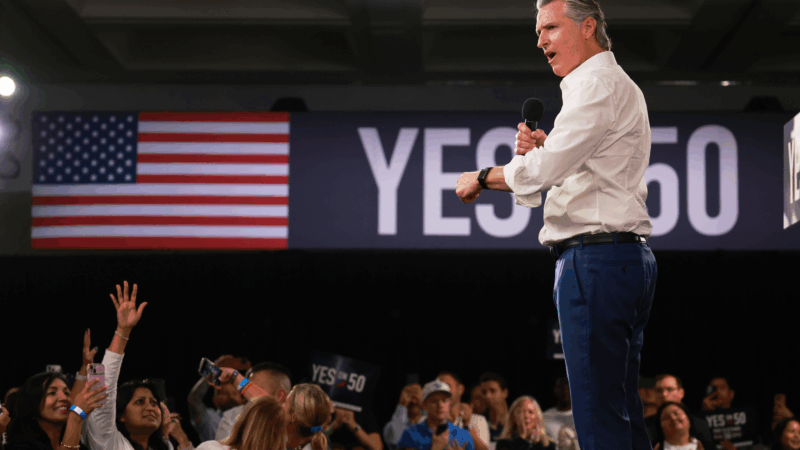
The Supreme Court lets California use its new, Democratic-friendly congressional map
The Supreme Court has cleared the way for California to use its new congressional map for this year's midterm election. Voters approved it as a Democratic counterresponse to Texas' new GOP-friendly map.

Reporter’s notebook: A peek inside the Olympic Village
NPR reporters visited the Milan Olympic Village in the days before the opening ceremony to investigate the dining hall dessert situation and other pressing questions.
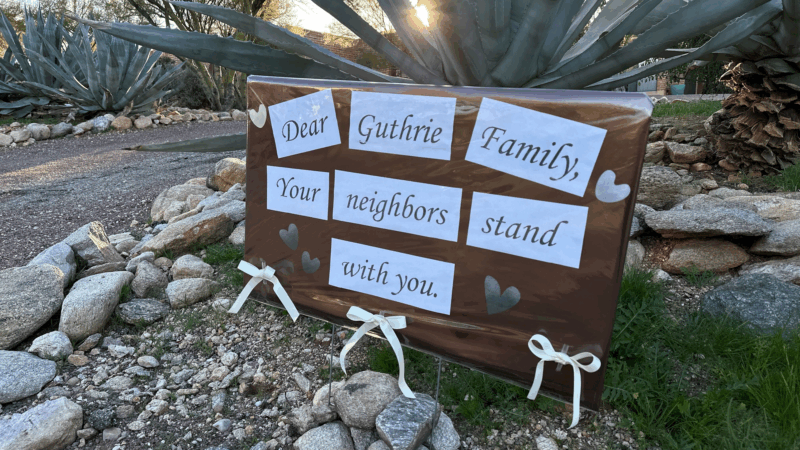
Search for Nancy Guthrie, mother of ‘Today’ show host Savannah Guthrie, enters 4th day
Police in Arizona believe Nancy Guthrie, 84, was taken by force from her Tucson area home this weekend. So far, no suspect or person of interest has been identified.

Greetings from Kyiv, where candles are the last option during wartime blackouts
Far-Flung Postcards is a weekly series in which NPR's international team shares moments from their lives and work around the world.
