
MLB will allow players to challenge balls and strikes starting in 2026
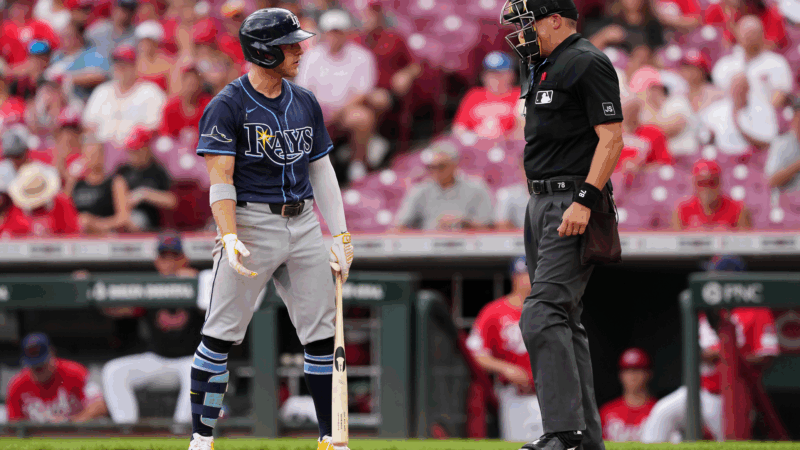
Starting in the 2026 season, Major League Baseball players will be able to challenge called balls and strikes in regular and postseason games for the first time.
The widely expected adoption of the challenge system — which is powered by baseball’s automated strike zone, known as ABS — was announced Tuesday after years of testing in the minor leagues and a major-league debut this year in spring training and the All-Star Game.
The new system “[strikes] the right balance of preserving the integral role of the umpire in the game with the ability to correct a missed call in a high-leverage situation, all while preserving the pace and rhythm of the game,” said MLB commissioner Rob Manfred in a press release.
Only batters, pitchers and catchers are allowed to challenge the umpire’s call. The challenge, indicated by a player tapping his head, must be made immediately after the call of ball or strike. Afterward, an automated video will play on the scoreboard showing the location of the pitch and strike zone as detected by a series of 12 cameras placed around every ballpark.

Each team will begin each game with two challenges. If a call is overturned, the team retains that challenge; if a call is upheld, the team loses that challenge. Once a team loses both its challenges, no player can challenge any more calls.
Tayler Saucedo, a relief pitcher who played with the Seattle Mariners this season, says he’s glad it’s coming to the Major Leagues after some initial reluctance. “I was always anti ABS but after experiencing it this year this will be a great change and fans will love it as well,” he posted on X. “Also felt it made umpires better. Doesn’t slow down the game at all and it takes about in total 10 seconds.”
In spring training this year, players collectively challenged more than 1,000 balls and strikes. The umpire’s calls were overturned just over half the time. Catchers, correct 56% of the time, were the most effective at challenging, and pitchers, at 41%, were the least. MLB reported that each challenge added around 14 seconds to the duration of a game.
Most MLB players have already experienced the ABS challenge system, whether in spring training this season or during their time in the minor leagues, where MLB has been testing ABS since 2021.
John Stanton, the owner of the Seattle Mariners, called the system a “big step forward for the game.”
“ABS Challenge strikes the right balance of putting a tool in the players’ hands to correct a missed call in a high leverage spot while retaining the human element of the game and adding a new fan-friendly engagement moment,” said Stanton, who is also currently the chairman of MLB’s joint competition committee, a rotating group of six team owners, four active players and one active umpire that votes on new rules.

Replay review has been part of baseball since 2008, when MLB first allowed the use of video to review home runs. Since then, replay review has widened to include many other types of calls, including force-outs on bases and whether fly balls were caught before touching the ground.
Called balls and strikes, though, were long accepted as a “human element” of the game, even as technology made it easier to spot bad calls and increased the pressure on umpires. The pressure came both internally from league officials and externally from TV audiences and fans on social media, to standardize the zone and increase their accuracy.
The ABS system was created by Hawk-Eye, the company behind automated replay systems in other sports, including out-of-bounds calls in tennis and offside reviews in soccer. Over four seasons of testing in Minor League Baseball, officials collected feedback from players, umpires and fans. Then they made tweaks — first to the strike zone by lowering the height of the automated zone after players reported the system produced a taller zone than they expected.
MLB also tried out a “full ABS” system in which the system fed umpires the call of every pitch, but players and fans alike reported preferring the challenge system. According to an internal MLB poll conducted last summer with Triple-A players and field staff, only 8 percent preferred the fully automated system, compared to 54% who preferred the challenges and 38% who preferred traditional human umpires.
“Throughout this process we have worked on deploying the system in a way that’s acceptable to players,” said Manfred. “The strong preference from players for the Challenge format over using the technology to call every pitch was a key factor in determining the system we are announcing today.”

Deadline looms as Anthropic rejects Pentagon demands it remove AI safeguards
The Defense Department has been feuding with Anthropic over military uses of its artificial intelligence tools. At stake are hundreds of millions of dollars in contracts and access to some of the most advanced AI on the planet.

Pakistan’s defense minister says that there is now ‘open war’ with Afghanistan after latest strikes
Pakistan's defense minister said that his country ran out of "patience" and considers that there is now an "open war" with Afghanistan, after both countries launched strikes following an Afghan cross-border attack.

Hillary Clinton calls House Oversight questioning ‘repetitive’ in 6 hour deposition
In more than seven hours behind closed doors, former Secretary of State Hillary Clinton answered questions from the House Oversight Committee as it investigates Jeffrey Epstein.
Chicagoans pay respects to Jesse Jackson as cross-country memorial services begin
Memorial services for the Rev. Jesse Jackson Sr. to honor his long civil rights legacy begin in Chicago. Events will also take place in Washington, D.C., and South Carolina, where he was born and began his activism.

In reversal, Warner Bros. jilts Netflix for Paramount
Warner Bros. says Paramount's sweetened bid to buy the whole company is "superior" to an $83 billion deal it struck with Netflix for just its streaming services, studios, and intellectual property.
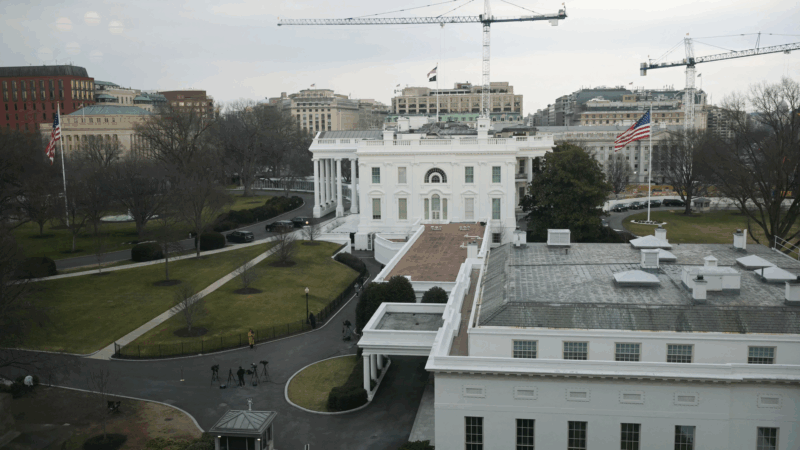
Trump’s ballroom project can continue for now, court says
A US District Judge denied a preservation group's effort to put a pause on construction
