
Minneapolis Catholic school shooting: What we know so far
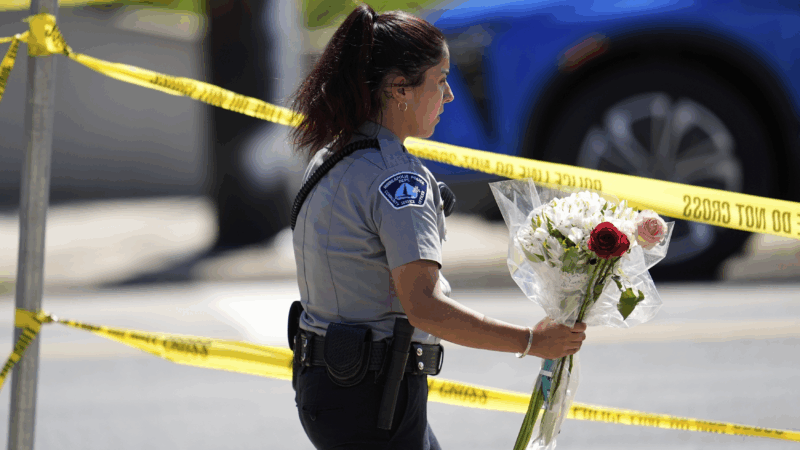
A shooter opened fire on a Minneapolis church filled with children and other worshippers during a Mass to mark the first week of school, killing two children and wounding 17 more people, authorities said.
The shooter, identified as Robin Westman, 23, died of a self-inflicted gunshot wound at the scene after firing through the windows of the Annunciation Church from outside the building.
On Wednesday, authorities recovered additional firearms at three residences in the Minneapolis area that they said are linked to the shooter.
Minneapolis Police Chief Brian O’Hara said a motive has yet to be determined. FBI Director Kash Patel said on X that the attack will be investigated as an act of domestic terrorism and a hate crime targeting Catholics.
Here’s what to know.
What happened?
The shooting occurred just before 8:30 a.m. local time near the start of Mass. It was held to mark the first week of classes at Annunciation Catholic School, which is next door to the church, according to O’Hara.
O’Hara said Westman — using a rifle, shotgun and pistol — stood outside the church and opened fire through its windows.
In a press conference on Wednesday, Annunciation Catholic School principal Matthew DeBoer said staff members moved students under the pews “within seconds” of the shooting.
“Adults were protecting children, older children were protecting younger children,” he said. “It could have been significantly worse without their heroic actions.”
Two children, ages 8 and 10, were killed where they sat in the pews. Seventeen other people were injured, including three adult parishioners who were in their 80s and 14 children between the ages of 6 and 15. Chief O’Hara said all the injured victims are expected to recover.
Children’s Minnesota hospital officials said Wednesday that three children remained at the hospital and four patients have been discharged.
Who is the suspect?
Westman had legally purchased the guns used in the shooting and had no prior criminal record, according to O’Hara.
He added that investigators believe the shooter left writings and YouTube videos in connection to the attack.
The videos showed guns and weapon magazines marked with handwritten messages referencing names of past mass shooters and other details. They also showed the inside of a notebook containing schematic drawings of a church sanctuary hall.
In 2020, Westman’s mother applied to change the name of her 17-year-old child from Robert to Robin. In court documents obtained by NPR, the mother, Mary Grace Westman, wrote, “minor child identifies as female and wants her name to reflect that identification.”
NPR has also learned that Westman’s mother previously served at the church where the shooting took place.
NPR’s Joe Hernandez contributed reporting.

A new one-a-day-pill holds promise for HIV’s ‘forgotten population’
It's designed to take the place of complicated, multiple drug regimens that many people with HIV need to follow. And it's also beneficial because the HIV virus is always evolving.

For filmmaker Chloé Zhao, creative life was never linear
Director Chloé Zhao used meditation, somatic exercises and dance to inspire the cast and crew of this Oscar-nominated story about William Shakespeare's family.

10 new books in March offer mental vacations
March is always a big one for books – this year is no different. We call out a handful of upcoming titles for readers to put on their radars — offering a good alternative to doomscrolling.
Sen. Chris Coons, D-Del., talks about the war with Iran and upcoming war powers vote
NPR's A Martínez asks Delaware Democrat Chris Coons, a member of the Senate Foreign Affairs Committee, about the war with Iran.

The candy heir vs. chocolate skimpflation
The grandson of the Reese's Peanut Butter Cups creator has launched a campaign against The Hershey Company, which owns the Reese's brand. He wants them to stop skimping on ingredients.

Scientists make a pocket-sized AI brain with help from monkey neurons
A new study suggests AI systems could be a lot more efficient. Researchers were able to shrink an AI vision model to 1/1000th of its original size.
