
Millions watch as underwater camera documents daily life on a Miami coral reef
MIAMI — For five years and counting, a continuous livestream on YouTube has shown daily life in a community few people get a chance to visit — a coral reef in Biscayne Bay.
The Coral City Camera shows endangered corals that are thriving and remarkably resilient in the heart of Miami’s busy port. The live feed has helped scientists gain a new understanding of the value and beauty of something they call “urban corals.”
The underwater camera is the brainchild of Colin Foord. He’s a marine biologist who, while he was still in high school, became intrigued by corals. They’re the tiny marine animals that build large, stony colonies, creating diverse and colorful underwater ecosystems.
Five years ago, Foord installed a video camera on corals living in a busy channel in Miami’s port. Since then, the live feed of corals and fish has been viewed more than 3.7 million times. He says, “We’ve got close to 20 different species of stony corals living in one of the busiest ports in the entire world.”

Foord spends time each week maintaining the camera, which he accesses from a spit of land in the port. To get there, he drives past cruise terminals and huge gantry cranes unloading container ships.
He arrives at a spot, just across the channel from Miami Beach that’s remarkably peaceful. Just offshore, in abot nine feet of water is his video camera. Gazing across the bay, he says, “You can see, the water is really gorgeous. It’s turquoise blue. And we’re standing on this limestone rip rap.”
Rip rap are large pieces of rock that armor a shoreline, protecting it from erosion, storm surge and sea level rise.
“These boulders go down into the water,” he says. “They provide great habitat for fish and for corals to recruit onto the limestone. It’s geologically basically the same as coral skeletons so corals are happy to grow on it.” Huge cruise ships and recreational boaters pass by just 150 feet away.
Foord operates the Coral City Camera from a warehouse and lab several miles inland from the port in a warehouse where he has at least 50 saltwater tanks and nearly a thousand species of coral. He hopes to eventually expand his “coral museum” and open it to the public. Using a computer, Foord controls the video camera, changing its angles several times a day. He calls the live feed a “free-range aquarium.”

Volunteer moderators contribute to the chat on the feed, alerting viewers to sightings of squid and manatees. He says repeat viewers begin to notice some of what he calls “the regulars.”
“We have Lisa, the lemon shark who has this Mona Lisa smile,” he says. “You begin to recognize that they really do live here. It’s their neighborhood.”
Almost 20 years ago, Foord helped start Coral Morphologic, a company that blends his interest in corals with art. He’s been involved in a number of projects, including one during Miami’s Art Basel fair a few years ago that projected images of coral onto the city’s performing arts center. He says, “We approach corals from a slightly different perspective than the academic or scientific community might. Our goal really is to try and reach the public and get them to really fall in love with these organisms that are just so alien, that how can you not be captivated by them?”
The Coral City Camera has begun to show not just the beauty, but also the resilience of these “urban corals,” corals that persist and sometimes thrive in port cities like Miami, Singapore and Sydney.
Foord says that was demonstrated dramatically two years ago when record-high ocean temperatures caused corals around the world to bleach and, in many cases, die. “2023 was an absolutely dreadful year,” he says. “We watched corals all up and down the Florida reef tract bleaching and dying. And yet for the most part, the corals living at the port of Miami around the Coral City camera didn’t even bleach.”
Using daily screenshots from his video feed, Foord compiled what he believes is the world’s longest-running underwater time lapse video feed documenting the bleaching event. It shows the death of some corals over several months and the resiliency and regrowth of others.
In part because of Foord’s work, NOAA research ecologist Ian Enochs is studying Miami’s urban corals and has published some surprising findings. He says, “They may be genetically stronger, more capable of dealing with environmental conditions that are otherwise killing corals.”
Climate change, ocean acidification and pollution are degrading coral reefs worldwide. In Florida, NOAA and a host of research groups are working to restore the ailing reefs. Enochs says these urban corals may play a key role in that effort. He says, “If we can find individuals that are able to deal with these environmental stressors, if we can grow them, if we can outplant them, then we can build reefs that are more resilient.”
To help make that happen, Coral Morphologic is building a lab to breed and cultivate urban coral species. It’s a high-tech endeavor, with continuously controlled water quality and specially designed LED lights. Foord says, “We can simulate the solar and lunar cycles to induce these urban corals to spawn.” The plan, he says, is “They can pass on their resilient genes to produce hardy babies that we’re then going to bring out to the reef line to plant to other places in Miami.”

It’s one of a number of projects Foord has in the works. This summer working with other artists and scientists, he’ll begin planting corals on an artificial reef that’s planned to be seven miles long and within swimming distance of Miami Beach.
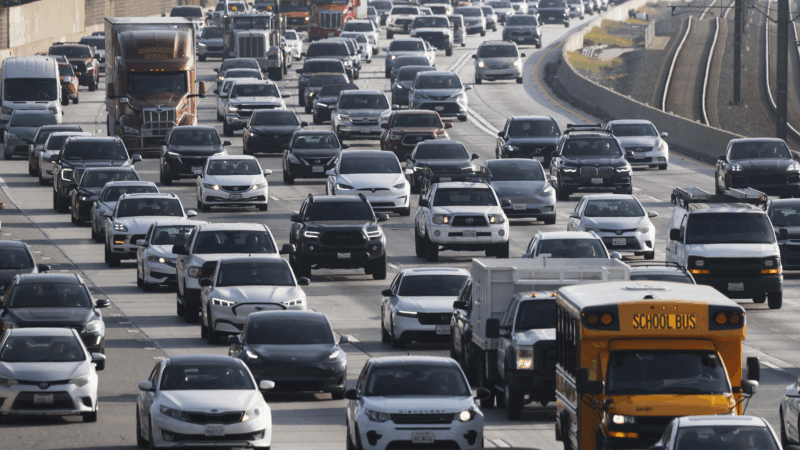
The Trump administration’s crackdown on immigrant truckers shifts into higher gear
The White House wants tougher rules for commercial licenses after several high-profile crashes involving foreign-born drivers. But critics say that would do little to make the nation's roads safer.

5 ways to resist the urge to keep looking at your phone
So you want to spend less time on your phone. How do you do that when it's designed to suck you in? Life Kit spoke to experts in behavioral science, psychology and technology for real-world advice.
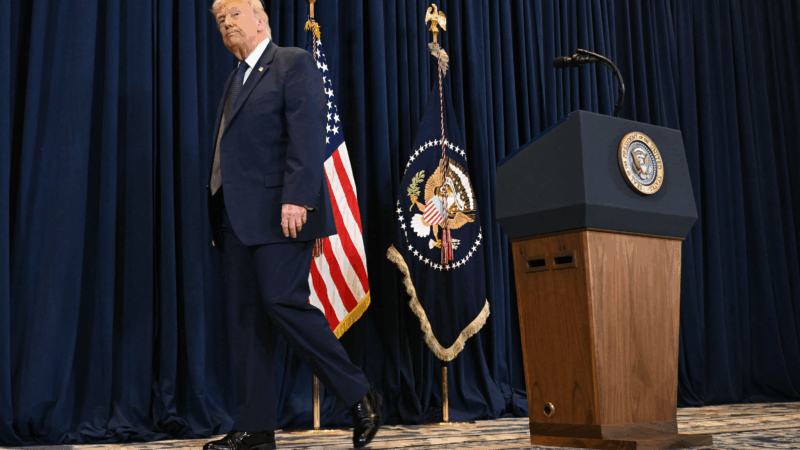
Trump’s war with Iran is angering some swing voters who want money spent at home
Swing voters who helped reelect President Trump in 2024 don't support his decision to go to war in Iran and instead want to see U.S. tax dollars spent tackling economic pressures facing Americans.
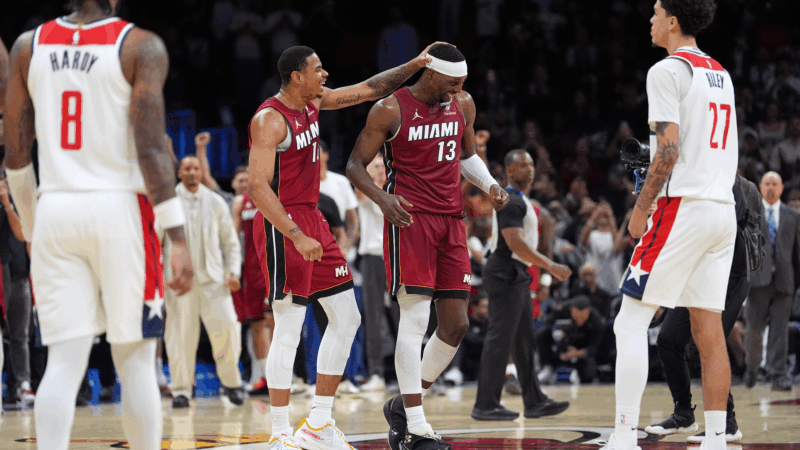
Bam Adebayo’s 83-point night was one to remember. But not everyone was pleased
Detractors point to Adebayo's one-of-a-kind stat line — 43 field goal attempts, 22 3-point attempts and, most of all, NBA records of 36 free throws and 43 attempts — as proof of stat-padding.
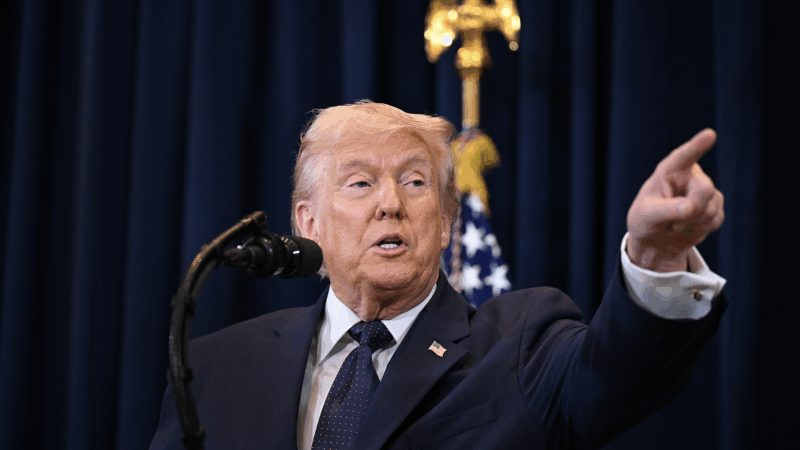
Trump says Democrats must cheat to win. What do his supporters think?
NPR spent several days traveling across a pair of swing districts in Pennsylvania to find out. The answers show how much has changed since the 2020 election.
The government is investigating new claims that DOGE misused Social Security data
The fallout from DOGE staffers' efforts to access sensitive Social Security data continues as an agency watchdog disclosed a new investigation into "potential misuse" reported by a whistleblower.
