
Mental health warnings on social media? Minnesota will require them next year

ST. PAUL, Minn. — Olivia Kanavati might think about social media more than she uses it. The 17-year-old from a Twin Cities suburb uses an app that tracks how many times a day she opens social media on her phone. Before she can log on, it prompts her to take a deep breath and offers her an inspirational quote.
Beginning next summer, any Minnesotan using social media will get a pop-up warning before they log on. Unlike Kanavati’s app, the label they’ll encounter will ask users to acknowledge that prolonged social media use can pose a hazard to their mental health.
“I think it’s helpful for people that just take a second and, like, pause and be like, ‘Hmm,'” Kanavati says, “‘why am I doing this? What is this purpose?'”
Kanavati didn’t have a say in the new law, but she says she is in favor of it. She’s a member of the Digital Well-Being Club at her school, along with Evangeline Fuentes, who is also starting her senior year this fall. Fuentes agrees it’s worth giving people the chance to think twice.
“Obviously, you know, there’s always going to be the people who don’t,” she says. “The best that we can do is just offer the outlet for them to change.”
Minnesota takes a different route
After courts blocked other state bans on social media for young people — laws that also require apps to verify users’ ages — Minnesota lawmakers approved the measure that takes a different approach.
Gov. Tim Walz signed the law this year, which requires sites to provide users with the warning label starting in July 2026. Social media companies say they’ll seek changes or try to block enforcement, but supporters say the pop-ups could encourage people, especially kids, to be more thoughtful about their time online.
“I think the evidence is very clear that social media use is linked with depression, anxiety, loneliness, self-harm, suicidal ideation, eating disorders, all sorts of terrible mental health conditions,” says Democratic state Rep. Zack Stephenson, the main sponsor of the law. “You’ll see a message telling you that prolonged use of social media can lead to those outcomes.”
Stephenson says the labels, while not yet written, will be like warnings for tobacco products or alcohol, and it’s up to the Minnesota Department of Health to decide what they say.
“If you had expected big tobacco to make cigarettes less addictive in the ’50s and ’60s, you would have been sorely mistaken,” Stephenson says. “Addiction was their business model. And the same thing is true for big tech.”
A Biden-era national charge
Under President Biden, former U.S. Surgeon General Vivek Murthy called for warning labels to be placed on sites last year. He pointed to research indicating that prolonged social media use can lead to worse mental health outcomes, higher rates of eating disorders and body image issues among children and adolescents. Minnesota is the first state to pass legislation requiring these kinds of labels. New York could soon follow.
In Minnesota, failure to add the labels could be met with investigation and civil punishment enforced by the state’s attorney general. Social media platforms also have to provide resources to address adverse mental health outcomes — like contacts for the Suicide and Crisis Hotline 988, something suicide prevention advocates fought for.
While warning labels are not the full solution to protecting youth online, they “serve as a really powerful tool for educating the public, making them aware that the things that are taking place on social media pose a significant danger to the safety of their children,” says Erich Mische, CEO of Suicide Awareness Voices of Education, or SAVE.
Tech pushes back
The bill faced some opposition from Republicans at the Capitol who said it could limit free speech, but others in the party supported the proposal, saying the impacts of social media on young people require a tougher response.
NetChoice, an industry group that represents social media companies, says it will ask lawmakers to roll back the law over the next year. If that fails, NetChoice says it could sue the state.
“It does, I think, force the companies to essentially denigrate themselves in ways that they would otherwise choose not to,” says Paul Taske, co-director of the group’s litigation center. “We’ve had courts across the country say that you can’t compel private actors to act as the mouthpiece for the state to promulgate the state’s preferred message.”
NetChoice sued the state over a law that took effect earlier this month requiring social media companies to notify users about how their algorithms recommend content. Taske says rather than compelling the companies to post warning labels, the state should educate Minnesotans about potential issues for young people who choose to use the sites.
“The government has the ability to go and use its own voice, its own bully pulpit, its own pedestal to try and get its message across,” Taske says. “The problem here is that it’s trying to compel private companies to disseminate a message for it.”
Barring a successful legal challenge, the warning labels will take effect July 1, 2026.
If you or someone you know is considering suicide, call or text 988 to reach the suicide and crisis hotline.
Supreme Court blocks redrawing of New York congressional map, dealing a win for GOP
At issue is the mid-term redrawing of New York's 11th congressional district, including Staten Island and a small part of Brooklyn.
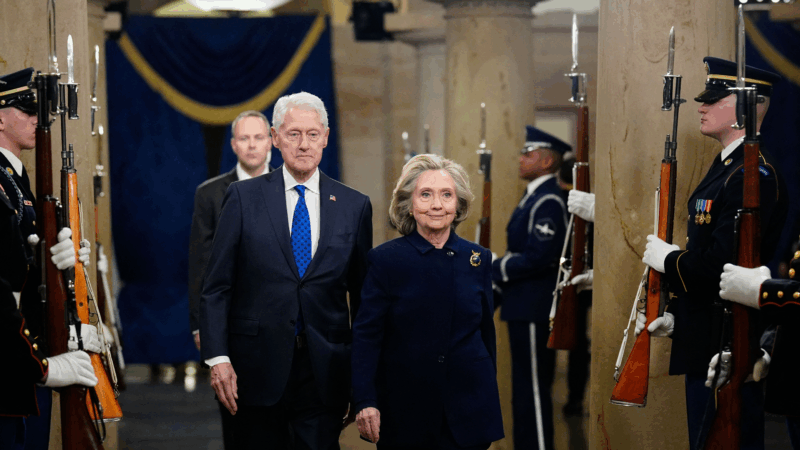
Video of Clinton depositions in Epstein investigation released by House Republicans
Over hours of testimony, the Clintons both denied knowledge of Epstein's crimes prior to his pleading guilty in 2008 to state charges in Florida for soliciting prostitution from an underage girl.
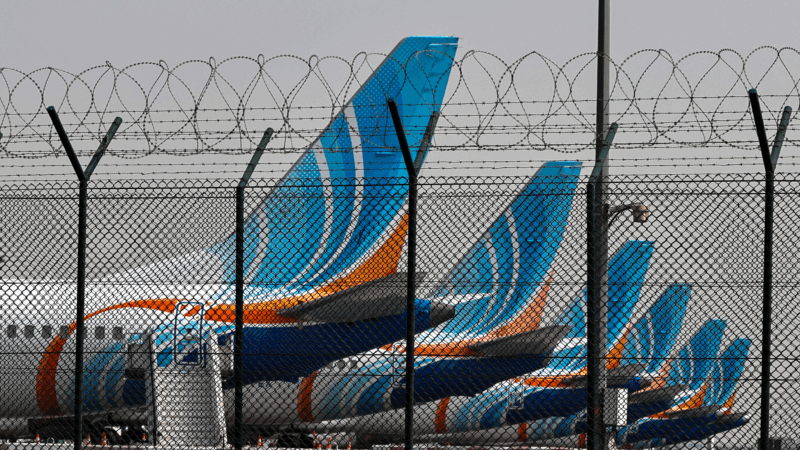
Some Middle East flights resume, but thousands of travelers are still stranded by war
Limited flights out of the Middle East resumed on Monday. But hundreds of thousands of travelers are still stranded in the region after attacks on Iran by the U.S. and Israel.

‘Hamnet’ star Jessie Buckley looks for the ‘shadowy bits’ of her characters
Buckley has been nominated for a best actress Oscar for her portrayal of William Shakespeare's wife in Hamnet. The film "brought me into this next chapter of my life as a mother," Buckley says.
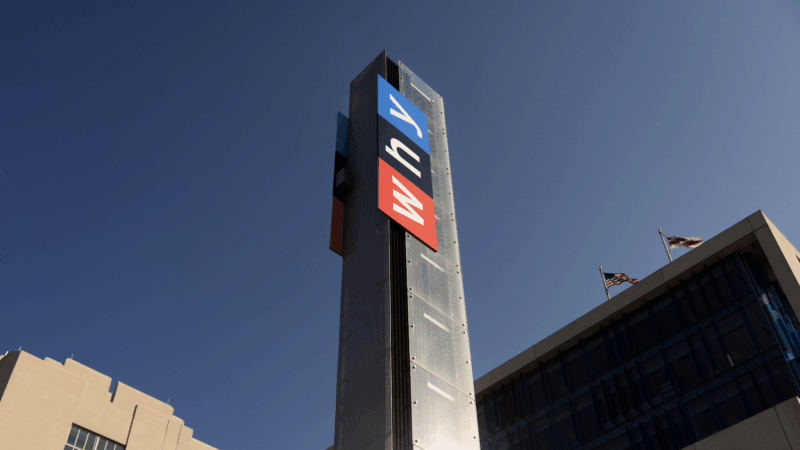
How, who, and why: NPR flips its famous letters to defend the right to be curious
NPR is standing up for the public's right to ask hard questions in a national campaign dubbed "For your right to be curious." At NPR's headquarters, on billboards in New York City, Chicago, and Washington, D.C., and across social media, NPR's three iconic letters transform into "how," "who," and "why" — a bold declaration of its commitment to fight for Americans' right to ask questions both big and small.

Oil prices surge, but no panic yet, as Iran war continues
Global oil prices are in the high $70s as traffic through Strait of Hormuz comes to a halt. Some analysts have warned they could top $100 a barrel if the stoppage is prolonged.
