
Memory loss: As AI gobbles up chips, prices for devices may rise
The world has a memory problem, thanks to artificial intelligence.
The explosion in AI-related cloud computing and data centers has led to so much demand for certain types of memory chips that now there’s a shortage. The imbalance is expected to start affecting prices of all sorts of products powered by technology.
“I keep telling everybody that if you want a device, you buy it now,” said Avril Wu, a senior research vice president at TrendForce, a Taiwan-based consultancy that tracks markets for computer components. “I myself bought an iPhone 17 already,”
The chips are known as RAM, or random access memory, and are crucial to making sure that things like smartphones, computers and game consoles run smoothly. Chips allow you to keep multiple tabs open in browsers, for instance, or watch videos without them being choppy.
Wu said TrendForce’s data indicates that demand for RAM chips exceeds supply by 10% – and it’s growing so fast that manufacturers are having to shell out a lot more to buy them each month.
Wu said this quarter alone, they’re paying 50% more than the previous quarter for the most common type of RAM, known as DRAM – dynamic random access memory. And if producers want the chips sooner, they’re paying two to three times more.
Wu expects DRAM prices to rise another 40% in the coming quarter, and she doesn’t expect the prices to go down in 2026.
How AI is gobbling up memory
AI data centers require huge amounts of memory to accompany their cutting-edge graphics processing unit (GPU) microprocessors that train and operate AI models.
“AI workloads are built around memory,” said Sanchit Vir Gogia, CEO of the tech advisory firm Greyhound Research.
What’s more, AI companies are spending billions of dollars constructing data centers at warp speed around the world. It’s the reason why Gogia says the demand for these chips isn’t just a cyclical blip.
“AI has changed the nature of demand itself,” he said. “Training and inference systems require large, persistent memory footprints, extreme bandwidth, and tight proximity to compute. You cannot dial this down without breaking performance.”
More chips for AI means fewer chips for other products
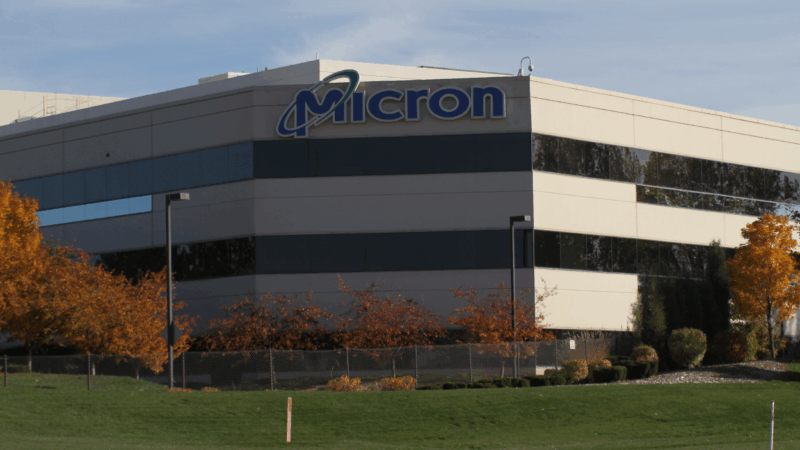
Idaho-based Micron Technology is one of the world’s top makers of RAM and it’s benefited from this increase in demand. It reported better-than-expected quarterly earnings last week on the back of higher memory chip prices.
CEO Sanjay Mehrotra said the company expected the market to remain strong, as the AI boom continues apace. “We believe that the aggregate industry supply will remain substantially short of the demand for the foreseeable future,” he said on a webcast after the earnings report.
Chipmakers like Micron have shifted production to meet as much of the lucrative AI-related demand for high-end memory as they can, according to analysts. That translates into fewer chips for other segments of the market – personal computers, mobile phones, games and consumer products like TVs.
And that means higher costs. Dell Technologies Chief Operating Officer Jeff Clarke noted the higher costs on an earnings call on Nov. 25. For PC’s, he said “I don’t see how this will certainly not make its way into the customer base.”
Analysts say there is no short-term fix.
Tech consultant Wu said the memory chip industry faces a significant bottleneck. By the end of 2026, she said, chip makers will have maxed out how much they can expand production in their current facilities.
She said the next new factory expected to come online is being built by Micron in Idaho. The company says it will be operational in 2027.
Expect suppliers to keep raising prices for the foreseeable future, Wu said.
Transcript:
AILSA CHANG, HOST:
The world has a memory shortage, and it’s in large part because of the AI boom. Artificial intelligence is having an impact on all kinds of things, including how much memory there is to power the technology that we all use. NPR’s John Ruwitch has been covering this and joins us now. Hi, John.
JOHN RUWITCH, BYLINE: Hey there.
CHANG: Hey. OK, so what does this mean, that we have a memory shortage? Like, what are we looking at here?
RUWITCH: Yeah, we all have memory shortages from now and then – right? – occasionally.
CHANG: I mean, I do (laughter).
RUWITCH: It’s a Friday. Ha ha. But what we’re talking about here is different. It’s computer memory, right? There’s a RAM shortage in the world right now. RAM as in R-A-M, random access memory. This is kind of a microchip that provides the short-term memory for your computer or smartphone or device. It’s what makes real-time computing possible. And to note, though, that RAM is different than storage, right? So your computer comes with a hard drive that’s maybe a few hundred gigabytes or a terabyte. That’s storage. RAM is – basically makes computing smooth. It allows you to have more tabs open on your browser, for instance, or watch videos without it being choppy.
CHANG: OK, that makes sense. So how big of a deal is it, then, that we don’t have enough memory?
RUWITCH: Yeah, it seems to be pretty seismic. I spoke with Avril Wu about this. She’s a senior vice president at TrendForce, which is a Taiwan-based tech consultancy that tracks markets for computer hardware. She says cloud providers and all these new AI data centers that are coming up around the world are sucking up a lot of these memory chips, and she’s crunched the numbers on it.
AVRIL WU: It means that out of the overall demand out there, there’s 10% that cannot be fulfilled.
RUWITCH: So 10% of demand can’t be fulfilled. That’s pretty big. If you think about it, every laptop, PlayStation, iPad, smart TV, they all have this kind of memory in them. And now there’s this big upswing in demand from the AI boom. One of the companies that makes chips – these chips is Micron, based in Boise, Idaho. They released quarterly earnings last week, and they’re doing pretty well. This shortage has meant there’s a lot of demand for the chips and higher prices. Here’s a clip of CEO Sanjay Mehrotra talking about it on a webcast after earnings.
(SOUNDBITE OF ARCHIVED RECORDING)
SANJAY MEHROTRA: We believe that the aggregate industry supply will remain substantially short of the demand for the foreseeable future.
CHANG: OK, so how does this chip shortage affect you and me specifically?
RUWITCH: Yeah, it comes from the data centers, but it kind of affects everything. And chip companies have been prioritizing this AI boom, so they’ve been shifting production to make more memory for their cloud computing and AI data center customers. That means there’s less of this RAM to go around for other segments of the market, like PCs, mobile phones, video games. Here’s Avril Wu again.
WU: I keep telling everybody that if you want a device, you buy it now. I myself bought an iPhone 17 already.
RUWITCH: That’s because she’s predicting that prices will rise as companies pass on these higher costs. And this quarter alone, she told me that the price of one popular category of memory chip has already gone up as much as three times from last quarter.
CHANG: Wow. Well, how soon can all of this be resolved, do you think?
RUWITCH: There doesn’t seem to be a short-term fix. You know, the analysts I spoke to all said that this is a structural change in the market. Demand for memory for these data centers is only going to grow. And the reality is that there’s limited RAM production capacity on Earth, and it takes years to build new chip fabs. Avril Wu from TrendForce says that the next big one is being built in Idaho. It’s being built by Micron, and the company’s website says that it won’t come online until 2027. So we can probably expect prices of memory and of all the stuff that this memory goes into going up in the coming months and maybe years.
CHANG: That is NPR’s John Ruwitch. Thank you so much, John.
RUWITCH: You’re welcome.

Pentagon puts Scouts ‘on notice’ over DEI and girl-centered policies
After threatening to sever ties with the organization formerly known as the Boy Scouts, Defense Secretary Hegseth announced a 6-month reprieve

President Trump bans Anthropic from use in government systems
Trump called the AI lab a "RADICAL LEFT, WOKE COMPANY" in a social media post. The Pentagon also ordered all military contractors to stop doing business with Anthropic.

HUD proposes time limits and work requirements for rental aid
The rule would allow housing agencies and landlords to impose such requirements "to encourage self-sufficiency." Critics say most who can work already do, but their wages are low.
Paramount and Warner Bros’ deal is about merging studios, and a whole lot more
The nearly $111 billion marriage would unite Paramount and Warner film studios, streamers and television properties — including CNN — under the control of the wealthy Ellison family.

A new film follows Paul McCartney’s 2nd act after The Beatles’ breakup
While previous documentaries captured the frenzy of Beatlemania, Man on the Run focuses on McCartney in the years between the band's breakup and John Lennon's death.

An aspiring dancer. A wealthy benefactor. And ‘Dreams’ turned to nightmare
A new psychological drama from Mexican filmmaker Michel Franco centers on the torrid affair between a wealthy San Francisco philanthropist and an undocumented immigrant who aspires to be a dancer.
