
Meet Yolanda the wax truck, Team USA’s unsung cross-country ski hero
America’s Olympic cross-country ski team has seen some historic wins at this year’s Games in Italy. Ben Ogden won a silver medal, becoming only the second American man to win an Olympic medal in the sport in 50 years. And this is the third Olympics in a row that Jessie Diggins has medaled for the U.S., with a bronze.
Their ability to get on podiums is thanks in large part to a behind the scenes team of technicians who spend hours before every race preparing the athletes’ skis; applying secret wax formulas, carefully scraping and brushing them, and then testing them obsessively on snow before the starter’s gun goes off.
Diggins praised their efforts at the last World Cup cross-country ski race before the Olympics, in Switzerland in January. She took second in a 20 kilometer contest in the classic technique, which requires skis that need to both grip, or “kick” on the uphills, and also glide really fast going down. It’s tough to get that wax ratio just right.
“Honestly, today I feel like the win belongs to our wax team,” Diggins said, while cooling down on a stationary bike just past the finish line after the race. “I had amazing kick. I was just so, so impressed, that was super crucial to success today, especially for 20 kilometers … like, you can’t fake it for 20K.”
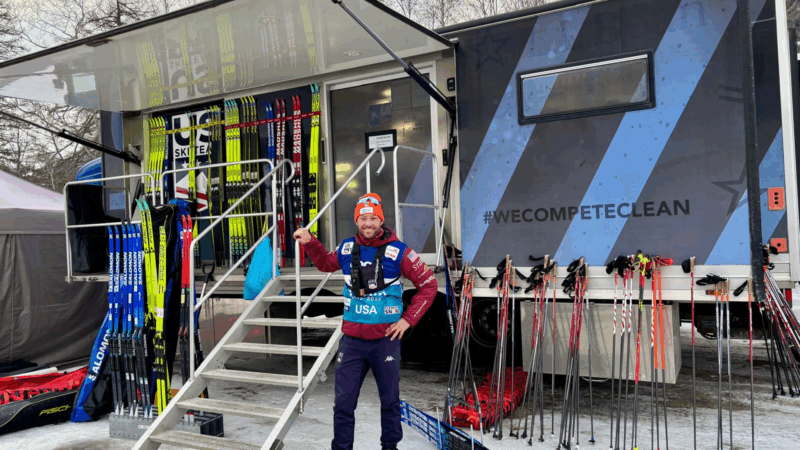
There are 10 ski technicians on the U.S. cross-country team. They spend the winter driving to different race courses all over Europe (World Cup cross-country races are rarely held in North America, but there is one in Lake Placid, N.Y. this year in March). Their ride is known as Yolanda the wax truck, which is also their workspace.
Yolanda’s name is a reference to the movie Pulp Fiction, in which Samuel L. Jackson’s character shouts, “Yolanda! We’re not going to do anything stupid, are we?”
Team USA’s Wax Boss, Oleg Ragilo, an Estonian who speaks five languages, has been with them since 2008.
Ragilo says when the team got Yolanda eight years ago it made a huge difference — no more working in metal storage units with bad ventilation, and no more constantly packing up and unpacking the whole team’s skis and preparation equipment every week.
Yolanda is a little smaller than an American 18-wheeler. When it’s parked, the sides of the trailer behind the cab expand out about 10 feet, and there’s a little deck on one side with an awning. It looks kind of like something you’d see at a fancy RV park, but inside, it’s a ski shop.
“So, all the magic happens over here,” Ragilo says, standing beside his workbench, “It’s called like the kitchen side of the skiing.”
Eight techs can work simultaneously, on long benches that skis clamp into. And there are skis everywhere, bright yellow, blue, red, and shiny black. They fill piles of bags and horizontal and vertical storage racks.
“I think it’s around 600 pairs of skis, including, like, athlete skis, all the test skis, all that,” Ragilo says.
Each of the team’s 16 athletes has about 30 pairs of skis each. Some skis are better for some race courses than others, their bottom surfaces different to better match the many different kinds of snow the team will compete on each winter.
Snow is always changing, which is why Ragilo has drawer after drawer of different kinds of ski wax. He and his team obsess about dialing in just the right wax, giving their skiers any advantage they can in races that can decided by hundredths of a second. That means evaluating a big set of variables that include snow temperature and density, whether its newly-fallen or has been sitting for a while, whether it’s natural or man-made, and how the day’s weather forecast is expected to affect it.
It’s a lot of work, under high pressure, and intense competition. And Team USA’s skiers, coaches and technicians all say Yolanda is making a real difference for them.
It’s not as big as the trucks for Norway, Sweden and Finland, with are double-deckers, but, “we have the best truck,” says longtime American coach Matt Whitcomb.

It didn’t come cheap, he says, about $750,000.
“One thing cool about Americans is when you want to raise money for, say, plane tickets or hotel rooms, you really have to convince people,” Whitcomb said. “But if you want to raise money for a truck? People get pretty excited.”
Yolanda includes a special refreshment station, with a coffee pot and, “also some very random bottles of liquor,” says Technician Tim Baucom, “and some of them are, are homemade. A lot of those were just scared to drink, so they’ve been there for a few years.”
When a U.S. athletes achieves a podium finish; first, second or third place, a Yolanda tradition is toasting them athlete with a shot of Aquavit. And the skier gets to put a star sticker on the ceiling with their name and date of their accomplishment.
The U.S. falters again in figure skating, but the women still have time to make it up
Alysa Liu finished the night in third place, Isabeau Levito finished in eighth and Amber Glenn is in 13th place after a popped jump. That puts extra pressure on all of them for Thursday's medal event.
WBHM seeks a local government and communities reporter
Come be WBHM’s next local government and communities reporter and bring stories to our audience that help explain public policy and show how those decisions impact people living around Birmingham. […]

A safe space for girls who’ve faced sexual violence
The Democratic Republic of Congo is seeing a significant increase in acts of sexual violence against girls and young women. A support center offers a sanctuary for treatment — and to be heard.

U.S. releases new details on alleged secret Chinese nuclear test
At a event in Washington D.C., A U.S. official said a remote earthquake in 2020 was caused by a Chinese nuclear test.
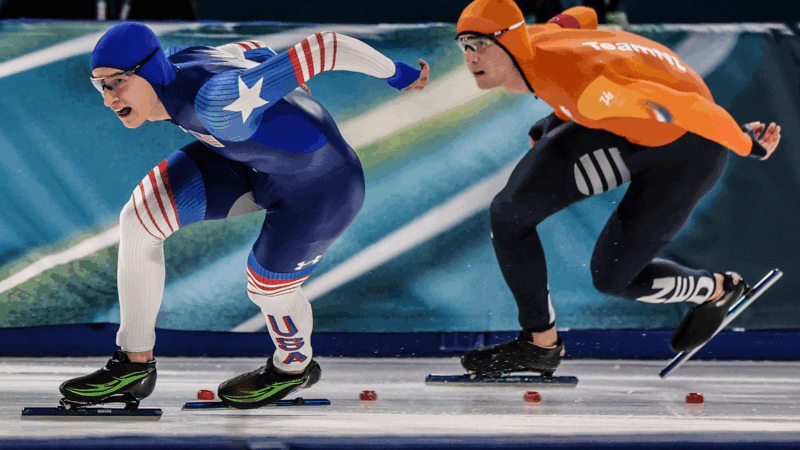
The very polite, unheated rivalry between Jordan Stolz and Jenning de Boo
The two top speedskating sprinters in the world are a cut above the competition. They battle fiercely on the ice, but refuse to trash talk

Top Trump administration immigration spokesperson is leaving
Tricia McLaughlin has become the public face defending the Trump administration's mass deportation policy and immigration tactics over the past year.
