
Many rural schools rely on international teachers. Trump’s visa changes threaten that
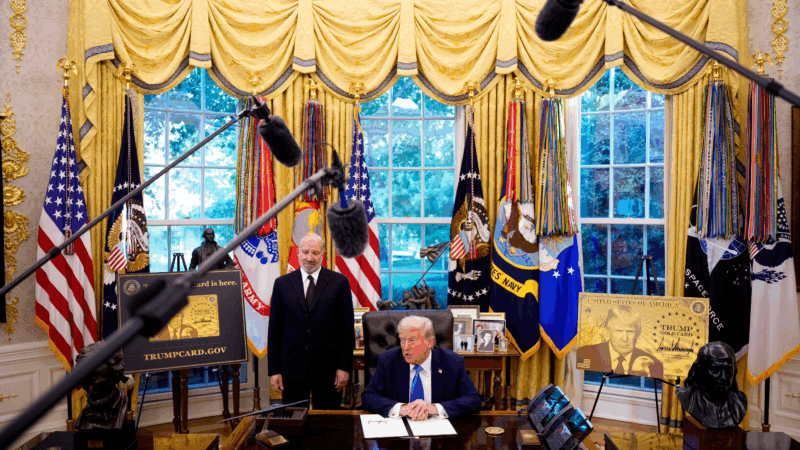
Maria Cristina Tomimbang has taught middle school math for 22 years — 18 years in the Philippines and four years in Montana.
“It’s really such a blessing,” she says of her job in the Hardin Public Schools. “I love the community.”
Hardin, a town of 4,000 about an hour east of Billings and just off the Crow Indian Reservation, is a place that has had trouble attracting teachers.
“We don’t have candidates,” says Tobin Novasio, the district’s superintendent. Earlier in his career, he says that if he posted an elementary teacher position, at least 20 people would apply. Now, “if we get two, we’re ecstatic.”
Hardin, like many rural districts, relies on international teachers to fill out its staff. Out of 150 teachers in the district, about 30 are in the U.S. on teaching visas. Many are on short-term J1 visas, with hopes to one day graduate to the longer-term H-1B visa.
Now, things are about to get even tougher — for the district and for teachers like Tomimbang.
Last month, President Trump unveiled a plan that requires employers pay a $100,000 fee for new H-1B visas. In his announcement, Trump specifically called out high-paying tech jobs that he said were filled by too many foreign workers.
However, the impact on schools and educators will be significant. According to data from the Department of Homeland Security, more than 20,000 educators are in the country on H-1B visas — the third most common occupation group for the program.
“I don’t have a teacher in my district that makes $100,000 a year,” Novasio says. For school districts, “to pay that fee on top of a salary is just gonna kill the H-1B for education.”
The change is a blow to some districts’ long-term strategy to keep teachers in classrooms.
Many of Hardin’s current teachers are on cultural exchange, or J1 visas; they must go back to their home countries every few years and stay for at least one year.
When that happens, Novasio struggles to fill those classrooms. His goal was to transition many of his current teachers to H-1B visas so they could stay three to six years, with options to extend. Now, that option is financially untenable.
To further add to the turmoil and uncertainty, the White House earlier this year temporarily halted interviews for J1 visa applicants for about a month, before reinstating the program. The pause made hiring for this year’s gaps even more stressful.
Despite the challenges, would Tomimbang recommend others come to the U.S. to teach, amid the changing immigration landscape? Yes, she says.
“It’s worth the wait, it’s worth the time and it’s worth the effort.”
An “unintentional consequence”
When asked about the impact of the H-1B proposal on teachers, Taylor Rogers, a White House spokesperson, told NPR that “President Trump promised to put American workers first, and this commonsense action does just that by discouraging companies from spamming the system and driving down American wages.”
Novasio isn’t sure that applies to teaching, especially in Hardin. International teachers in his district, he said, earn the same as their domestic counterparts. The salaries are dictated by the teachers union.
The White House, in a statement, also directed NPR to the text of the president’s proclamation — which would allow the Department of Homeland Security to grant exceptions to the fee. It’s unclear whether such an exemption might be granted to schools and school districts. When asked for comment, a DHS spokesperson deferred to the White House.
Sasha Pudelski, the director of advocacy for the AASA, an organization representing school superintendents that has been working to navigate the new rule in Washington, says she feels hopeful about that part of the text.
“We believe this is an unintentional consequence,” she says. “And we’re doing everything we can to ensure the Department of Homeland Security exempts educators.”
However, in tandem with the proclamation, the administration released a proposal to change the H-1B visa from a lottery system to a weighted scale that gives preference to the highest earners. The average teacher salary in the state of Montana in 2023 was $58,600, far below what many tech workers earn.
This proposal, Pudelski believes, could be the most harmful for schools and educators.
“As you might imagine, education is not a particularly lucrative profession,” she says. “So we’re very worried that this could present a more significant long-term barrier to utilizing these visas for educators.”
In the meantime, Novasio is already on the lookout for new teachers for next year — abroad and at home. He’s working with state officials to create an apprenticeship program for teachers and develop a stronger local pipeline.
His district already has partnerships with local colleges. “It’s not by a lack of trying that we’re not able to fill these positions.”
He hopes people will “have some empathy for those folks that are packing up their lives and coming to our country to help teach our kids.”
He says his school system could not function without them.
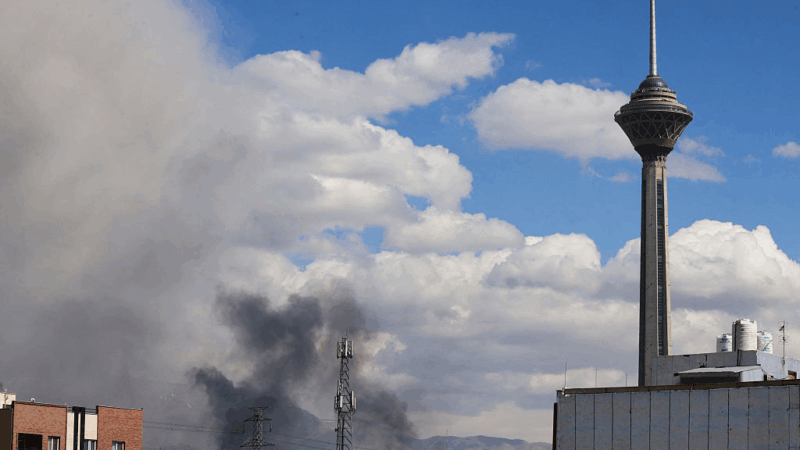
U.S.-Israeli strikes in Iran continue into 2nd day, as the region faces turmoil
Israel said on Sunday it had launched more attacks on Iran, while the Iranian government continued strikes on Israel and on U.S. targets in Gulf states, Iraq and Jordan.
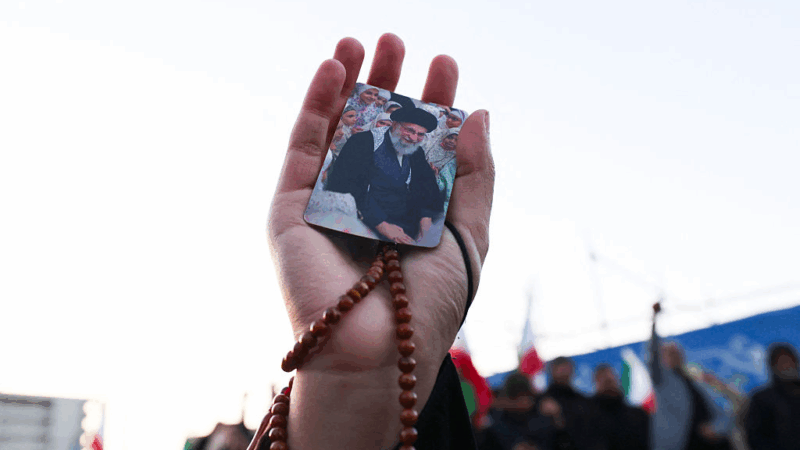
Trump warns Iran not to retaliate after Ayatollah Ali Khamenei is killed
The Iranian government has announced 40 days of mourning. The country's supreme leader was killed following an attack launched by the U.S. and Israel on Saturday against Iran.
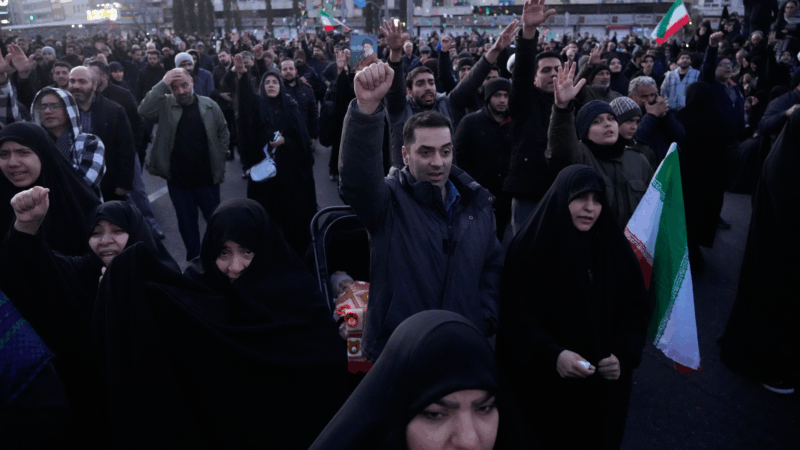
Iran fires missiles at Israel and Gulf states after U.S.-Israeli strike kills Khamenei
Iran fired missiles at targets in Israel and Gulf Arab states Sunday after vowing massive retaliation for the killing of Supreme Leader Ayatollah Ali Khamenei by the United States and Israel.
House Dem. Leader Jeffries responds to air strikes on Iran by U.S. and Israel
NPR's Emily Kwong speaks to House Minority Leader Hakeem Jeffries (D-NY), who is still calling for a vote on a war powers resolution following a wave of U.S.- and Israel-led airstrikes on Iran.
Iran’s Ayatollah Ali Khamenei is killed in Israeli strike, ending 36-year iron rule
Khamenei, the Islamic Republic's second supreme leader, has been killed. He had held power since 1989, guiding Iran through difficult times — and overseeing the violent suppression of dissent.

Found: The 19th century silent film that first captured a robot attack
A newly rediscovered 1897 short by famed French filmmaker Georges Méliès is being hailed as the first-ever depiction of a robot in cinema.
