
Lucy Liu on ‘Rosemead,’ rejection and returning to Mandarin
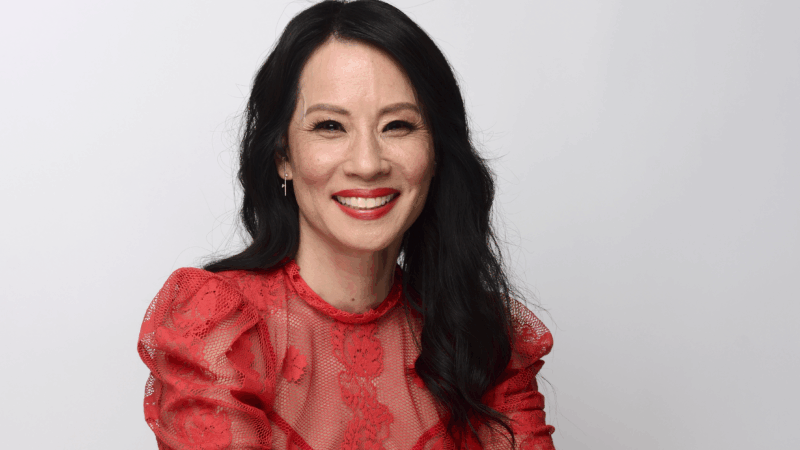
Actor Lucy Liu says she’s forgotten a lot of her childhood. “I think it’s probably because it was a lot of trauma of not feeling like you belonged, or wanting to seem like everything was perfectly normal and not looking like everybody else,” she says.
The child of Chinese immigrants, Liu grew up in Queens where she spoke Mandarin at home and didn’t learn English until she was 5. She remembers seeing only white actors on TV shows like I Dream of Jeannie and The Brady Bunch. Then she saw an ad for Calgon laundry detergent featuring an Asian actor and something clicked: “There’s somebody in that set that looks like me,” Liu remembers thinking.
That ad opened Liu up to the possibility of an acting career. She’d go on to make a name for herself on the TV show Ally McBeal, and in films like Kill Bill: Volume 1, Kill Bill: Volume 2 and Charlie’s Angels.
In Rosemead, Liu stars as a terminally ill woman grappling with her teenage son’s escalating mental health crisis and the impossible choices she faces to help him. Liu says, the movie, which is based on a true story, offered the chance to “humanize this woman and her son and to really talk about what happened behind closed doors.”
“I know for myself, there’s a lot of cultural stigma and there’s a lot of fear about being seen in a true light, thinking that it would be judged or I guess you’ll be shunned from the community,” she says. “And I think that there’s something about exposing that in a positive way that might help spark conversation for not just the AANHPI community, but for so many other cultures.”
Liu’s Rosemead character speaks Mandarin to her son, which allowed Liu to return to her own first language. “I felt such a great depth of tenderness,” she says. “It just reminded me so much of the community and just the beautiful poetry of Mandarin, and how some words just cannot be expressed in English.”

Interview highlights
On exploring Asian Americans and mental health in Rosemead
There’s a lot of judgment within the community, and I think they are not as open oftentimes to mental health services, like therapists. And, I mean, the extreme of that is Western medicine, taking, you know, SSRIs. … When Irene, who’s the character I play, says [her son] seems to be getting better in therapy, her own friend says, “you sound like a foreigner.”
On what happens when children of immigrants become their parents’ translators
As a child when you are the one to advocate for your parents and to translate for your parents … even though you don’t have the experience to understand exactly what you’re translating, it really changes the dynamic of yourself and your parents. So you become the parents in that situation, even though they’re the ones who have the authority. So there’s a very strange dynamic that occurs. And I think that a lot of people that are children of immigrants have experienced that too. And that’s something that I wanted to imbue in Irene, that she was still very childlike when she was outside of her home and outside of her community.
On getting fewer auditions than white actors
I think rejection was on my resume — it should have been like, “Rejection, takes it pretty well.”
Lucy Liu
I think rejection was on my resume — it should have been like, “Rejection, takes it pretty well.” I think that there were so few auditions that I really didn’t know how to get better. Because when you audition, you really need to know how to understand the room. You have to understand what you’re doing. There’s a certain way to introduce yourself. And because I kind of was very raw and unpolished, maybe that worked in my favor. I think the unknowing of it, the naiveté and really the sincerity of going in and just doing your best and not having any expectations was really a saving grace for me.
On why she majored in Asian languages and cultures in college
When I went to college, it was sort of a free-for-all and I was so excited to take all these multiple courses, like ceramics and Chinese, which I had rejected so much when I was a child. We would go to Chinese school on the weekends and I would just absolutely despise going to Chinese School. … I just wanted to have a childhood. I wanted to run around and just ride my bicycle and do all the things that everyone else was doing. And here I was sitting in a classroom, repeating these vowels and these tones. It wasn’t my interest. And I was struggling with, like, am I Chinese? Am I American? Where am I? And so here I am trying to be American and try[ing] to find a voice, but then I’m stuck in Chinese school. And so I think when I got to college, I was like, I can choose this now. And it was a choice. And that’s a very different feeling to make that decision for yourself.
On getting roles written for white women and wanting to keep the characters’ names, like Lindsay or Alex
I just think it’s imperative to know that these roles, although they were not written for someone Asian, that they could be and they should be retained as those names because it shows that having been cast in that role, it’s become something that’s more ubiquitous, it’s more accepted. … Leaving that name in there, to me, shows the history of how things can change and how they have changed and they can continue to change. … It’s definitely not gonna be overnight, but it is so, for me, important to remember those moments, because I feel like those are huge leaps forward.
On being name-checked in OutKast‘s “Hey Ya!” and the first time she heard the song
I was driving down Laurel Canyon towards Sunset Boulevard from Mulholland and then somebody said “your name is in this song,” and then it came on and I thought, “What are you talking?” about and then … I heard my name and it was such a fast thing it was a blur. … It was so shocking to me and it didn’t really occur to me what it meant, because I don’t think I was as present as I am now back then, because I was so busy just doing.
Ann Marie Baldonado and Nico Wisler produced and edited this interview for broadcast. Bridget Bentz, Molly Seavy-Nesper and Beth Novey adapted it for the web.
Trump calls SCOTUS tariffs decision ‘deeply disappointing’ and lays out path forward
President Trump claimed the justices opposing his position were acting because of partisanship, though three of those ruling against his tariffs were appointed by Republican presidents.

The U.S. men’s hockey team to face Slovakia for a spot in an Olympic gold medal match
After an overtime nailbiter in the quarterfinals, the Americans return to the ice Friday in Milan to face the upstart Slovakia for a chance to play Canada in Sunday's Olympic gold medal game.

NASA eyes March 6 to launch 4 astronauts to the moon on Artemis II mission
The four astronauts heading to the moon for the lunar fly-by are the first humans to venture there since 1972. The ten-day mission will travel more than 600,000 miles.

Skis? Check. Poles? Check. Knitting needles? Naturally
A number of Olympic athletes have turned to knitting during the heat of the Games, including Ben Ogden, who this week became the most decorated American male Olympic cross-country skier.

Police search former Prince Andrew’s home a day after his arrest over Epstein ties
Andrew Mountbatten-Windsor, the British former prince, is being investigated on suspicion of misconduct in public office related to his friendship with the late convicted sex offender Jeffrey Epstein.

Violinist Pekka Kuusisto is not afraid to ruffle a few feathers
On his new album, the violinist completely rethinks The Lark Ascending by Ralph Vaughan Williams, and leans into old folk songs with the help of Sam Amidon.
