
Kraft Heinz is splitting up, separating hot dogs from ketchup
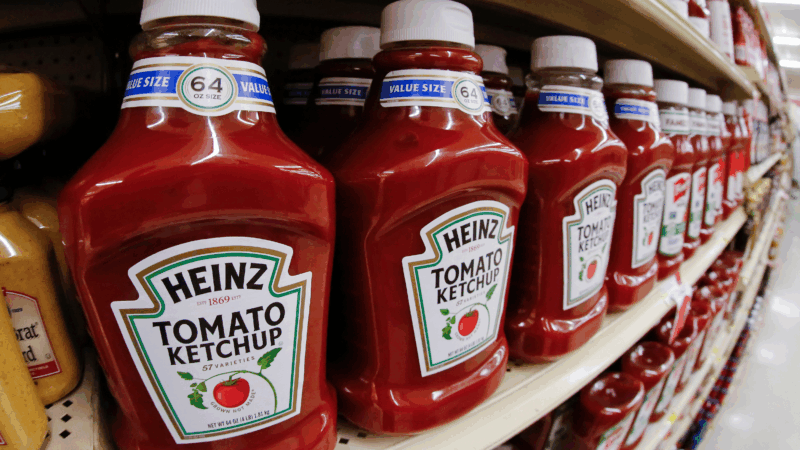
Hot dogs go to the left; ketchup to the right. That’s Kraft Heinz, one of the world’s largest food conglomerates, splitting into two companies.
The breakup comes a decade after its messy mega-merger, orchestrated by billionaire investor Warren Buffett and considered one of his notable missteps. In recent weeks, both Kraft Heinz and Buffett’s Berkshire Hathaway took multibillion-dollar impairment charges reflecting the declining value of the food giant.
Kraft Heinz spent years slicing its costs while rivals invested in new ideas to keep up with changing consumer tastes. Budget-conscious shoppers have been buying more store-brand packaged foods, while people willing to spend extra often reach for fresher alternatives to processed products.
Now, Kraft Heinz executives hope the sum of two separate companies will be greater than the firm’s current value.
The first will focus on shelf-stable foods and include brands Heinz, Philadelphia and Kraft Mac & Cheese. The second will include more of what the company describes as groceries, with brands such as Oscar Mayer, Maxwell House, Capri Sun and Lunchables. The latter will be run by Kraft Heinz’ current CEO, Carlos Abrams-Rivera.
The merger went sour
Kraft Foods and H.J. Heinz merged in 2015 in a mega-deal led by the firms that controlled Heinz: Buffett’s Berkshire Hathaway and Brazilian private-equity firm 3G Capital.
3G was famous for its cost-cutting approach to consumer companies, having reinvigorated Burger King and beverage giant Anheuser-Busch. But the strategy failed to feed much growth at Kraft Heinz.
In 2019, after massive layoffs and lost sales, the company shocked Wall Street by writing down the value of marquee brands Oscar Mayer and Kraft by $15 billion. It faced shareholder lawsuits and an investigation by U.S. financial regulators.
In July, Kraft Heinz once again reported a drop in sales and a net loss of nearly $8 billion, largely thanks to a $9.3 billion impairment charge attributed to the declining share price. Soon after, Berkshire Hathaway also wrote down the value of its investment in Kraft Heinz with its own $3.8 billion impairment charge.
Buffett had maintained his financial stake even as 3G Capital completed its quiet exit from Kraft Heinz last year. In a rare admission, Buffett did acknowledge he “was wrong in a couple of ways on Kraft Heinz” and had overpaid in the deal, but praised the historic strength of the brands.
History is a who’s-who of food brands
Pittsburgh-based Heinz began in 1869 with grated horseradish that Henry J. Heinz packaged in a clear jar to show off its quality. But of course it was his ketchup – or “catsup” as it was known for a while – that brought Heinz fame, followed by baked beans.
Illinois-based Kraft brothers started their business selling cheese by horse and wagon in the early 1900s. During World War I, they supplied the U.S. Army with cheese processed to resist spoilage.
The Great Depression saw Kraft introducing the mayo-like Miracle Whip and the iconic mac and cheese mix, one of the first pre-packaged, shelf-stable dinners. The Kraft brothers also acquired Philadelphia – the cream cheese – and Velveeta. And in 1935, hot liquid cheese poured onto cold stainless steel and cut into squares set the stage for Kraft Singles cheese slices.
In the 1980s, Kraft was bought by tobacco giant Philip Morris during a food-company buying spree. That’s when Kraft ballooned to include Nabisco, Jell-O, Maxwell House and hot-dog maker Oscar Mayer.
In the early 2000s, Kraft again became its own publicly traded company. Later it spun off a separate snacking company, Mondelez, which makes Oreo cookies and Ritz crackers.
The big food meltdown
After its 2015 merger, Kraft Heinz wanted to jump-start growth by buying rival Unilever, maker of Hellmann’s mayonnaise and Ben & Jerry’s ice cream. But the European conglomerate rejected the deal.
Kraft Heinz tried to refresh its food offerings and address families’ growing health concerns. It cut the sugar level in its Capri Sun juices. It launched cheese-stuffed hot dogs, hot honey and plant-based cheese and mayo. It began making mac and cheese with natural food coloring. Last year, after reports about Lunchables’ sodium and heavy metals content, the company stopped offering the snack packs for school-lunch programs. It is now removing artificial food dyes from all U.S. products.
But years of high inflation have shoppers at Walmart, Costco and supermarket chains increasingly choosing private-label packaged foods, including in categories where brand names had long enjoyed high loyalty. And smaller startups continue to pose fierce competition with new takes on familiar snacks and meals.
In February, CEO Abrams-Rivera said Kraft Heinz was focusing its resources on faster-growing and more profitable products “to become a sauces and meals powerhouse.”
By mid-2025, the company’s shares lost two-thirds of their value from the post-merger peak. The company’s stock rose Tuesday on the news of the breakup.
From guns to ballots: FARC’s campaign for votes in Colombia
Ten years after Colombia's peace deal, former FARC commander on the election campaign trail is discovering that winning ballots can be tougher than waging war.

Bill to force formal utility rate hearings for the first time in more than 40 years delayed
Alabama's Public Service Commission hasn't held a formal rate hearing for utilities since 1981. A bill that would force the commission to hold such hearings is under consideration in the state legislature, although the measure was delayed in a House committee this week. We get more details on our weekly legislative update with Todd Stacy, host of Capitol Journal on Alabama Public Television.
A college student’s perspective on using AI in class
Instead of banning AI, why don't schools teach students to use it critically? College freshman Maximilian Milovidov shares what he has learned in an "AI writing" course at Columbia University.
The U.S. unexpectedly loses 92,000 jobs, adding to worries about the economy
The job market showed further signs of weakness last month as employers cut 92,000 jobs. The unemployment rate inched up to 4.4%, from 4.3% in January.

Taking the heat. Sauna’s popular and there may be health benefits too
It's an age old practice that's having a moment right now. But is there anything to the health claims? Scientists say sauna is more than hot air.
Iran retaliates after Israel strikes Beirut and Tehran as war enters Day 7
Iran fired missiles toward Israel Friday, Israeli officials said, after Israel launched fresh strikes on Tehran and hit Beirut's southern suburbs overnight.
