
Kids’ willpower is no match for fast food and screens. Try this instead
For decades, psychologists believed willpower was the ticket to a good life.
“It was thought that people with better willpower would be more successful,” says psychologist Marina Milyavskaya at Carleton University, in Ottawa, Canada.
Hundreds of studies appeared to support this idea. Researchers found links between better willpower and better grades in school, better relationships and careers as adults, healthier diets and even more consistent parenting.
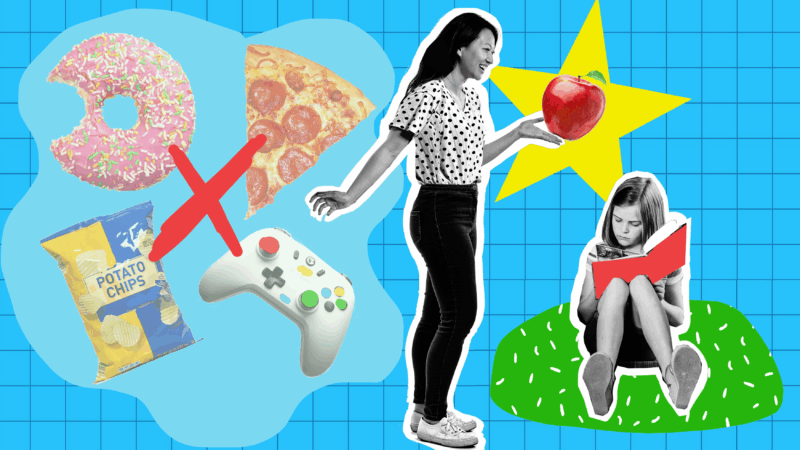
So psychologists and parenting experts advised parents to teach children to use willpower to resist modern temptations, such as sweets, fast food, video games, phones and other screens.
But in the past 15 years, Milyavskaya and other psychologists have dug deeper into the studies, and they uncovered a major flaw: These studies weren’t actually measuring willpower but a different skill — the ability to avoid temptation in the first place.
And in the process, they’ve found easier and more effective ways for parents to handle the tsunami of temptations in children’s lives.
Focusing on willpower can backfire
Willpower is the ability to resist a temptation right in front of you, Milyavskaya says. “It’s the idea of effortful resistance of temptation.” For example, your ability to say no to a fast food cheeseburger for dinner and choose baked salmon instead. Or to resist the video game and finish your homework.
“Fifteen to 20 years ago, it was thought you could train willpower,” she adds, by building a kids’ ability to resist temptations the way athletes build up muscles — through practice. Let children play video games each day and teach them to stop after one hour, for example. Or expose your children to “forbidden” foods, such as chips, cookies, and soda, so they can learn to self-regulate and not gobble up too many.
“There was this idea that if you’re exposed to junk food more, you’re going to resist it better,” says Michael Inzlicht, a professor of psychology at the University of Toronto. But there was one big problem with this approach: It doesn’t work for very long. “Evidence from my lab and other people’s labs suggests that it’s not gonna help you in the long-term.”
In fact, he says, trying to build up kids’ willpower actually backfires. By offering children temptations regularly parents are teaching kids to prefer and want these foods and activities. “Guess what the kids are going to like?,” Inzlicht asks. “Fatty foods and sweet foods because that’s what we’re programmed to like,” he says.
New strategies for modern temptations
The original studies on willpower relied on surveys or questionnaires to measure a person’s self-control and their success in life. Researchers assumed these questionnaires measured a person’s willpower — the ability to resist temptations in front of you.
But in the early 2010s, psychologists decided to stop relying on surveys, and instead, study what people do in real-life to meet their long-term goals. These studies revealed a surprise, Inzlicht says. The more successful people didn’t have better willpower compared to those who were less successful. Instead, successful people set up their lives so they didn’t need to use willpower frequently. They exposed themselves to fewer temptations.
And this is the strategy parents should be teaching their children, says Wendy Wood, a professor emerita of psychology at the University of Southern California. “Teach them how to choose situations that reduce the likelihood of doing things that aren’t good for them. Teach them how to control the temptations,” Wood says.
In essence, parents don’t need to teach kids how to say, “no” to the marshmallow sitting in front of them — like in the infamous Stanford study — but rather, learn “how to put a pie-pan over the marshmallow,” Wood says. Or how to avoid being in a room with marshmallows.
“For example, parents can teach kids to leave their phone in another room when they’re studying,” Wood says, or to use apps that block distracting websites and games. They can teach kids how to keep sweets and ultra-processed foods out of the house and out of their backpack or car. In other words, parents can create times and places in children’s life where distractions or temptations aren’t an option at all — and show them how they can implement this strategy themselves.
Learn to love what’s good for you
The great thing, Wood says is, parents can help kids fall in love with the healthier alternatives — to love salmon and bok choy at dinner, love playing outside with friends, or love working hard in school.
“Your kids’ choices are malleable, and it’s really influenced in part by what they’re exposed to,” she says. “You can truly learn to like the things that are good for you.”
To shape their preferences, she says, give your kids oodles of opportunities to experience the pleasure of these healthy options. For example, Wood wanted to teach her kids to love reading. So she kept books in the car and her purse. “I like to eat out at nice restaurants, and I would take my kids along.” While waiting at the restaurant, the only option they had was to read. And so they built a habit of reading. “Today my kids are still wild readers. “
Finally, Carleton University’s Marina Milyavskaya says, pay attention to how you talk about healthy foods and activities. Don’t present them as burdens, sacrifices or punishments. Instead, focus on how good these foods taste or how fun an activity offline is. Studies have found that our language shapes our preference for foods, as well as how much we eat them.
“Whether it’s eating healthier food or going to the gym, if you make the activity more fun in the moment, then you’re more likely to do it again,” Milyavskaya says.
So if you want your child to love salmon, talk about how great it tastes with yummy garlicky soy sauce and wild rice. And how great it makes you feel right after eating it. Something that a frozen ultra-processed dinner won’t do.
Michaeleen Doucleff has a PhD. in Chemistry and is a longtime science journalist (including previously for NPR). She has a new parenting book out called Dopamine kids.

Microshelters for Birmingham’s unhoused set to open soon
The pilot program called Home For All involves building 14 small pallet homes to house those who would otherwise be living on the streets.
Chimps’ taste for fermented fruit hints at origins of human love of alcohol
Scientists analyzed the urine of wild chimpanzees who'd feasted on fallen fruit to see how much alcohol they consumed from the fermented sugars.

Iran attacks Israel, Gulf states, after naming new leader on Day 10 of war
The price of crude oil briefly neared $120 a barrel Monday as Iran named Mojtaba Khamenei the supreme leader and then launched new attacks at Israel and Gulf states.

World shares tumble as Iran war pushes crude prices over $110 a barrel
World shares tumbled on Monday, with Japan's benchmark Nikkei 225 index plunging more than 5%, after oil prices spiked at nearly $120 a barrel.
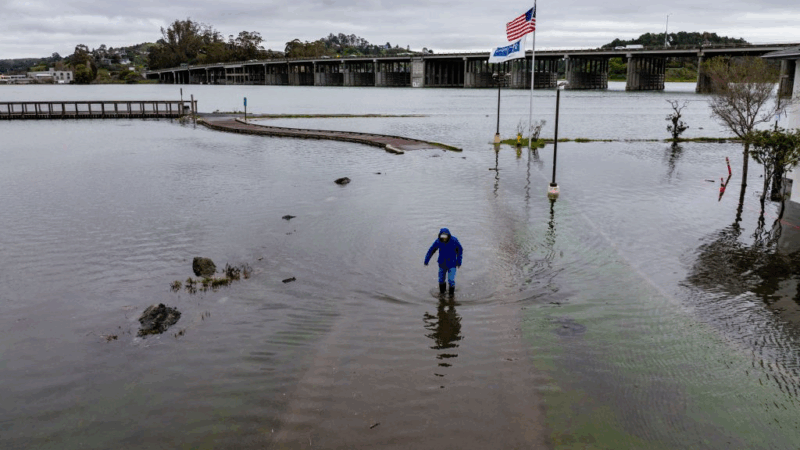
Millions more people are in the path of rising seas than previously thought
Oceans are rising as the climate changes, threatening coastal cities. A new study shows that much more of the world's population is vulnerable than earlier predictions had estimated.
Come along with some geese as they migrate back from their southern winter havens
Geese's iconic "V" formations and trademark squawks can be seen and heard overhead as they go back and forth to the south through the year. But what does it take for such a long trip?
