
Julian Barnes’ playful new book is also his ‘official departure’
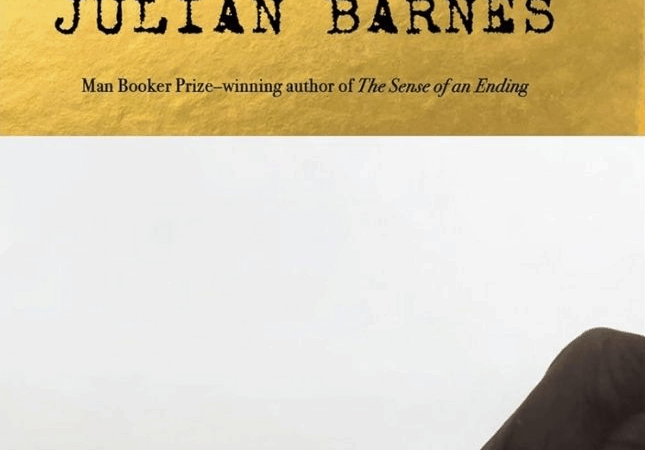
In Departure(s), Julian Barnes’ playful new novel about several of his lifelong obsessions — mortality, memory, and time — the author announces that after publishing 27 books over the past 44 years, “this will definitely be my last book — my official departure, my final conversation with you.”
Surely, he jests? Barnes, who describes himself as a “cheerful pessimist,” turned 80 this month. He also has a longstanding interest in endgames — both endings and games. Writing, he says, is still “one of the times I feel most alive and original,” but he worries about repeating himself, or going stale, or “lapsing into the easy garrulity of autobiography.” Self-determined retirement has the advantage of assuring against being cut off mid-project — and worse, of having someone else clumsily complete his orphaned book. Still, he backslided rather quickly after swearing off interviews some 10 years ago — lasting only until the publication of his very next book.
Departure(s) is billed as a novel. It is narrated by a writer named Julian (“Jules”), a self-declared agnostic/atheist who prepared for COVID lockdown by ordering a 30-DVD boxed set of Ingmar Bergman films. This narrator, like the author, was devastated by the sudden death of his wife (literary agent Pat Kavanagh) to brain cancer in 2008, and has since lost many friends, including fellow writers Christopher Hitchens and Martin Amis, to other forms of the disease. He relays his own medical saga, including his diagnosis in early 2020 with an incurable but manageable form of leukemia, which is kept in check with daily chemotherapy pills. He comments wryly: “‘Incurable yet manageable,’ that sounds like…life, doesn’t it?”
It takes Barnes a while to get to the story at the core of this book, which involves college classmates he introduced to each other while they were at Oxford University with him in the 1960s. Barnes calls this couple, whom he promised never to write about, Jean and Stephen. They all parted ways after graduation, and mostly fell out of touch until 40 years later, when they were in their 60s. Stephen, long-divorced, contacts Barnes and asks him to help reconnect with Jean. Barnes happily obliges, glad to have another go as matchmaker. Both Stephen and Jean confide separately that they consider their rekindled relationship their “last shot at happiness.”
As a novelist, Barnes is used to playing god, manipulating his characters’ lives and feelings. He notes that he has written about love frequently, though “few of my characters have ever been granted a happy ending.” Jean argues that novelists really don’t get love. Could this be true, Barnes wonders. Surely not the great novelists, who he feels “understand love, and most aspects of human behaviour, better than, say, psychiatrists or scientists or philosophers or priests or lonely-hearts columnists.”
Barnes’ central concern here is not so much with how Jean and Stephen’s relationship plays out, but with endings in general, both literary and otherwise, and with stories and memories “with a missing middle,” like the 40 year gap in his friends’ love story. Fiction, he notes, “requires the slow composting of life before it becomes usable material.” It also has the advantage over nonfiction of enabling writers to fill in blanks where facts remain elusive.
Like much of Barnes’ work, Departure(s) attempts to synthesize multiple strands in a wily (and sometimes unruly) hybrid of autobiography, essay, fiction and autofiction that is thick with musings about Proust and other French writers, involuntary memory, and aging. (“You should do one thing or the other,” sharp-tongued Jean admonishes him about his discursive approach to narrative.)
As always, Barnes underscores his thoughts with trenchant quotes from his inner Bartlett’s, including this wonderful parenthetical remark: “What did T.S. Eliot say about memory? That no matter how you wrap it in camphor, the moths will get in.”
Even if Departure(s) does not turn out to be Barnes’ capstone, it is a welcome addition to his bibliography, exhibiting more in common with his greatest hits — including his breakthrough third novel, Flaubert’s Parrot and his 2011 Booker Prize-winner, The Sense of An Ending — than his most recent novel, the disappointingly flat Elizabeth Finch.
Departure(s) is slim but weighty, digressive yet incisive. The plot is pretty much beside the point. Although the book features a somewhat tricky, not entirely reliable narrator, it gives us unprecedented access to the thoughts and feelings of this extraordinarily interesting, erudite writer who professes to view life as, “at best, a light comedy with a sad ending.” A light comedy with a sad ending — that pretty much sums up Departure(s).

Why the Chicago Bears could be moving to Indiana
While Illinois is trying to keep the team in Chicago's suburbs, Indiana lawmakers are offering a plan to finance a new stadium

Pentagon tightens controls over Stars and Stripes after calling it “woke”
The new rules for the independent military newspaper are the Defense Department's latest effort to put extraordinary restrictions on journalists covering the agency.
‘War of the Worlds’ remake sinks to the bottom at this year’s Razzie Awards
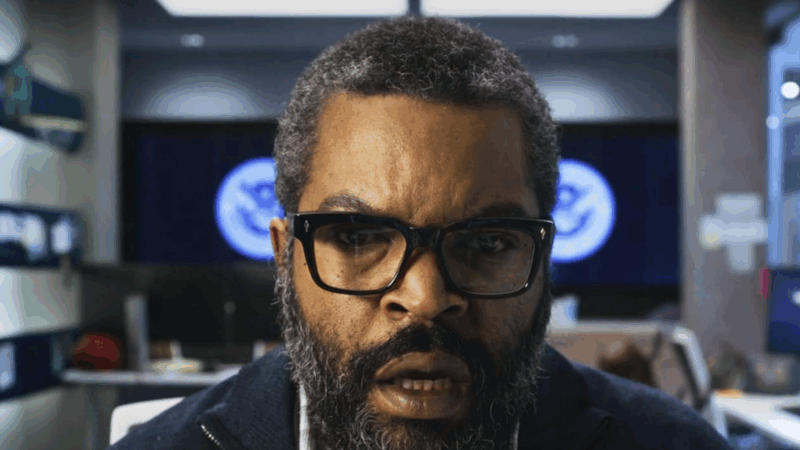
The surveillance industry version of HG Wells' 1898 classic sci-fi novel stars Ice Cube, and won accolades for worst picture, actor, director and more.

Russian strike on Kyiv region kills 4 and wounds 15, with peace talks stalled
The strikes comes after the United States paused ceasefire talks between Russia and Ukraine due to the war with Iran.
As the risk of measles grows, why are parents so divided on vaccines?
In South Carolina, some parents embrace vaccines, others opt out. Why do people make such different choices? A mix of politics, distrust and misinformation is pushing neighbors apart.

Brazil’s ex-President Bolsonaro is in intensive care with pneumonia, hospital says
One of Bolsonaro's doctor's described the former Brazilian president's medical condition as "serious."
