
Judge orders Trump administration to resume distributing money for EV chargers
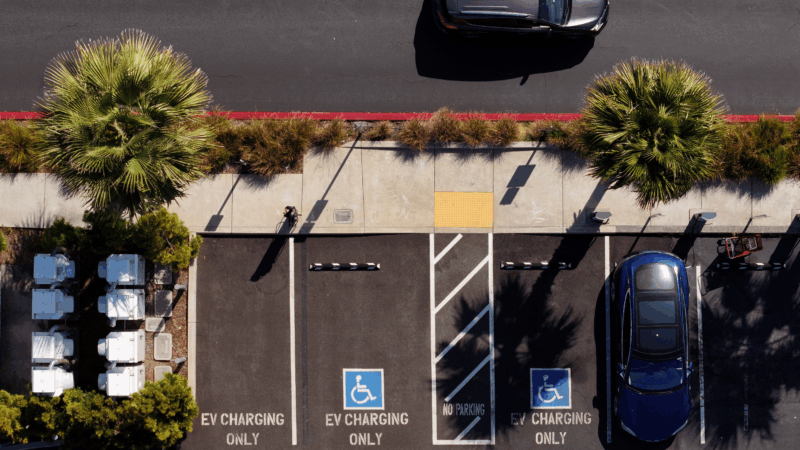
A federal judge in Washington state has ordered the Trump administration to resume distributing money to build EV chargers to 14 states, which had sued to challenge the ongoing freeze on those funds.
Billions of dollars are at stake, which Congress had allocated to the states in order to install high-speed chargers along highway corridors. The Department of Transportation announced a temporary pause in distributing those funds in February, saying that new guidance for applying for the funding would be published this spring. No new guidance has been published, and the funds remain paused.
The court order is a preliminary injunction, not a final decision in the case itself. The judge also added a seven-day pause before it goes into effect, to allow the administration time to appeal the decision. After seven days, if no appeal has been filed, the Department of Transportation would have to stop withholding funds from the National Electric Vehicle Infrastructure (NEVI) program and distribute them to the 14 states.
While the legal battle is ongoing, the judge’s ruling is an early win for the states and a setback for the Trump administration. California Attorney General Rob Bonta, who is co-leading the suit, said in a statement he was pleased with the order, while the Sierra Club called it “only a first step” toward the full restoration of the funds.
In a statement emailed to NPR, the Department of Transportation wrote: “Another day, another liberal judicial activist making nonsensical rulings from the bench because they hate President Trump. The Biden-Buttigieg NEVI program guidance was a disaster and failed miserably to deliver EV chargers. While we [assess] our legal options, the order does not stop our ongoing work to reform the program, so it actually works for the American people, which continues apace.”
A 180-degree policy turn on EV chargers
The Biden administration advanced a multi-pronged effort to promote electric vehicles in the United States, including allocating billions of dollars to build chargers to alleviate drivers’ “range anxiety” and make road trips in an EV more convenient.
But the $5 billion from the NEVI program was slow to roll out. States had to make detailed plans for how they would spend the money and get approval from the federal government before charger sites could be selected, permitting acquired, contractors lined up and construction begun.
That meant that much of the money — 84% of it, according to the current Department of Transportation — had not yet been spent when President Trump took office. Trump brought with him a new agenda, prioritizing fossil fuels and combustion engines and dismantling EV incentives as well as regulations.
Within a few weeks, the Department of Transportation announced that the NEVI program was being put on pause, and no new money from that pool of cash would be made available to states until guidance had been rewritten.
Seventeen attorneys general joined the suit, alleging that the freeze on funds disrupted projects that were underway — and in some cases already under construction — and that the disruptions will get worse if the pause continues. (Only 14 of those states were granted relief in the injunction; the judge said two states and the District of Columbia did not provide the necessary evidence.)
Furthermore, the states alleged, delaying the rollout of those chargers hampered the states’ ability to meet their targets for cutting transportation-related carbon emissions, as part of their efforts to slow the catastrophic effects of climate change.
A challenge to the separation of powers
In her ruling, Judge Tana Lin of the Western District of Washington wrote that although these issues of EV charging and policy preferences “lurk in the background of this case, the bedrock doctrines of separation of powers and agency accountability, as enshrined in Constitution and statute, are indifferent to subject matter and blind to personality.”
That is to say, this is about much more than just chargers.
Crucially, the money Congress allocated to the NEVI program is not grant money that has to be competed for and won, which would give the executive branch discretion over whether it’s awarded or not. Instead, it’s what’s called “formula funding,” which means that Congress allocated it to states based on a calculation. Each state gets a certain percentage of the total pool, as long as they follow the required steps, including making detailed plans for where they’d put chargers and how.
The states did follow those steps, and their plans were approved under the Biden administration. So, they say in their suit, they had made agreements and contracts based on the expectation that they’d get the money allocated to them — expectations which have been disrupted. As Lin wrote, the freeze “has pulled the rug out from under them.”
Like several other cases currently working through the courts, the dispute centers on the separation of powers between the three branches of government. Congress has the power of the purse, and dictates spending; the executive branch administers that spending. The Trump administration has tested the limits of this system by refusing to spend money that Congress had previously allocated.
In their suit, the states alleged — and in her ruling Lin agrees — that this is one of those cases. The NEVI funds were allocated to states in the bipartisan infrastructure law of 2021, which remains in place. The Department of Transportation is free to update its guidance about how that program is administered moving forward, Lin wrote, but that does not require suspending the distribution of money — and should not involve canceling plans that were already approved.
“When the Executive Branch treads upon the will of the Legislative Branch, and when an administrative agency acts contrary to law, it is the Court’s responsibility to remediate the situation and restore the balance of power,” Lin wrote.
Trump says Democrats must cheat to win. What do his supporters think?
NPR spent several days traveling across a pair of swing districts in Pennsylvania to find out. The answers show how much has changed since the 2020 election.
The government is investigating new claims that DOGE misused Social Security data
The fallout from DOGE staffers' efforts to access sensitive Social Security data continues as an agency watchdog disclosed a new investigation into "potential misuse" reported by a whistleblower.
Epstein’s longtime accountant testifies he was ‘not aware’ of sex offender’s crimes
Richard Kahn testified to the House Oversight Committee that he did not know about Epstein's crimes. He said monetary gifts that Epstein made did not raise any red flags.

Rebecca Gayheart Dane on caring for her late husband, Eric Dane, and synthetic voices
The wife of 'Grey's Anatomy' actor Eric Dane says caring for him gave her an "extra dose" of compassion for others.

Chile turns right: Kast inaugurated as nation’s most conservative leader since Pinochet
Chile has sworn in its most right-wing president in decades — and his rise, and ideology, are rooted in a small town beneath the Andes.
Iran’s soccer team cannot participate in the FIFA World Cup, Iranian minister says
Iran is set to play three games in the U.S. this June. But amid the U.S.-Israel military campaign that has killed Iran's supreme leader, Iran's sports minister said the team would pull out.
