
Judge orders Trump administration to continue to seek funding for the CFPB
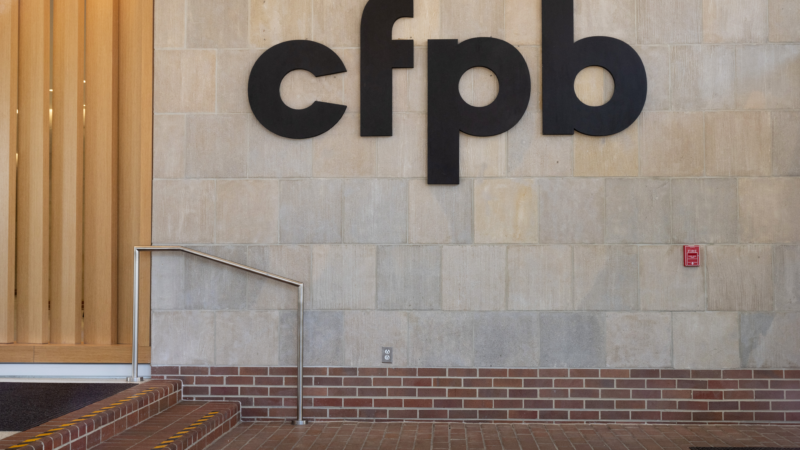
A federal district court judge ruled Tuesday that the Trump administration must continue to seek funding for the Consumer Financial Protection Bureau, or CFPB, a watchdog agency the administration has been trying to dismantle through staffing and funding cuts.
The administration recently made a legal argument that because the agency gets its funding from the Federal Reserve, and since the Fed is technically operating at a loss, there are no valid funds for the CFPB.
Judge Amy Berman Jackson rejected the argument, writing that this “would be tantamount to closing what is left of the Bureau.” This upholds an earlier injunction from Jackson to ensure the agency would continue to exist as congressionally mandated, and to stop efforts to shutter the CFPB, including through layoffs.
Separately, last week a coalition of 21 states and the District of Columbia joined together for a lawsuit to prevent the defunding of the agency. They argue that the administration is too narrowly interpreting which Fed funds can be used to support the agency — that they don’t have to be profits.
Representatives from the White House and the CFPB did not immediately respond to requests for comment.
The CFPB was created after the 2008 financial crisis to protect consumers against fraud and predatory practices; among its many duties, it collects people’s complaints against businesses. It has long been a target of conservatives who say it’s too aggressive in enforcing consumer protection laws.
President Donald Trump installed Russell Vought as the acting director of the agency, who has mirrored the president’s desire to close the bureau. Vought ordered a stop to all work at the agency within the first few weeks of Trump’s second inauguration.
In April, layoff notices were sent to about 1,400 of the bureau’s workers. The National Treasury Employees Union sued to stop the staff reductions. Judge Jackson issued a preliminary injunction blocking the layoffs, but in August an appeals court panel vacated that ruling, saying that the U.S. District Court for the District of Columbia lacked jurisdiction in the case. In December, that panel decision was itself vacated, meaning that the layoffs currently remain blocked.
In today’s order, Jackson wrote that the administration was “actively and unabashedly trying to shut the agency down again, through different means.”
“Notably, though, not one penny of the funding needed to run the agency that has returned over $21 billion to American consumers comes from taxpayer dollars,” she wrote. “Today, the agency is hanging by a thread.”
Carney says he backs strikes on Iran ‘with some regret’ as world order frays
Canadian Prime Minister Mark Carney says he supports the strikes on Iran "with some regret" as they represent an extreme example of a rupturing world order.
Iranian civilians are now fleeing the relentless bombing for neighboring Turkey
As the U.S. military broadens its strikes in Iran, traumatized Iranians are reaching the border with Turkey.
A split Senate votes against measure to constrain Trump’s authorities in Iran
Democrats in the Senate were facing an uphill climb Wednesday in their push to restrain President Trump's ability to wage war against Iran.
WATCH: How traffic dried up in the Strait of Hormuz since the Iran war began
The effective closure of the Strait of Hormuz is "about as wrong as things could go" for global oil markets. Iran achieved it not with a naval blockade, but with cheap drones.
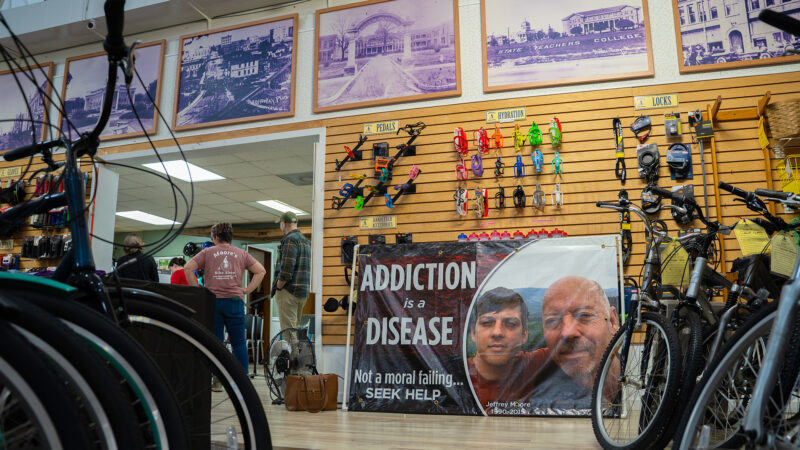
As Mississippi waits to spend opioid settlement funds, children and families suffer
Mississippi will receive more than $400M to fight the opioid epidemic. So far, officials haven't directed it toward programs that support addiction recovery.

Alabama’s new state climatologist takes the reins
The controversial John Christy is retiring as Alabama’s state climatologist. Lee Ellenburg now assumes the role and is already making a few changes, including declaring that climate change is real and caused by humans.
