
Judge orders the Trump administration to return a Guatemalan man to the U.S.

A federal judge ordered the Trump administration late Friday to facilitate the return of a Guatemalan man it deported to Mexico in spite of his fears of being harmed there.
The man, who is gay, was protected from being returned to his home country under a U.S. immigration judge’s order at the time. But the U.S. put him on a bus and sent him to Mexico instead, a removal that U.S. District Judge Brian Murphy found likely “lacked any semblance of due process.”
Mexico has since returned him to Guatemala, where he is in hiding, according to court documents. An earlier court proceeding that determined the man, identified by the initials O.C.G., risked persecution or torture if returned to Guatemala, but he also feared returning to Mexico. He presented evidence of being raped and held for ransom there while seeking asylum in the U.S.
“No one has ever suggested that O.C.G. poses any sort of security threat,” Murphy wrote. “In general, this case presents no special facts or legal circumstances, only the banal horror of a man being wrongfully loaded onto a bus and sent back to a country where he was allegedly just raped and kidnapped.”
Department of Homeland Security Assistant Secretary Tricia McLaughlin said O.C.G. was in the country illegally, was “granted withholding of removal to Guatemala” and was instead sent to Mexico, which she said was “a safe third option for him, pending his asylum claim.”
McLaughlin called the judge a “federal activist judge” and said the administration expects to be vindicated by a higher court.
Murphy’s order adds to a string of findings by federal courts against recent Trump administration deportations. Those have included other deportations to third countries and the erroneous deportation of Kilmar Abrego Garcia, an El Salvadoran who had lived in Maryland for roughly 14 years working and raising a family.
The U.S. Supreme Court ordered the Trump administration to facilitate Abrego Garcia’s return to the U.S. from a notorious Salvadoran prison, rejecting the White House’s claim that it couldn’t retrieve him after mistakenly deporting him. Both the White House and the El Salvadoran president have said they are powerless to return him. The Trump administration has tried to invoke the state secrets privilege, arguing that releasing details in open court — or even to the judge in private — about returning Abrego Garcia to the United States would jeopardize national security.
In his Friday ruling, Murphy nodded to the dispute over the verb “facilitate” in that case and others, saying that returning O.C.G. to the U.S. is not that complicated.
“The Court notes that ‘facilitate’ in this context should carry less baggage than in several other notable cases,” he wrote. “O.C.G. is not held by any foreign government. Defendants have declined to make any argument that facilitating his return would be costly, burdensome, or otherwise impede the government’s objectives.”
British Columbia to make daylight saving time permanent
The Canadian province is permanently ending the biannual time shifts for more light at the day's end. But research shows daylight saving increases health risks.
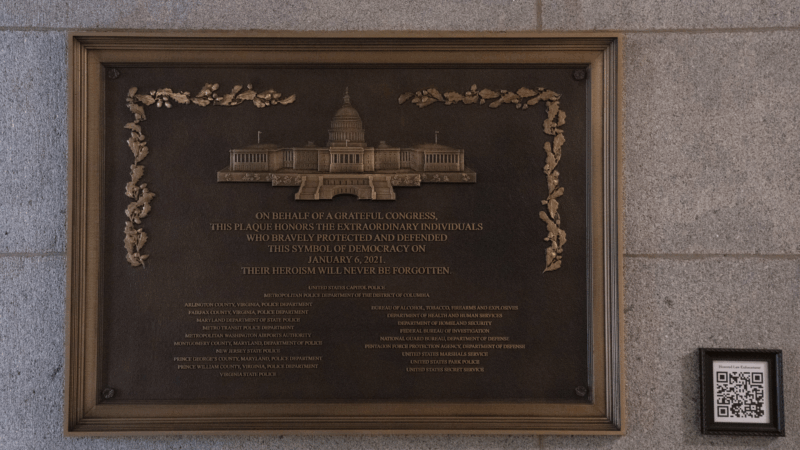
Jan. 6 plaque honoring police officers is now displayed at the Capitol after a 3-year delay
Visitors to the Capitol in Washington now have a visible reminder of the siege there on Jan. 6, 2021, and the officers who fought and were injured that day.
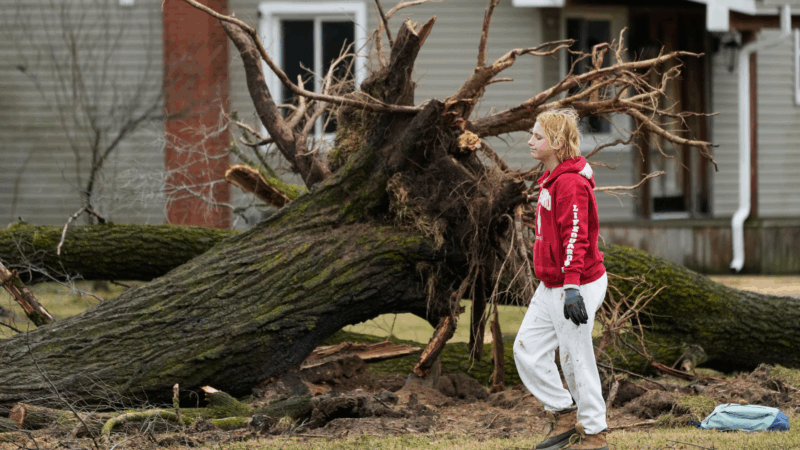
Authorities searching debris after suspected tornadoes kill 6 in Michigan, Oklahoma
A 12-year-old boy is reported to be among the dead following powerful storms that stretched across the middle of the country.

Opinion: The immorality of betting on war
Traders on prediction markets bet on nearly anything. One made more than half a million dollars betting on the U.S. strike against Iran. But should people wager on human suffering?

Alabama man facing execution for deadly robbery asks for clemency as he didn’t kill victim
Charles “Sonny” Burton is scheduled to be executed March 12 for his role in a 1991 robbery in which a man was fatally shot. His supporters and attorney are asking the governor for clemency, arguing that his life should be spared because Burton didn’t fire the gun or witness the killing.
One week into the Iran war, the fallout is global
The war is no longer just about the U.S., Israel and Iran. More countries are getting caught in the political crossfire or being drawn into the fighting themselves.
