
Judge blocks HUD homelessness overhaul, rebukes agency for causing ‘chaos’

The U.S. Department of Housing and Urban Development cannot impose dramatically different conditions for homelessness programs for now, according to an oral ruling Friday by U.S. District Judge Mary McElroy in Rhode Island.
McElroy granted a preliminary injunction to a group of states, cities and nonprofits who said a last minute overhaul of how to spend $4 billion on homelessness programs was unlawful. She also agreed with their argument that it likely would push many people back onto the streets in the middle of winter, causing irreparable harm.
“Continuity of housing and stability for vulnerable populations is clearly in the public interest,” said McElroy, ordering HUD to maintain its previous funding formula.
The National Alliance to End Homelessness, one of the plaintiffs, said in a statement the order “means that more than 170,000 people – families, seniors, veterans, and people with disabilities – have respite from the government’s assault.”
HUD has sought to dramatically slash funding for permanent housing and encourage more transitional housing that mandates work and treatment for addiction or mental illness. The overhaul – announced last month – also would allow the agency to deny money to local groups that don’t comply with the Trump administration’s agenda on things like DEI, the restriction of transgender rights and immigration enforcement.
“HUD will continue working to provide homelessness assistance funding to grantees nationwide,” said HUD spokeswoman Kasey Lovett in a statement to NPR. “The Department remains committed to program reforms intended to assist our nation’s most vulnerable citizens and will continue to do so in accordance with the law.”
‘Chaos seems to be the point’
McElroy expressed frustration with a series of HUD actions in recent weeks. Just hours before a Dec. 8 hearing, the agency withdrew its new funding notice, saying it would make changes to address critics’ concerns. But on Friday, HUD’s attorney said the new version would not be ready until the end of the day.
“The timing seems to be strategic,” McElroy said, asserting there was no reason the document could not have been ready before the hearing. “The constant churn and chaos seems to be the point.”
In defending the agency, attorney John Bailey said HUD was simply trying to change its policies to reflect President Trump’s executive orders, which he called “legal directives.” The judge interjected repeatedly to explain that he was conflating things, noting Congress – not the president – makes laws.
‘It’s kind of shocking’
HUD’s changes were announced in November with little notice and only weeks before local homeless service providers must apply for new funding.
“Our agencies are just scrambling right now to try to respond,” said Pam Johnson with Minnesota Community Action Partnership, whose members provide housing and other services for homeless people. “It also just reverses 40 years of bipartisan work on proven solutions to homelessness. So it’s really, it’s kind of shocking.”
For decades, U.S. policy favored permanent housing with optional treatment for addiction or mental illness Years of research has found the strategy is effective at keeping people off the streets.
But many conservatives argue it’s failed to stop record rates of homelessness.
“What is the root cause of homelessness? Mental illness, drug addiction, drug abuse,” HUD Secretary Scottt Turner said recently on Fox Business Network. “During the Biden administration, it was just warehousing. It was a homeless industrial complex.”
Turner and others who support the changes say the goal is to push people towards self-sufficiency.
But local advocates say mental health and substance abuse are not the main factors driving homelessness.
“It’s poverty. Poverty, low income and significant lack of affordable housing,” says Julie Embree, who heads the Toledo Lucas County Homelessness Board in Ohio.
Many in permanent housing have disabilities that make it hard to work full time, she said. Embree agrees with Trump administration goals like efficiency and saving money, but says pushing people back into homelessness, where they’re more likely to land in jail, the courts or a hospital, is not cost-effective.
“One emergency room visit is just as expensive as a month of sustaining this [permanent housing] program,” she said.
In Los Angeles, Stephanie Klasky-Gamer with LA Family Housing said there is a need for more transitional housing, but not at the expense of long-term housing. And the idea that programs could simply switch from one to the other is not only unrealistic, it’s illegal.
“You cannot take a building that has a 75-year deed restriction and just – ding! – call it interim housing,” she said.
Those challenging HUD say providers who own such properties – or states who’ve invested millions of dollars in permanent housing projects – face “significant financial jeopardy” if their funding is not renewed.
In addition to the legal challenges, members of Congress from both parties have questioned HUD’s sudden shift on homelessness. Advocates have lobbied lawmakers to step in and, at the least, push for more time to prepare for such a massive overhaul.
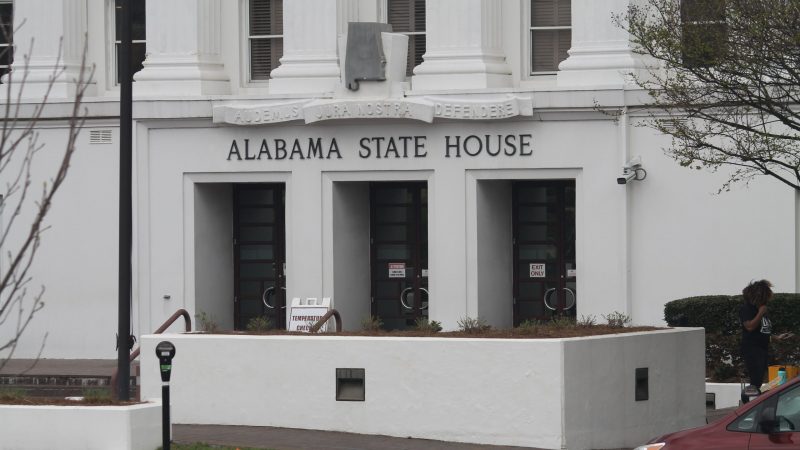
Bill making the Public Service Commission an appointed board is dead for the session
Usually when discussing legislative action, the focus is on what's moving forward. But plenty of bills in a legislature stall or even die. Leaders in the Alabama legislature say a bill involving the Public Service Commission is dead for the session. We get details on that from Todd Stacy, host of Capitol Journal on Alabama Public Television.

My doctor keeps focusing on my weight. What other health metrics matter more?
Our Real Talk with a Doc columnist explains how to push back if your doctor's obsessed with weight loss. And what other health metrics matter more instead.

Baz Luhrmann will make you fall in love with Elvis Presley
The new movie is made up of footage originally shot in the early 1970s, which Luhrmann found in storage in a Kansas salt mine.

Forget the State of the Union. What’s the state of your quiz score?
What's the state of your union, quiz-wise? Find out!

A team of midlife cheerleaders in Ukraine refuses to let war defeat them
Ukrainian women in their 50s and 60s say they've embraced cheerleading as a way to cope with the extreme stress and anxiety of four years of Russia's full-scale invasion.

SNL mocked her as a ‘scary mom.’ In the Senate, Katie Britt is an emerging dealmaker
Sen. Katie Britt, Republican of Alabama, is a budding bipartisan dealmaker. Her latest assignment: helping negotiate changes to immigration enforcement tactics.
