
Japan’s Takaichi to pursue conservative agenda after election landslide
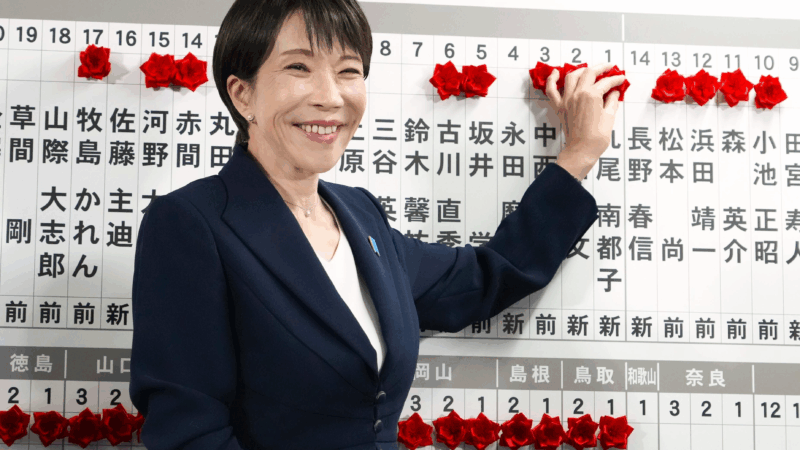
SEOUL — Japan’s first female Prime Minister, Sanae Takaichi, brought the ruling Liberal Democratic Party (LDP) its biggest electoral victory in its 71-year history, fueling her ambitions to pursue to a political agenda which she herself says could “split public opinion.”
The snap elections for the lower house of parliament were held despite the shortest campaign period in post-war history, and massive snowstorms across much of Japan.
Benefitting from Takaichi’s popularity, the LDP won a two-thirds majority in the lower house, enough to override vetoes by the opposition-controlled upper house.
It would also allow the LDP to initiate amendments to Japan’s pacifist constitution, which the party has sought to revise since its founding in 1955, and Takaichi said she would pave the way for an eventual referendum on the issue.
It’s the biggest majority any single Japanese party has won in the lower house in the post-war era. An unprecedented 90% of candidates fielded by the LDP won.
Charismatic Japanese leaders, including Takaichi’s mentor former Prime Minister Shinzo Abe, have helped the LDP stage comebacks before.
It’s a feature of Japan’s politics, which RAND Corporation Japan expert Jeffrey Hornung says “are always very personalistic. People always look to the leader, not so much the party.”
Japan’s Nikkei stock index jumped to a record high, bond yields went up, and Japan’s currency the Yen went down, in anticipation of Takaichi’s stimulus spending and tax cuts.
Questions and criticisms remain about how Takaichi will pay for these priorities, given that Japan’s government debt is more than 200% of GDP.
But Takaichi apparently feels her mandate will empower her to sweep aside obstacles.
“We have advocated policies facing significant opposition,” Takaichi said at LDP headquarters, “including a major shift in economic and fiscal policy, strengthening our security policy, and enhancing intelligence capabilities.”
Takaichi’s lopsided victory comes amid a general shift to the political right in Japan.
Following Takaichi’s election as LDP president last year, the LDP’s coalition partner of 26 years, the centrist Komeito Party, left the bloc. The LDP then joined a new coalition with the right-wing populist Japan Innovation Party.
Komeito joined a new coalition called the Centrist Reform Alliance, which lost most of their seats in the snap election, prompting their leaders to resign.
Takaichi also restated at her press conference her intention to revise Japan’s National Defense Strategy and related documents. She did not say what exactly she might change, but she has previously hinted that she could rework the country’s longstanding policies not to produce, possess or share nuclear weapons.
“This year marks 10 years since Prime Minister Shinzo Abe advocated a free and open Indo-Pacific,” Takaichi told the press conference. “I aim to deepen this vision.”
The first Trump administration adopted the concept of the Free and Open Indo-Pacific, envisioning like-minded nations upholding a rules-based international order against revisionist powers, implied to mean China.
Takaichi pledged to continue to use the Japan-U.S. alliance as the cornerstone of foreign policy, and plans to meet with President Trump next month.
Trump is scheduled to visit China in April. Takaichi, meanwhile, is at the center of a diplomatic stalemate with Beijing, over her comments that a Chinese blockade of Taiwan could trigger a Japanese military response.
The Trump administration emphasizes that its allies must bear a greater share of defense and other burdens.
And RAND’s Jeffrey Hornung says Takaichi may be better positioned than her predecessors to deliver such results.
“She can’t say anymore, ‘well, I can’t do that because the opposition parties will turn it down.’ I mean, she has the numbers to pass policies and do things.”
Chie Kobayashi contributed to this report in Tokyo.

Paul McCartney’s decade of transformation: From Beatles breakup to John Lennon’s murder
Man on the Run shows McCartney's effort to define himself outside The Beatles' shadow: "Paul making this documentary was a way of coming to terms with that whole period," says director Morgan Neville.

A Biden-era rule sought to stabilize child care. Why Trump wants it gone
The Trump administration has proposed repealing a Biden-era rule that required states to change how they pay out child care subsidies, citing the potential for fraud.

Greetings from Southwest Papua, which has some of the world’s richest marine biodiversity
The Raja Ampat islands in Indonesia's Southwest Papua province are a marine biodiversity hotspot and a divers' paradise.

Families remember U.S. reservists killed in Kuwait, members of an Iowa logistics unit
Four U.S. soldiers were killed in the Iran war on Sunday and IDed Tuesday by the Pentagon; two soldiers haven't yet been publicly identified. Their unit kept troops supplied with food and equipment.

Why supporting a shelter for women is now ‘kind of radioactive’
That's how researcher Beatriz Garcia Nice describes the new U.S. stance under the Trump administration to programs addressing gender-based violence.

Telehealth abortion is in the courts. Share your experience.
Mifepristone is facing another major legal challenge.
