
Japan’s Prime Minister Shigeru Ishiba to resign

TOKYO — Japan’s Prime Minister Shigeru Ishiba has expressed his intention on Sunday to step down following growing calls from his party to take responsibility for a historic defeat in July’s parliamentary election, Japan’s NHK public television reported.
Ishiba, who took office in October, had resisted growing calls from within his own party to resign for more than a month, saying such a step would cause a political vacuum when Japan faces key challenges in and outside the country.
His resignation plan comes a day before his Liberal Democratic Party makes a divisive decision on whether to hold an early leadership election, a virtual no-confidence motion against him if approved.
Ishiba intends to step down to prevent the party from getting divided further, NHK said. If he had stayed on, he would have inevitably struggled to manage his divided party and minority government.
The prime minister is expected to hold a news conference later Sunday.
In July, Ishiba ‘s ruling coalition failed to secure a majority in the 248-seat upper house in a crucial parliamentary election, further shaking the stability of his government. The loss added to an earlier election defeat in the lower house, where the party-led coalition also had lost a majority.
His decision came after his meeting Saturday with Agriculture Minister Shinjiro Koizumi and his perceived mentor, former Prime Minister Yoshihide Suga, who apparently suggested Ishiba’s resignation ahead of Monday’s vote.
He had previously insisted on staying, stressing the need to avoid a political vacuum at a time Japan faces big challenges, including U.S. tariffs and their impact on the economy, rising prices, rice policy reforms and growing tension in the region.
Since the LDP’s last week adoption of its review of the election loss, which called for “a complete overhaul” of the party, requests for an early leadership vote or for Ishiba’s resignation before Monday’s results have gained traction.
A conservative heavyweight Taro Aso, known for his anti-Ishiba stance, and a minister and several deputy ministers in the Ishiba Cabinet have requested an early vote, prompting others to follow suit.
Former Health Minister Norihisa Tamura told an NHK talk show earlier Sunday that the best way to stop the party divide and move forward is for Ishiba “to settle” the dispute before Monday’s vote, urging his resignation. The party has already been distracted from necessary work on economic measures and on figuring out ways to gain opposition support in the next parliamentary session, Tamura said.
With Ishiba stepping down as party leader, the LDP is expected to set a date for its party presidential election, likely to be held in early October.

Possible candidates include Koizumi, as well as ultra-conservative former Economic Security Minister Sanae Takaichi, Chief Cabinet Secretary Yoshimasa Hayashi, a moderate and the protege of former Prime Minister Fumio Kishida.
Lacking a majority in both houses, the next LDP leader will have to work with the main opposition parties to get bills passed, experts say, or else face constant risks of no-confidence motions.
The opposition parties, however, are too splintered to form a big coalition to topple the government.
In recent weeks, Ishiba successfully got U.S. President Donald Trump to lower the tariff rates the US administration imposed on Japan from 25% to 15%. Ishiba also said he has had his chief trade negotiator, Ryosei Akazawa, deliver his letter to Trump, stating his wish to work with him to create “the golden era” of the Japan-U.S. alliance, inviting the American leader to visit Japan.
Ishiba’s top aide, LDP Secretary General Hiroshi Moriyama, a key figure who negotiated with main opposition leaders to help achieve legislation since the prime minister took office, has also expressed his intention to step down on Sept. 2 over the election loss, though Ishiba hasn’t granted him resignation. Moriyama’s departure would have dealt a blow to the prime minister.

Scientists make a pocket-sized AI brain with help from monkey neurons
A new study suggests AI systems could be a lot more efficient. Researchers were able to shrink an AI vision model to 1/1000th of its original size.

U.S. evacuates diplomats, shuts down some embassies as war enters fourth day
The United States evacuated diplomats across the Middle East and shut down some embassies as war with Iran intensified Tuesday while President Trump signaled the conflict could turn into extended war.

College students, professors are making their own AI rules. They don’t always agree
More than three years after ChatGPT debuted, AI has become a part of everyday life — and professors and students are still figuring out how or if they should use it.

Kristi Noem set to face senators over DHS shutdown, immigration enforcement
The focus of the hearing is likely to be on how Kristi Noem is pursuing President Trump's mass deportation efforts in his second term, after two U.S. citizens were killed by immigration officers.
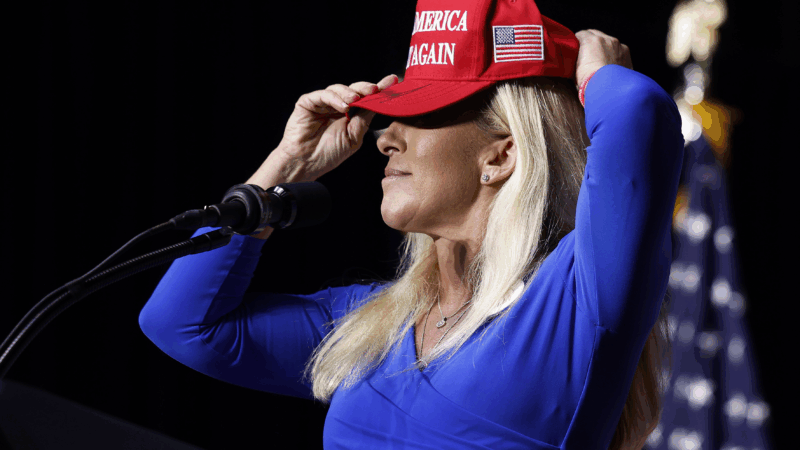
Trump promised the MAGA base no new wars. Then he went to war with Iran
President Trump promised his "Make America Great Again" voters an "America First" foreign policy. With the war in Iran, he's testing MAGA world's willingness to be flexible on one of its core beliefs.

North Carolina and Texas have primary elections Tuesday. Here’s what you need to know
The midterm elections are officially underway and contests in Texas and North Carolina will be the first major opportunity for parties to hear from voters about what's important to them in 2026.
