
Japan’s first female prime minister stakes her future on snap elections
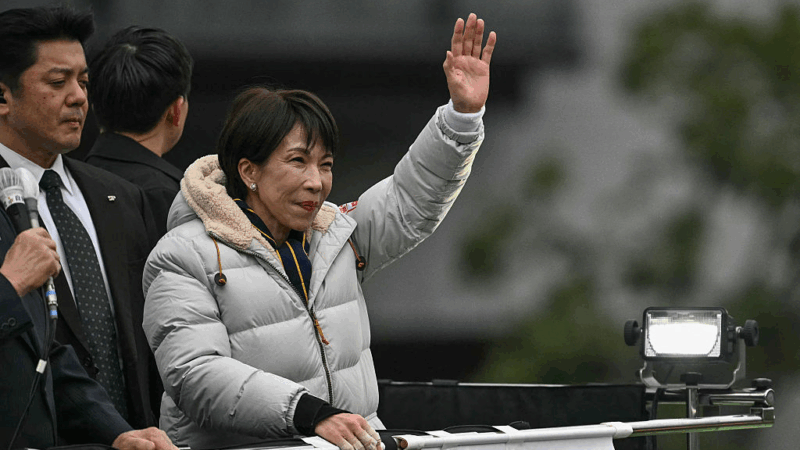
TOKYO – Polls show Japan’s first female prime minister and her coalition within reach of a decisive win in snap elections on Sunday.
Sanae Takaichi got an additional boost in the form of an endorsement from President Trump, which appears to be the first time a U.S. president has backed a Japanese leader in an election. “While Trump is often an outlier,” noted a Kyodo News Agency report, “it is very rare for the leader of any country to back a specific political figure ahead of a national election in a foreign country.”
Despite robust approval ratings mostly in the 60% range, Takaichi, whom Trump praised as “strong, powerful and wise,” has a fragile new coalition with a narrow majority in the lower house of parliament, and a minority in the upper house.
Polls predict she could win a two-thirds majority in the House of Representatives, which could empower her to pursue a conservative agenda, with policies that, by her own admission, could prove highly controversial.
“I also want to resolutely take up challenges that include bold policies and reforms that could split public opinion,” Takaichi said last month, as she tried to convince the public why elections were needed only four months into her administration.
Referendum on Takaichi
Takaichi is leveraging her popularity to increase her political power, turning the election into a sort of referendum on her and her policies, says Koichi Nakano, a political scientist at Sophia University in Tokyo.
“This election is really like a presidential election,” Nakano says. Takaichi’s message seems to be: ” ‘Give me power,’ without really specifying what she’s going to do.”
But Takaichi has previously made many of her priorities clear. She is a protégé of the late former Prime Minister Shinzo Abe, and shares his ambition to cast off post-war stigma and restrictions on Japan’s military and make it a “normal” country.
Since its establishment in 1955, Japan’s ruling Liberal Democratic Party (LDP) has sought to revise the country’s post-war constitution, especially its article nine, in which Japan renounces the right to wage war as a means of resolving international disputes.
At one of Prime Minister Takaichi’s recent campaign rallies, 50-year-old Koichi Sato, who came with his family, said he’s worried about global instability, and he thinks Takaichi can address that.
“In 10 or 20 years, our children will still have a future ahead of them, so I want Japan to be a place where they can live and feel safe.”
Another supporter, Manami Itoga, says she didn’t pay much attention to politics before Takaichi became Prime Minister.
Just weeks after she took office, Takaichi’s comments about Taiwan triggered a diplomatic spat with China, but Itoga says she’s on the same page as Takaichi.
“I’m worried that Japan will somehow be taken over by Chinese people,” she says, “because the number of Chinese [in Japan] is increasing rapidly. Things like that are circulating on Instagram and other social media, aren’t they?”
Japan’s politics shift to the right
Takaichi is trying to win back voters who switched their support from the LDP to right-wing parties, including the populist Sanseito Party. The party’s “Japan First” agenda includes restricting immigration, opposing same sex marriage, and opposing mandatory vaccinations.
Last year, the LDP split with their coalition partner of 26 years, the Komeito party, which is affiliated with the lay Buddhist Sokka Gakkai organization. To make up for the parliamentary seats it lost, it formed a new coalition with the conservative opposition Japan Innovation Party.
Takaichi’s forging ties with the smaller right-wing parties is “reminiscent in some ways of the Trumpian takeover of the Republican Party,” says Sophia University’s Koichi Nakano. For example, he argues that “Takaichi is trying to leave a personal mark on the LDP, and to become a new rallying center for the right-wing forces.”
Kyodo News Agency politics editor Masahiko Hisae says that anxiety about perceived security threats, including from China, North Korea and Russia, and widening income disparities are moving Japan’s politics in the same direction as other countries.
“These factors caused the entire political spectrum, including the LDP and most Japanese, to shift from the middle slightly toward the right.”
Whether Takaichi can reach her ambitious goals may depend in part on how her popularity holds up, and Masahiko Hisae says public opinion towards her may prove fickle. Her party has not emerged from the shadow of corruption scandals, and ties between its politicians and the Unification Church.
She has also faced criticism from liberal politicians about her comments on Taiwan, to the effect that a naval blockade of Taiwan could justify Japanese military intervention. China responded with a global campaign of criticism and a raft of economic countermeasures, from halting Japanese seafood imports and exports of materials with military applications, to discouraging tourism and canceling cultural performances.
“As long as the Takaichi administration continues, restoring Japan-China relations to their original state will be a very difficult problem,” Hisae says, “and we can only wait for time to pass.”
For now, Beijing seems uninterested in backing down or negotiating with Takaichi.
Chie Kobayashi contributed to this report in Tokyo.
Transcript:
AILSA CHANG, HOST:
Japan’s first female prime minister, Sanae Takaichi, is prepared to go big or go home. Four months since taking office, she enjoys high approval ratings, but her party does not. NPR’s Anthony Kuhn reports from Tokyo that Takaichi has vowed to secure a stronger mandate through snap elections on Sunday, and if her coalition fails to win a majority, she says she will step down.
(APPLAUSE)
ANTHONY KUHN, BYLINE: Packed crowds greeted Prime Minister Takaichi at a weekend rally outside Tokyo. Polls have predicted she could win a decisive majority in the lower house of Parliament. After the rally, 50-year-old Koichi Sato leaves with his family. He says he switched from supporting a liberal opposition party to the conservative ruling party because he’s worried about global instability, and he thinks Takaichi can address that.
KOICHI SATO: (Through interpreter) In 10 or 20 years, our children will still have a future ahead of them. So I want Japan to be a place where they can live and feel safe.
KUHN: Another supporter, Manami Itoga, says she didn’t pay much attention to politics before Takaichi became prime minister. Just weeks after she took office, Takaichi’s comments about Taiwan triggered a diplomatic spat with China. But Itoga says she’s on the same page as Takaichi.
MANAMI ITOGA: (Through interpreter) I’m worried that Japan will somehow be taken over by Chinese people or something like that because the number of Chinese people here is increasing rapidly. Things like that are circulating on Instagram and other social media, aren’t they?
KUHN: Takaichi is trying to win back voters who switched their support from her conservative party, called the Liberal Democratic Party, or LDP, to even more right-wing parties, including the populist Sanseito Party.
(SOUNDBITE OF ARCHIVED RECORDING)
SOHEI KAMIYA: (Speaking Japanese).
KUHN: Sanseito’s leader, Sohei Kamiya, stood atop a van at a recent rally in downtown Tokyo. He advocates a Japan-first agenda, restricting immigration, opposing same-sex marriage and mandatory vaccinations. Kyodo News agency politics editor Masahiko Hisae says that anxiety about perceived security threats and widening income disparities are moving Japan’s politics in the same direction as other countries.
MASAHIKO HISAE: (Through interpreter) These factors caused the entire political spectrum, including the LDP and most Japanese, to shift from the middle slightly toward the right.
KUHN: Hisae says Takaichi does not have a strong base within her party, but she’s trying to leverage her public popularity to increase her power through the election.
HISAE: (Through interpreter) If the LDP wins by a large margin, she will consider it a full mandate, a blank check, and Takaichi may embark on bold policies.
KUHN: Takaichi said she would do that when she explained to reporters last month why she’s calling snap elections.
(SOUNDBITE OF ARCHIVED RECORDING)
PRIME MINISTER SANAE TAKAICHI: (Through interpreter) I want to resolutely take up challenges that include bold policies and reforms that could split public opinion.
KUHN: Those controversial policies could include revising Japan’s post-war constitution, which renounces the right to wage war and reconsidering its long-standing policy against having or sharing nuclear weapons. Whether Takaichi can pull off such sweeping changes, Masahiko Hisae says, will depend in part on how her popularity holds up. Hisae argues that Japan’s public support for Takaichi is not solid like bedrock but, instead, shifting like a layer of sand. Anthony Kuhn, NPR News, Tokyo.
(SOUNDBITE OF MUSIC)

Pentagon puts Scouts ‘on notice’ over DEI and girl-centered policies
After threatening to sever ties with the organization formerly known as the Boy Scouts, Defense Secretary Hegseth announced a 6-month reprieve

President Trump bans Anthropic from use in government systems
Trump called the AI lab a "RADICAL LEFT, WOKE COMPANY" in a social media post. The Pentagon also ordered all military contractors to stop doing business with Anthropic.

HUD proposes time limits and work requirements for rental aid
The rule would allow housing agencies and landlords to impose such requirements "to encourage self-sufficiency." Critics say most who can work already do, but their wages are low.
Paramount and Warner Bros’ deal is about merging studios, and a whole lot more
The nearly $111 billion marriage would unite Paramount and Warner film studios, streamers and television properties — including CNN — under the control of the wealthy Ellison family.

A new film follows Paul McCartney’s 2nd act after The Beatles’ breakup
While previous documentaries captured the frenzy of Beatlemania, Man on the Run focuses on McCartney in the years between the band's breakup and John Lennon's death.

An aspiring dancer. A wealthy benefactor. And ‘Dreams’ turned to nightmare
A new psychological drama from Mexican filmmaker Michel Franco centers on the torrid affair between a wealthy San Francisco philanthropist and an undocumented immigrant who aspires to be a dancer.
