
Italian officials voice outrage at the presence of U.S. ICE agents at the 2026 Olympics
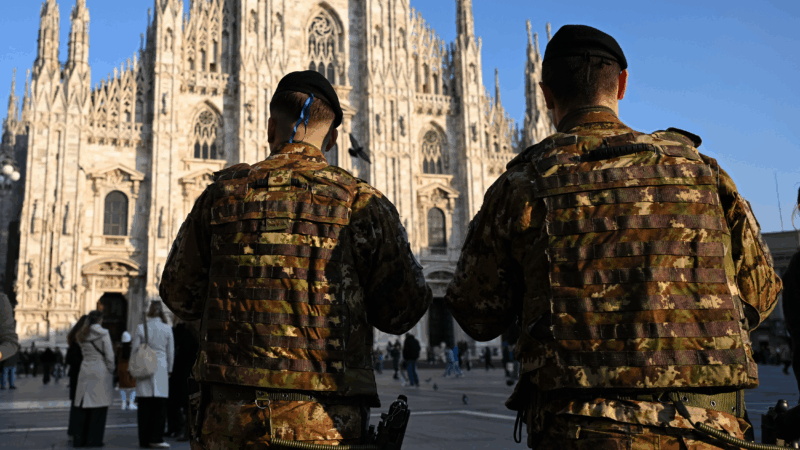
A growing number of Italian politicians are pushing back against a plan for U.S. Immigration and Customs Enforcement (ICE) agents to help provide security at the Milan Winter Olympics.
U.S. Homeland Security officials have provided assistance at past Olympic Games, but critics including Milan’s mayor say after the violence in Minneapolis, ICE agents are no longer welcome.
“This is a militia that kills, a militia that enters into the homes of people, signing their own permission slips,” Milan Mayor Giuseppe Sala told local media. “It is clear they are not welcome in Milan, without a doubt.”
It’s common for U.S. law enforcement and intelligence agencies, including the Department of Homeland Security, to play a role at big international events like the Olympics.
In a statement to NPR, Department of Homeland Security spokesperson Tricia McLaughlin said ICE’s Homeland Security Investigations unit will assist Italian authorities and other U.S. federal agencies working at the Winter Games.
“Obviously, ICE does not conduct immigration enforcement operations in foreign countries,” McLaughlin said. “At the Olympics, ICE’s Homeland Security Investigations is supporting the U.S. Department of State’s Diplomatic Security Service and host nation to vet and mitigate risks from transnational criminal organizations. All security operations remain under Italian authority.”
Speaking with Italian journalists, Italy’s interior minister, Matteo Piantedosi, said it’s not yet clear what U.S. security personnel will be at the Milan Cortina Games, but he stressed that “ICE will not operate on Italian territory.”
“It’s not like the SS are about to arrive.” – Italian Foreign Minister Antonio Tajani, speaking with L’Espresso
Italy’s foreign minister Antonio Tajani, meanwhile, scrambled to contain the controversy, saying that the ICE agents operating in Italy are not comparable to immigration enforcement squads. “It’s not like these are the [ICE] people on the streets of Minneapolis,” Tajani told the Italian magazine L’Espresso, adding, “It’s not like the SS are about to arrive.”
Those reassurances haven’t satisfied many Italian politicians. Posting on X, former Italian Prime Minister Giuseppe Conte pointed to “street violence and killings” in the U.S. linked to ICE. He urged Italy’s government to block any role for ICE agents. “We cannot allow this,” Conte wrote.
The opening ceremonies for the Milan Games are a week from Friday, with Vice President Vance and other U.S. officials expected to attend.
These Olympics open at a moment when tensions between the Trump administration and European allies are running high over a range of issues, from tariffs and Greenland to the future of NATO and the defense of Ukraine.
NPR correspondent Ruth Sherlock in Rome contributed to this report.
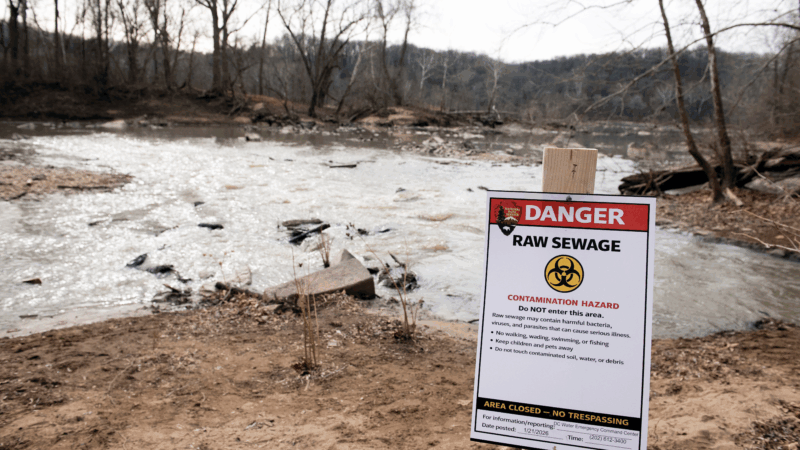
Class-action lawsuit filed after the Potomac sewage spill
A class-action lawsuit has been filed after part of a decades-old sewer line in Maryland collapsed in January, sending raw sewage into the Potomac River. After weather delays, repair work has resumed.
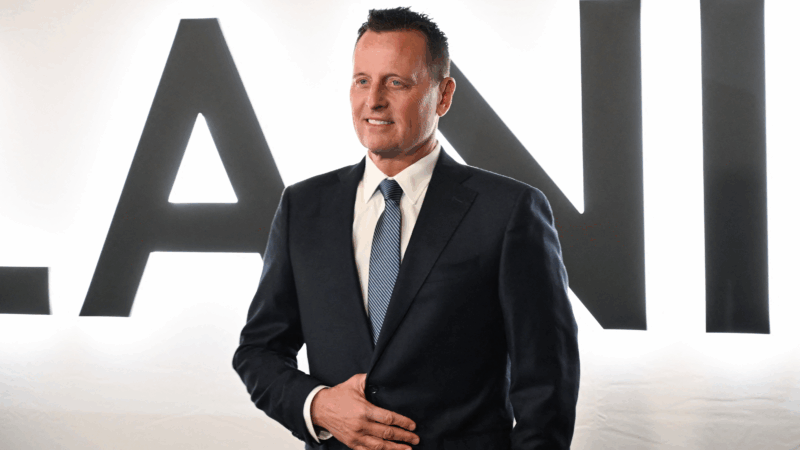
Kennedy Center president departs – months before the art complex’s scheduled closing
In a post on Truth Social, President Trump announced Friday afternoon that Richard Grenell is leaving the Kennedy Center. The arts complex is scheduled to close in July for renovations.
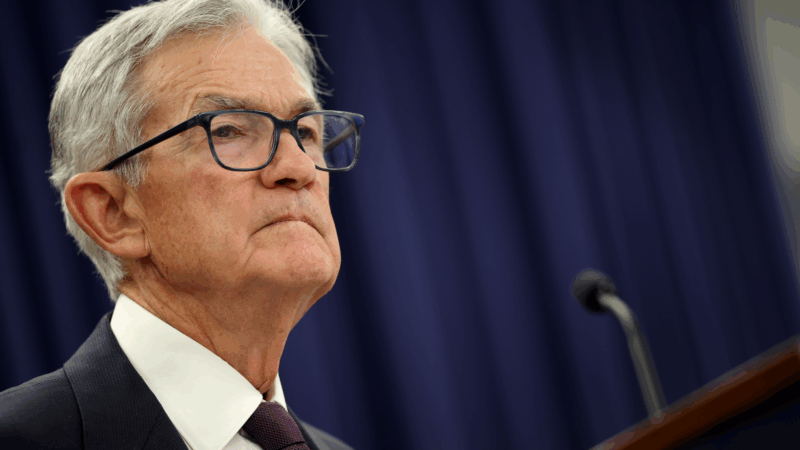
Judge blocks DOJ’s criminal probe of Federal Reserve, blasting it as political
A federal judge has put the brakes on a criminal probe of the Federal Reserve, saying it was part of an improper campaign by the Trump administration to pressure the central bank into cutting interest rates.

A cholesterol test you’ve never heard of is now recommended to prevent heart disease
The test can help assess your lifetime risk for cardiovascular disease. That, along with earlier treatment for high cholesterol, is part of new doctors' guidelines.

And the Oscar goes to — wait, why is it called an Oscar?
The Academy Awards officially adopted the "Oscars" nickname in 1939. But who is Oscar, and who started calling them that? We may never know. But here are four enduring legends to consider.
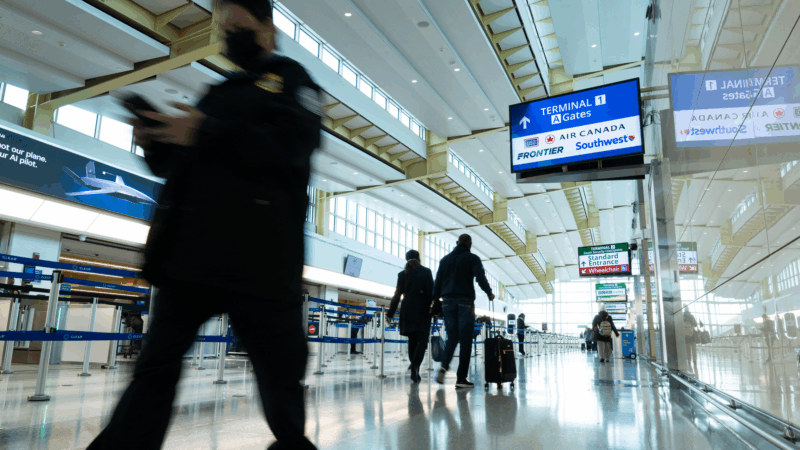
TSA workers miss a full paycheck, while travelers keep paying airport security fees
Many TSA workers received no money in their paychecks Friday as the partial DHS shutdown drags on. Fees paid by airline passengers keep piling up, even as airport security officers work without pay.
