
Israel’s Netanyahu agrees to join Trump’s Board of Peace
JERUSALEM — Prime Minister Benjamin Netanyahu of Israel said Wednesday he had agreed to join U.S. President Donald Trump’s Board of Peace, after his office earlier criticized makeup of the board’s executive committee. The committee included Turkey, a regional rival.
A statement from Netanyahu’s office said he had accepted Trump’s invitation.
The Board of Peace led by Trump was originally envisioned as a small group of world leaders overseeing the Gaza ceasefire plan. The Trump administration’s ambitions have ballooned into a more sprawling concept, with Trump extending invitations to dozens of nations and hinting it will soon broker global conflicts, like a pseudo-U.N. Security Council.
More details were expected when Trump participates in an announcement about the Board of Peace on Thursday at the World Economic Forum meeting in Davos, Switzerland.
The board’s charter has not yet been made public, but a draft version obtained by The Associated Press indicates much of the power will be concentrated in the hands of Trump himself. A $1 billion contribution secures permanent membership, the draft said.
So far, at least eight countries — Israel, the United Arab Emirates, Morocco, Vietnam, Kazakhstan, Hungary, Argentina and Belarus have agreed to take part.
Invitation letters from Trump also have been sent to Paraguay’s leader Santiago Peña, Canadian Prime Minister Mark Carney, Egyptian President Abdel-Fattah el-Sissi and Turkish President Recep Tayyip Erdogan. Plus, Russia, Israel, India, Slovenia, Thailand and the European Union’s executive arm have said they received invitations.
The Kremlin is now “studying the details” and will seek clarity of “all the nuances” in contacts with the U.S., Kremlin spokesman Dmitry Peskov said. Trump confirmed Monday night that Russian President Vladimir Putin had been invited.
It was not immediately clear how many or which other leaders would receive invitations.
The executive board’s members include U.S. Secretary of State Marco Rubio, Trump envoy Steve Witkoff, Trump’s son-in-law Jared Kushner, former British Prime Minister Tony Blair, Apollo Global Management CEO Marc Rowan, World Bank President Ajay Banga, and Trump’s deputy national security adviser Robert Gabriel.
The White House also announced the members of another board, the Gaza Executive Board, which, according to the ceasefire, will be in charge of implementing the tough second phase of the agreement. That includes deploying an international security force, disarming Hamas and rebuilding the war-devastated territory.
Nickolay Mladenov, a former Bulgarian politician and U.N. Mideast envoy, is to serve as the Gaza executive board’s representative overseeing day-to-day matters. Additional members include: Witkoff, Kushner, Blair, Rowan, Turkish Foreign Minister Hakan Fidan; Qatari diplomat Ali Al-Thawadi; Hassan Rashad, director of Egypt’s General Intelligence Agency; Emirati minister Reem Al-Hashimy; Israeli businessman Yakir Gabay; and Sigrid Kaag, the Netherlands’ former deputy prime minister and a Mideast expert.
The board also will supervise a newly appointed committee of Palestinian technocrats who will be running Gaza’s day-to-day affairs.
Iranian civilians are now fleeing the relentless bombing for neighboring Turkey
As the U.S. military broadens its strikes in Iran, traumatized Iranians are reaching the border with Turkey.
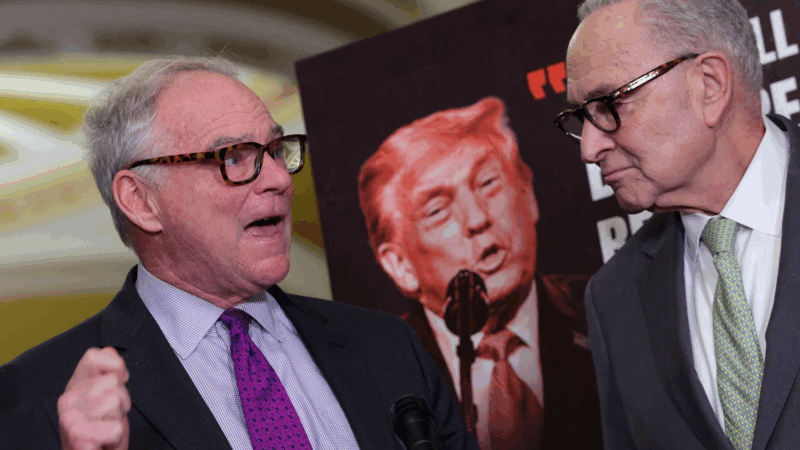
A split Senate votes against measure to constrain Trump’s authorities in Iran
Democrats in the Senate were facing an uphill climb Wednesday in their push to restrain President Trump's ability to wage war against Iran.
WATCH: How traffic dried up in the Strait of Hormuz since the Iran war began
The effective closure of the Strait of Hormuz is "about as wrong as things could go" for global oil markets. Iran achieved it not with a naval blockade, but with cheap drones.

As Mississippi waits to spend opioid settlement funds, children and families suffer
Mississippi will receive more than $400M to fight the opioid epidemic. So far, officials haven't directed it toward programs that support addiction recovery.
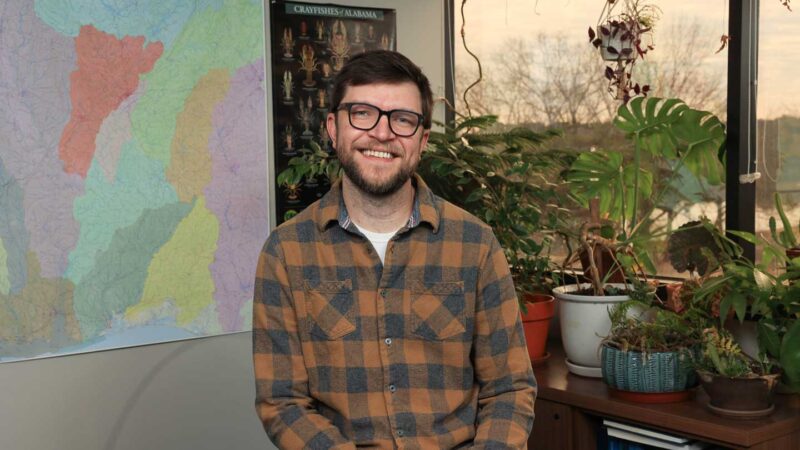
Alabama’s new state climatologist takes the reins
The controversial John Christy is retiring as Alabama’s state climatologist. Lee Ellenburg now assumes the role and is already making a few changes, including declaring that climate change is real and caused by humans.
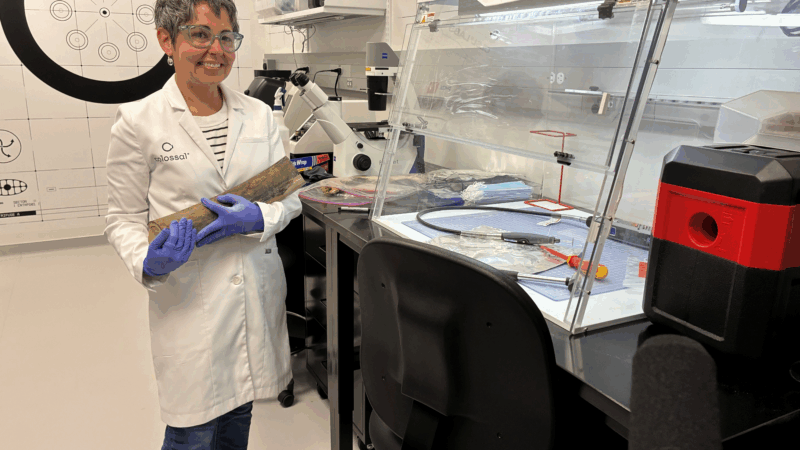
Colossal Biosciences breeds controversy while trying to revive mammoths
A Texas biotech company is trying to bring mammoths and other extinct creatures back to life. The science is as intriguing as the ethical questions are thorny.
