
Israel says it will bar aid groups, including Doctors Without Borders, from Gaza
JERUSALEM — Israel on Tuesday said it will suspend more than two dozen humanitarian organizations, including Doctors Without Borders, for failing to meet its new rules to vet international organizations working in the Gaza Strip.
The Ministry of Diaspora Affairs said that the organizations facing bans on Jan. 1 didn’t meet new requirements for sharing staff, funding and operations information. It accused Doctors Without Borders, one of the largest health organizations operating in Gaza, of failing to clarify the roles of some staff that Israel accused of cooperation with Hamas and other militant groups.
International organizations have said that Israel’s rules are arbitrary and could endanger staff. The ministry said that around 25 organizations, or 15%, of nongovernmental organizations working in Gaza didn’t have their permits renewed.
Doctors Without Borders, also known by its French acronym MSF, didn’t immediately respond to a request for comment. Israel previously accused its staff of involvement in military activities in Gaza in 2024. At the time, the group said that it would never knowingly employ people engaged in military activity.
Other major organizations whose permits weren’t renewed include the Norwegian Refugee Council, CARE International, the International Rescue Committee, and divisions of major charities such as Oxfam and Caritas, according to a list from the ministry. The organizations help with a variety of social services, including food distribution, health care, disability services, education and mental health.
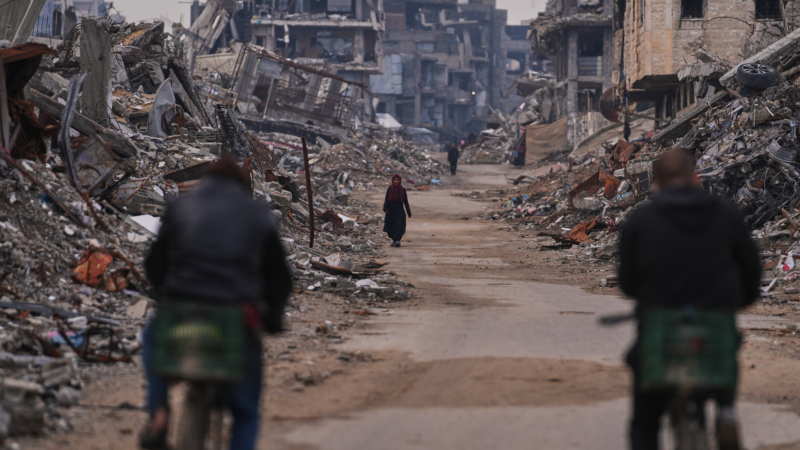
Israel and international organizations have been at odds over the amount of aid going into Gaza. Israel says it’s upholding the aid commitments laid out in the latest ceasefire that took effect Oct. 10, but humanitarian organizations dispute Israel’s numbers and say more aid is desperately needed in the devastated Palestinian territory of more than 2 million people.
New regulations
Earlier this year, Israel changed its registration process for aid groups, which included a requirement to submit a list of staff, including Palestinians in Gaza.
Some aid groups say they didn’t submit the list of Palestinian staff for fear they’d be targeted by Israel, and because of data protection laws in Europe.
“It comes from a legal and safety perspective. In Gaza, we saw hundreds of aid workers get killed,” said Shaina Low, communications adviser for the Norwegian Refugee Council.
The decision not to renew aid groups’ licenses means offices in Israel and East Jerusalem will close, and organizations won’t be able to send international staff or aid into Gaza.
“Despite the ceasefire, the needs in Gaza are enormous and yet we and dozens of other organizations are and will continue to be blocked from bringing in essential life-saving assistance,” Low said. “Not being able to send staff into Gaza means all of the workload falls on our exhausted local staff.”
Israel says exploitation unwelcome
The decision means the aid groups will have their license revoked on Jan. 1, and if they are located in Israel, they will need to leave by March 1, according to the ministry.
“The message is clear: humanitarian assistance is welcome — the exploitation of humanitarian frameworks for terrorism is not,” said Amichai Chikli, the minister of diaspora affairs and combating antisemitism.
The Israeli defense body that oversees humanitarian aid to Gaza, COGAT, said that the organizations on the list contribute less than 1% of the total aid going into the Gaza Strip, and that help will continue to enter from more than 20 organizations that did receive permits to continue operating in Gaza.
“The registration process is intended to prevent the exploitation of aid by Hamas, which in the past operated under the cover of certain international aid organizations, knowingly or unknowingly,” COGAT said in a statement.
This isn’t the first time Israel has tried to crack down on international humanitarian organizations. Throughout the war, Israel has accused the U.N. Relief and Works Agency, or UNRWA, of being infiltrated by Hamas, using its facilities and taking aid. The United Nations has denied it.
Israel also has said that hundreds of Palestinian militants work for UNRWA, the top U.N. agency working with Palestinians. UNRWA has denied knowingly aiding armed groups and says it acts quickly to purge any suspected militants.
After months of criticism from Israeli Prime Minister Benjamin Netanyahu and his far-right allies, Israel banned UNRWA from operating on its territory in January. The U.S., formerly the largest donor to UNRWA, halted funding to the agency in early 2024.
NGOs say Israel vague over data use
Israel failed to confirm that the data collected from the new regulations wouldn’t be used for military or intelligence purposes, raising serious security concerns, said Athena Rayburn, the executive director of AIDA, an umbrella organization representing over 100 organizations that operate in the Palestinian territories. She noted that more than 500 aid workers have been killed in Gaza during the war.
“Agreeing for a party to the conflict to vet our staff, especially under the conditions of occupation, is a violation of humanitarian principles, specifically neutrality and independence,” she said.
Rayburn said organizations expressed their concerns and offered alternatives to submitting staff lists, such as third-party vetting, but that Israel refused to engage in any dialogue.

Video of Clinton depositions in Epstein investigation released by House Republicans
Over hours of testimony, the Clintons both denied knowledge of Epstein's crimes prior to his pleading guilty in 2008 to state charges in Florida for soliciting prostitution from an underage girl.

Some Middle East flights resume, but thousands of travelers are still stranded by war
Limited flights out of the Middle East resumed on Monday. But hundreds of thousands of travelers are still stranded in the region after attacks on Iran by the U.S. and Israel.

‘Hamnet’ star Jessie Buckley looks for the ‘shadowy bits’ of her characters
Buckley has been nominated for a best actress Oscar for her portrayal of William Shakespeare's wife in Hamnet. The film "brought me into this next chapter of my life as a mother," Buckley says.

How, who, and why: NPR flips its famous letters to defend the right to be curious
NPR is standing up for the public's right to ask hard questions in a national campaign dubbed "For your right to be curious." At NPR's headquarters, on billboards in New York City, Chicago, and Washington, D.C., and across social media, NPR's three iconic letters transform into "how," "who," and "why" — a bold declaration of its commitment to fight for Americans' right to ask questions both big and small.

Oil prices surge, but no panic yet, as Iran war continues
Global oil prices are in the high $70s as traffic through Strait of Hormuz comes to a halt. Some analysts have warned they could top $100 a barrel if the stoppage is prolonged.
Hegseth: ‘We didn’t start this war but under President Trump we’re finishing it’
The remarks are the first to reporters since the U.S.-Israeli military operations against Iran began Saturday despite weeks of talks designed to stave off a conflict.
