
Israel has hunted its top enemies around the Middle East. What has it achieved?
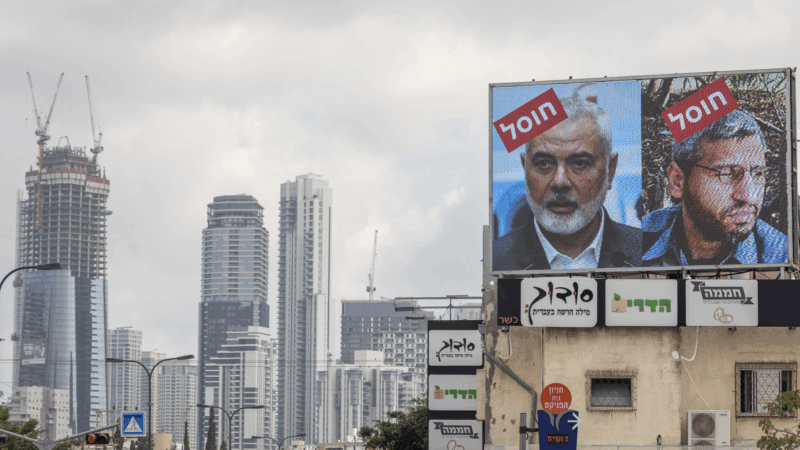
Israel’s surprise attack in Qatar on Tuesday targeting Hamas’ top political leadership failed to kill any senior officials, according to Hamas.
But it was the latest in a long campaign of targeted attacks aimed at hunting down Israel’s top enemies since the Hamas-led attack on Israel in 2023. In the past two years, Israel is known to have carried out a string of targeted strikes throughout the Middle East — in Gaza, Lebanon, Syria, Iran, Yemen, and now Qatar — against top leaders of militant groups, and even Iranian officials themselves.
In Lebanon and Iran, those killings helped lead to an end of hostilities — for now. In Gaza and Yemen, they did little to bring an end to war.
Here are some of the most prominent figures Israel has killed in the region in the past two years.
Saleh Arouri, a Hamas leader killed in Lebanon
Arouri was the first high-ranking Hamas leader to be killed by Israel abroad after the Oct. 7, 2023, attack.
Arouri served many years in Israeli prison before he was released in a 2011 prisoner swap with Israel and sent abroad. From exile, he coordinated Hamas attacks on Israel from the West Bank. Israel killed him in a strike in Lebanon in January 2024.
He was succeeded by Zaher Jabareen, whom Israel tried to kill in its Tuesday strike on Doha.
Mohammed Deif, Hamas’ elusive military chief
The top commander of Hamas’ military wing in Gaza was an elusive figure and had long been on Israel’s kill list. A heavy Israeli strike on a tent camp for displaced persons in Gaza killed him in July 2024. Around 90 other Palestinians are believed to have been killed in that strike, according to Gaza health officials. Hamas denied Deif’s death for months and acknowledged it only this year.
Israel’s defense minister at the time called Deif the “Osama bin Laden of Gaza” and said his death was “a significant milestone in the process of dismantling Hamas as a military and governing authority in Gaza.”
Israel also killed Deif’s successor, Mohammed Sinwar, in May of this year, in a strike on a tunnel under a hospital in Khan Younis. His role is now held by Izzedin al-Haddad, who continues to command Hamas forces fighting Israeli troops in Gaza.
Ismail Haniyeh and Yahya Sinwar, Hamas’ top leaders
The head of Hamas’ political wing since 2017, Haniyeh left Gaza with his family and other Hamas leaders in 2019 and moved to Doha. An Israeli explosion killed him in July 2024 in Tehran, where he was attending the Iranian president’s inauguration.
Haniyeh was considered to be among Hamas’ more moderate leaders, and was seen as more amenable to negotiating a ceasefire deal with Israel.
He was replaced by Yahya Sinwar, who had served as the head of Hamas in the Gaza Strip — a more hardline leader, whom Israel accused of masterminding the Oct. 7 attack.
Sinwar was killed by Israeli troops in October 2024. Netanyahu called his death the “beginning of the day after Hamas.” Nearly one year later, Hamas still survives.
Hassan Nasrallah, longtime Hezbollah leader, killed in Lebanon
On Sept. 27, 2024, the longtime leader of the Iran-backed Lebanese militia Hezbollah was killed by an Israeli strike on a secret underground Hezbollah facility in Beirut. President Joe Biden cautiously welcomed the killing, saying it delivered “a measure of justice” for thousands of Nasrallah’s victims.
Nasrallah’s killing — along with Israel’s ground invasion of southern Lebanon and Israel’s exploding pagers maiming hundreds of Hezbollah operatives — helped lead to a ceasefire and an end to heavy cross-border fighting between Hezbollah and Israel. It also weakened Hezbollah, a strong ally of Syrian dictator Bashar al-Assad, leading to the fall of his regime.
Since then, Hezbollah has been engaged in negotiations with the Lebanese government about disarmament, while some Israeli troops remain in strategic positions in southern Lebanon and have continued periodic strikes on Hezbollah targets.
A top Iranian military officer, killed in consulate in Syria
Mohammad Reza Zahedi, a top Iranian general in the Islamic Revolutionary Guard Corps, was among senior Iranian military officials killed in an airstrike on the Iranian consulate in Damascus in April 2024.
Israel did not take responsibility, but Iran blamed Israel for the strike, and launched missiles at Israel that month in retaliation. It was the first direct military confrontation between Iran and Israel, and it led to a full-blown war between the countries this year.
Senior Iranian officials killed in surprise Israeli blitz on Tehran
In June 2025, Israel launched a war with Iran that began with a surprise offensive targeting nuclear facilities and senior officials. Among those killed were Hossein Salami, commander of the Islamic Revolutionary Guard Corps (IRGC), Brig. Gen. Amir Ali Hajizadeh, head of the IRGC’s Aerospace Force, and senior Iranian nuclear scientists.
The conflict — which also drew in the U.S. with its bombing of Iranian nuclear sites and drew Iranian missile attacks on Israel — lasted 12 days before the U.S. and Qatar brokered a ceasefire.
Since then, no direct military exchanges have taken place between Israel and Iran. But analysts estimate the strikes did not eliminate Iran’s enriched uranium stockpile and did not bring about a negotiated resolution to prevent Iran from developing nuclear weapons. Some analysts predict Israel and Iran may be preparing for another round of war.
Houthi leaders killed in Yemen, but Houthi attacks continue
In late August, Israel carried out an airstrike on Sana’a, the capital of Yemen, killing a number of senior leaders of the Iranian-backed militant group that rules in Yemen’s capital. Among those killed was Houthi Prime Minister Ahmed al-Rahawi, along with several other senior ministers.
The strike was in retaliation to Houthi missile and drone attacks on Israel, one of which landed near Israel’s international airport in May and led to airline cancellations. The Houthis have targeted Israel in retaliation for its offensive in Gaza.
Following the August airstrike, Israel’s defense minister declared, “The Houthis will learn the hard way that anyone who threatens or harms Israel will pay many times over — and it will not be they who decide when this ends.”
But Houthi and Israeli attacks have not stopped until this day.
Bashir reported from Sheffield, England. Stern reported from Tel Aviv. NPR’s Daniel Estrin contributed to this report from Tel Aviv.

10 new books in March offer mental vacations
March is always a big one for books – this year is no different. We call out a handful of upcoming titles for readers to put on their radars — offering a good alternative to doomscrolling.
Sen. Chris Coons, D-Del., talks about the war with Iran and upcoming war powers vote
NPR's A Martínez asks Delaware Democrat Chris Coons, a member of the Senate Foreign Affairs Committee, about the war with Iran.

The candy heir vs. chocolate skimpflation
The grandson of the Reese's Peanut Butter Cups creator has launched a campaign against The Hershey Company, which owns the Reese's brand. He wants them to stop skimping on ingredients.

Scientists make a pocket-sized AI brain with help from monkey neurons
A new study suggests AI systems could be a lot more efficient. Researchers were able to shrink an AI vision model to 1/1000th of its original size.
U.S. evacuates diplomats, shuts down some embassies as war enters fourth day
The United States evacuated diplomats across the Middle East and shut down some embassies as war with Iran intensified Tuesday while President Trump signaled the conflict could turn into extended war.

Kristi Noem set to face senators over DHS shutdown, immigration enforcement
The focus of the hearing is likely to be on how Kristi Noem is pursuing President Trump's mass deportation efforts in his second term, after two U.S. citizens were killed by immigration officers.
